

- Updated: February 24, 2026
- 6 min read
Claude AI Code Generation: Privacy, Power, and Future Impact
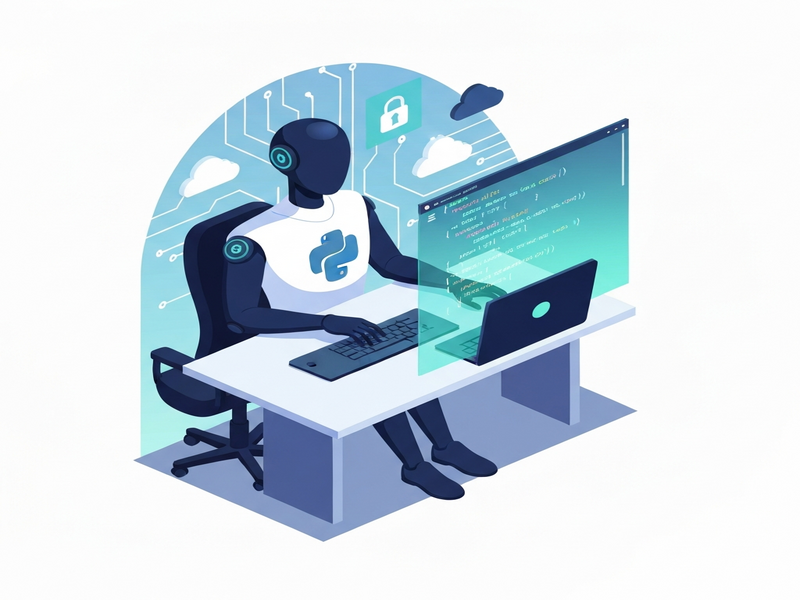
Claude AI is transforming software development by generating production‑ready code, but its deep integration with personal data raises significant privacy questions that developers and business leaders must address now.
Claude AI: Revolutionizing Code Generation Amidst Privacy Concerns and Future Prospects
In the latest Vergecast episode, Anthropic’s Claude Code was put under the microscope. The conversation highlighted three core themes: the unprecedented productivity boost from Claude’s code‑generation engine, the privacy trade‑offs that come with granting an AI agent extensive system access, and the strategic ripple effects for the broader AI‑driven software market.
For tech enthusiasts, developers, AI researchers, and business leaders, understanding these dynamics is essential for making informed decisions about adopting AI‑assisted development tools.
1. Claude AI’s Code Generation Capabilities
Claude AI, Anthropic’s flagship large‑language model, has been fine‑tuned for “code‑first” interactions. Unlike generic chat models, Claude can:
- Interpret natural‑language specifications and output syntactically correct code in over 20 programming languages.
- Perform iterative debugging by reading error messages, suggesting fixes, and re‑executing code in a sandboxed environment.
- Generate full‑stack applications, from database schema design to front‑end UI components, with minimal human prompting.
- Integrate with popular IDEs and CI/CD pipelines, allowing developers to accept, reject, or modify suggestions on the fly.
During the podcast, Boris Cherny, head of Claude Code, claimed that Claude now writes 100 % of his code. While that statement is hyperbolic, it underscores a shift: developers are increasingly treating AI as a co‑author rather than a mere autocomplete.
“Claude has become the most reliable pair programmer I’ve ever worked with. It catches edge cases I’d miss and suggests idiomatic patterns across languages.” – Boris Cherny, Anthropic
For teams looking to experiment, the UBOS templates for quick start include pre‑built “AI‑assisted coding” workflows that can be deployed in minutes, demonstrating how Claude‑style models can be embedded into existing development pipelines.
2. Privacy Concerns Highlighted on Vergecast
Claude’s power stems from its ability to read and write to a developer’s local environment, access APIs, and even interact with personal files. Hayden Field from The Verge warned that this level of access creates a “privacy paradox”: the more useful the AI, the more data it must ingest.
Key privacy risks
- Data leakage: If Claude processes proprietary code or confidential business logic, there’s a risk that snippets could be retained in model logs.
- Credential exposure: Integration with cloud services often requires API keys. Mishandling these keys can grant the AI unintended privileges.
- Surveillance creep: Continuous monitoring of developer activity could be repurposed for performance analytics without explicit consent.
Anthropic mitigates some of these concerns by offering on‑premise deployment options and strict data‑retention policies. However, the conversation on Vergecast made it clear that organizations must adopt robust governance frameworks before granting AI agents deep system access.
For a practical illustration, consider the ChatGPT and Telegram integration. While it showcases seamless cross‑platform automation, it also demonstrates how an AI can read messages, store them, and act on them—mirroring the same privacy considerations developers face with Claude.
3. Future Impact and Industry Implications
Looking ahead, Claude’s trajectory points toward three major industry shifts:
A. Democratization of Software Development
By lowering the barrier to entry, Claude enables non‑technical stakeholders to prototype applications. This aligns with the rise of “no‑code/low‑code” platforms, where AI fills the gap between business logic and executable code.
B. New Business Models Around AI‑Assisted Development
Companies will monetize not just the AI model but also the surrounding ecosystem—templates, plugins, and compliance tooling. UBOS, for example, offers an Enterprise AI platform by UBOS that bundles AI agents, data connectors, and governance dashboards into a single subscription.
C. Heightened Regulatory Scrutiny
As AI agents gain access to sensitive codebases, regulators are likely to introduce standards for data handling, audit trails, and model explainability. Early adopters who embed privacy‑by‑design will gain a competitive edge.
To stay ahead, developers should explore complementary tools that enhance Claude’s capabilities while reinforcing security. The Chroma DB integration provides a vector‑store for secure, on‑premise embeddings, ensuring that proprietary code never leaves the corporate firewall.
Another emerging synergy is voice‑enabled AI. The ElevenLabs AI voice integration lets developers dictate code snippets verbally, which Claude can then validate and insert—opening new accessibility pathways for developers with disabilities.
4. Expert Perspectives
Dr. Maya Patel, AI Ethics Researcher
“The convenience of AI‑generated code must be balanced with transparent data policies. Without clear consent mechanisms, we risk eroding trust in software supply chains.”
Liam O’Connor, CTO of a fintech startup
“Claude has cut our feature rollout time by 40 %. The trade‑off is a disciplined approach to secret management—something we enforce through automated secret‑rotation pipelines.”
Conclusion & Next Steps
Claude AI is undeniably reshaping how software is built, but its power comes with a responsibility to protect data privacy. Organizations that adopt Claude should pair it with robust governance tools, on‑premise data stores, and clear consent frameworks.
If you’re ready to explore AI‑augmented development while keeping privacy front‑and‑center, start with UBOS’s ecosystem:
- Visit the UBOS homepage for an overview of AI‑driven platforms.
- Learn how the About UBOS team prioritizes security and compliance.
- Try the Web app editor on UBOS to prototype Claude‑powered apps without writing a line of code.
- Automate workflows with the Workflow automation studio, linking Claude to CI pipelines, secret managers, and monitoring dashboards.
- Explore pricing that scales with your team via the UBOS pricing plans.
- Browse real‑world success stories in the UBOS portfolio examples.
- Kick‑start projects with ready‑made solutions like the AI Article Copywriter or the AI SEO Analyzer.
- For a Claude‑specific demo, try the Talk with Claude AI app from our template marketplace.
By integrating Claude responsibly, you can accelerate innovation while safeguarding the data that fuels your business.
Ready to future‑proof your development workflow? Join the UBOS partner program today and get early access to enterprise‑grade AI tools.

Andrii Bidochko
CTO UBOS
Andrii Bidochko is an AI entrepreneur and researcher focused on AI agents, reinforcement learning, and autonomous systems. He writes about the technologies shaping the future of machine intelligence, from frontier models and agent architectures to real-world AI applications.