

- Updated: February 23, 2026
- 5 min read
Google Drive Introduces Built‑In Android Scanner – Boosting Productivity and Security
Google Drive now includes a built‑in scanner that lets Android users digitize documents directly into the cloud, streamlining file management for professionals and students alike.
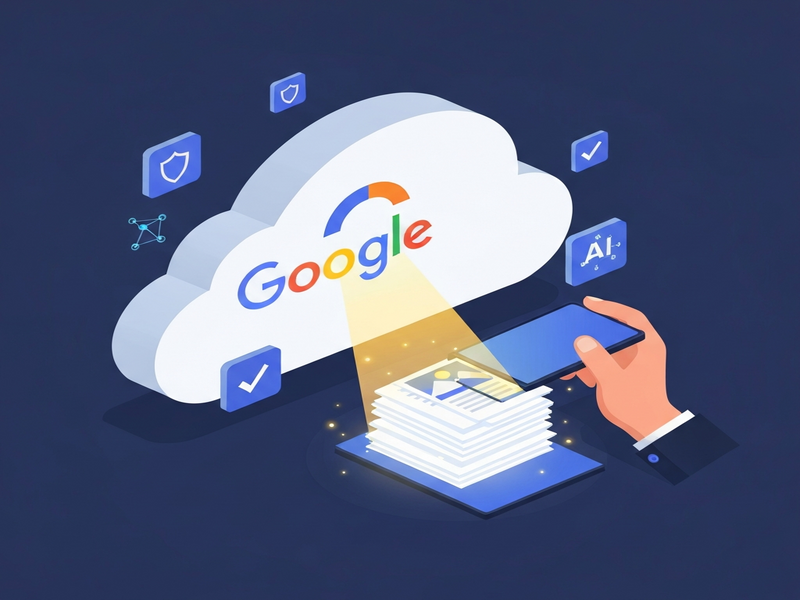
Google Drive scanner: What’s new?
In a move that reinforces Google’s commitment to mobile‑first productivity, the latest Android update adds a native scanning feature to Google Drive. The new tool transforms your phone’s camera into a high‑resolution document scanner, automatically uploading PDFs or images to the selected Drive folder. Announced on the official Google Workspace blog, the feature is rolled out to Pixel devices first, with broader Android rollout expected over the next few weeks.
How the Google Drive scanner works
The scanner is embedded directly in the Drive app’s “+” menu. Users tap Scan, align the document, and let the AI‑enhanced engine auto‑crop, enhance contrast, and optionally perform OCR (optical character recognition). The result is saved as a searchable PDF or image file, instantly synced across all devices linked to the same Google account.
Key benefits for productivity‑focused users
- Zero‑step upload: Scanned files appear in Drive without leaving the app, eliminating the need for third‑party scanner apps.
- AI‑driven OCR: Text is recognized in over 100 languages, making documents instantly searchable.
- Secure cloud storage: Files inherit the same encryption and access controls as any other Drive content.
- Integrated workflow: Combine scans with Google Docs, Sheets, or Slides for rapid report creation.
Why this matters in the cloud‑storage race
Google Drive’s scanner directly challenges similar features in Dropbox and Microsoft OneDrive, both of which have offered mobile scanning for years. However, Google’s advantage lies in its deep integration with the broader UBOS platform overview and the AI capabilities that power OCR and document classification.
Mobile‑first trend
As more professionals manage work on the go, the demand for on‑device scanning has surged. According to recent market research, over 68% of knowledge workers prefer to capture paper documents via their smartphones rather than using traditional scanners. Google’s move aligns with this shift, positioning Drive as a true mobile office hub.
Feature comparison at a glance
| Feature | Google Drive | Dropbox | OneDrive |
|---|---|---|---|
| Native Android integration | ✅ | ❌ (requires separate app) | ✅ (via Office app) |
| AI‑enhanced OCR | ✅ (100+ languages) | ✅ (limited languages) | ✅ (Microsoft OCR) |
| Automatic folder sync | ✅ | ✅ | ✅ |
Early user feedback and privacy considerations
Beta testers have praised the scanner’s speed and accuracy, noting that “the OCR is almost flawless even on low‑light photos.” However, privacy‑savvy users have raised questions about how scanned data is processed.
Privacy safeguards
Google assures that scanned images never leave the device for processing unless the user enables cloud‑based OCR. All data is encrypted in transit and at rest, adhering to the same standards as the rest of Google Workspace. For enterprises, administrators can enforce policies via the Enterprise AI platform by UBOS to audit document handling.
Community sentiment
On Reddit’s r/GoogleDrive community, users have highlighted the convenience of scanning receipts for expense tracking and the ability to instantly share PDFs with collaborators. A recurring theme is the desire for batch scanning, a feature Google has hinted at for future updates.
Google’s official statement
“We built the Drive scanner to help people capture the world around them and bring it into the cloud with a single tap. Security, speed, and AI‑powered text recognition are at the core of this experience,” said Prabhakar Raghavan, VP of Google Workspace.
The announcement emphasizes that the feature is part of a broader effort to make Google Workspace the most intelligent productivity suite on mobile devices.
Step‑by‑step: Using the Drive scanner on Android
- Open the Google Drive app and tap the + button.
- Select Scan from the menu.
- Align your document within the viewfinder; the app will auto‑detect edges.
- Choose Enhance or Original mode, then tap Save.
- Pick a destination folder or create a new one; the file uploads instantly.
- (Optional) Enable OCR in the settings to make the text searchable.
For power users, the scanner can be combined with the Workflow automation studio to trigger downstream actions—such as sending the PDF to a Slack channel or creating a task in Asana.
Leverage UBOS to supercharge your Drive workflow
If you’re already using Google Drive, integrating it with UBOS can unlock AI‑driven automation, advanced analytics, and custom app development.
- Explore the UBOS templates for quick start to build a document‑processing pipeline.
- Use the AI SEO Analyzer to optimize the metadata of your scanned PDFs for better discoverability.
- Deploy the AI Article Copywriter to automatically generate summaries of long reports you scan.
- Integrate with the ChatGPT and Telegram integration for instant notifications when new scans arrive.
- Enhance voice interactions using the ElevenLabs AI voice integration to read scanned documents aloud.
- Store vector embeddings of scanned text in the Chroma DB integration for semantic search across your archive.
- For startups, the UBOS for startups program offers discounted access to these AI tools.
- SMBs can benefit from the UBOS solutions for SMBs, which include pre‑built connectors for Google Workspace.
- Enterprise teams may consider the UBOS partner program to co‑develop custom scanning workflows.
- Visit the About UBOS page to learn more about our AI‑first approach.
Read the original story on Android Police.
Andrii Bidochko
CTO UBOS
Andrii Bidochko is an AI entrepreneur and researcher focused on AI agents, reinforcement learning, and autonomous systems. He writes about the technologies shaping the future of machine intelligence, from frontier models and agent architectures to real-world AI applications.