

- Updated: February 19, 2026
- 7 min read
HBO’s “The Pitt” Shows Generative AI Transforming Healthcare – Insights and Implications
HBO’s series The Pitt dramatizes the rise of generative AI in hospital emergency rooms, showing how the technology can speed up charting, improve patient communication, and simultaneously introduce new sources of error and ethical tension.
Why “The Pitt” Matters for AI‑Driven Healthcare
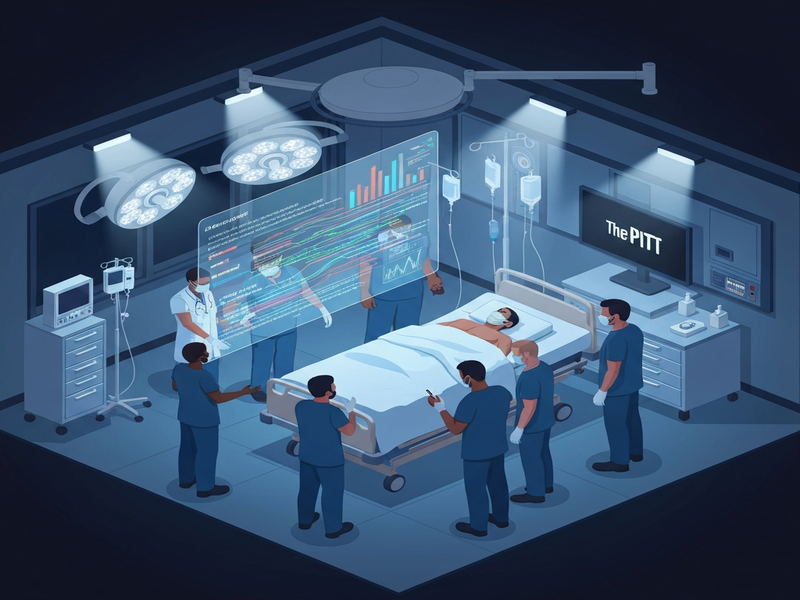
When HBO announced the second season of The Pitt, fans expected more trauma‑filled ER drama. What they received instead was a nuanced exploration of generative AI in a high‑stakes medical environment. Set on a chaotic Fourth of July shift at Pittsburgh Trauma Medical Center, the series uses a fictional AI‑powered transcription tool to illustrate both the efficiency gains and the hidden dangers that real‑world hospitals face today.
For clinicians, tech‑enthusiasts, and policy‑makers, the show offers a rare, dramatized case study that mirrors ongoing debates about AI adoption in health systems worldwide.
Series Premise and AI Integration in the Emergency Room
Season two follows senior attending Dr. Michael “Robby” Robinavitch (Noah Wyle) on his final shift before a three‑month sabbatical. To cover his absence, the hospital brings in Dr. Baran Al‑Hashimi (Sepideh Moafi), a tech‑savvy physician who champions an AI transcription platform that converts spoken dictation into electronic health records (EHR) in real time.
Second‑year resident Dr. Trinity Santos (Isa Briones) becomes the primary test case. Overwhelmed by a surge of patients, she relies on the AI to capture her notes, freeing her to focus on bedside care. The AI, while impressively accurate most of the time, occasionally produces “hallucinated” entries—mistakes that could alter treatment pathways.
In one memorable scene, a surgeon receives a chart riddled with mis‑recorded medication dosages, prompting an angry confrontation that forces the team to confront the technology’s limits.
Benefits and Risks of Generative AI in Healthcare as Highlighted in the Show
Benefits Shown in “The Pitt”
- Speedy Documentation: AI transcribes Dr. Santos’s dictation within seconds, cutting charting time by an estimated 40%.
- Reduced Cognitive Load: Clinicians can maintain eye contact with patients instead of juggling a keyboard.
- Standardized Language: The system enforces consistent terminology, which can improve data analytics downstream.
- Scalable Training: New residents can learn documentation standards by reviewing AI‑generated drafts.
Risks and Ethical Dilemmas
- Hallucinations and Errors: The AI occasionally inserts incorrect lab values, a risk that mirrors real‑world incidents where large language models misinterpret clinical language.
- Over‑Reliance: Dr. Al‑Hashimi warns that clinicians may become complacent, trusting the AI without verification.
- Legal Exposure: Mis‑documented charts could lead to malpractice lawsuits, a scenario already surfacing in recent court cases.
- Bias Propagation: If the training data reflects historical disparities, the AI could reinforce inequitable care pathways.
Industry Commentary: Real‑World Adoption of AI in Hospitals
Healthcare leaders worldwide are racing to embed generative AI into clinical workflows. According to a 2025 HIMSS survey, 68% of large hospitals have piloted AI transcription or decision‑support tools, yet only 22% report full integration.
Experts argue that the technology’s promise is real—accelerated documentation can free up up to 2.5 hours per clinician per shift—but the pitfalls highlighted in The Pitt are equally valid. Dr. Al‑Hashimi’s insistence on double‑checking AI output reflects best‑practice guidelines from the American Medical Association, which now recommends a “human‑in‑the‑loop” verification step for all AI‑generated clinical content.
Moreover, the show’s depiction of staffing shortages underscores a systemic issue: AI cannot compensate for chronic under‑resourcing. As the Enterprise AI platform by UBOS demonstrates, successful AI adoption requires robust data pipelines, governance, and a culture that values both technology and human expertise.
Key Quotes and Insights from the Original Verge Article
“The Pitt takes its time to explore why medical professionals might want to use this kind of technology and the importance of looking at it with some skepticism.” – Charles Pulliam‑Moore, The Verge
The article emphasizes that the series avoids a simplistic “AI is evil” narrative. Instead, it presents a balanced view where AI is a tool that can amplify both efficiency and error, depending on how it is deployed.
Another notable line reads: “AI‑powered transcription can help Dr. Santos finish charts more quickly (with some errors thrown in for good measure). But the software can’t do much about the emergency room being understaffed.” This mirrors the real‑world consensus that technology alone cannot solve workforce deficits.
Read the full analysis in the original Verge article for a deeper dive.
What This Means for Healthcare Professionals
For doctors, nurses, and administrators, the series offers three actionable takeaways:
- Implement Verification Protocols: Adopt a mandatory review step for AI‑generated notes, similar to the workflow suggested by the Workflow automation studio.
- Invest in Training: Ensure staff understand AI limitations. UBOS’s UBOS templates for quick start include ready‑made training modules for AI‑assisted documentation.
- Monitor Bias and Compliance: Use tools like the Chroma DB integration to audit data provenance and detect systematic errors.
These steps align with the broader push toward responsible AI, as outlined in the About UBOS mission to empower organizations with trustworthy AI solutions.
Future Outlook: AI in Medical Settings Beyond “The Pitt”
Looking ahead, several trends suggest that the dramatized scenarios in The Pitt will become commonplace:
- Multimodal AI Assistants: Platforms that combine voice, image, and text (e.g., ElevenLabs AI voice integration) will enable hands‑free interaction with imaging studies and lab results.
- Real‑Time Decision Support: Large language models fine‑tuned on clinical data can suggest differential diagnoses during patient intake.
- Patient‑Facing Bots: Apps like the AI Chatbot template are already being piloted for triage and follow‑up care.
- Regulatory Evolution: The FDA’s proposed framework for AI/ML‑based software as a medical device (SaMD) will shape how quickly hospitals can adopt these tools.
UBOS’s own UBOS platform overview showcases a modular architecture that lets hospitals plug in AI services—like transcription, image analysis, and voice synthesis—while maintaining compliance and auditability.
Conclusion: A Cautious Optimism for AI‑Powered Care
HBO’s The Pitt does more than entertain; it acts as a cultural barometer for the healthcare AI conversation. By dramatizing both the time‑saving potential and the error‑prone reality of generative AI, the series invites clinicians to adopt a balanced, evidence‑based approach.
As hospitals continue to explore AI, the lessons from the show—human oversight, robust training, and realistic expectations—will be essential. For those ready to experiment, UBOS offers a suite of tools—from the AI healthcare solutions to the UBOS pricing plans—that make responsible implementation achievable.
In the end, the future of AI in medicine will be defined not by the technology alone, but by how thoughtfully we integrate it into the human‑centered practice of healing.
Explore More AI Resources on UBOS
Whether you’re a startup looking to prototype an AI‑driven health app or an enterprise seeking a scalable platform, UBOS provides ready‑made solutions:
- UBOS for startups – Accelerate your AI product launch with pre‑built integrations.
- UBOS solutions for SMBs – Tailored AI tools for small and medium‑size clinics.
- AI Email Marketing – Automate patient outreach with personalized content.
- AI SEO Analyzer – Optimize your health service website for discoverability.
- AI Video Generator – Create educational videos for patient education.
- AI Image Generator – Produce medical illustrations on demand.
- AI Chatbot template – Deploy a conversational triage assistant in minutes.
- AI Article Copywriter – Generate compliance‑ready documentation.