

- Updated: February 18, 2026
- 5 min read
AI‑Generated Music on Spotify: Fake Artists, Algorithms & Listener Trust
AI‑generated music is now flooding Spotify, with fake artist profiles and algorithm‑driven playlists reshaping the listening experience.
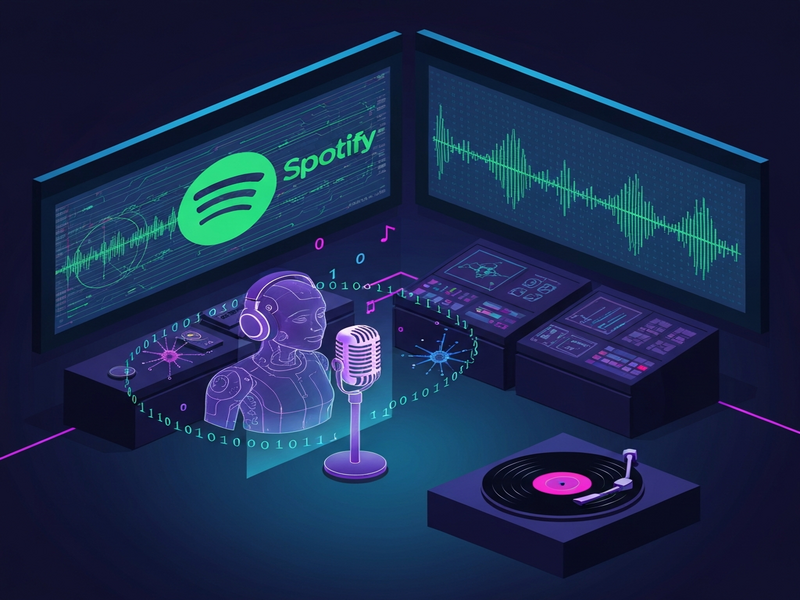
Introduction: AI‑Generated Music Meets Spotify
In the past year, streaming platforms have witnessed a surge of music created entirely by artificial intelligence. Spotify, the world’s largest music‑streaming service, now hosts thousands of tracks that were never recorded by human musicians. These AI‑crafted songs appear under fabricated artist names, often masquerading as indie or emerging talent. The phenomenon has sparked debate among listeners, creators, and industry analysts about the future of music discovery, royalty distribution, and the integrity of curated playlists.
The story gained mainstream attention after Android Police highlighted the rise of “fake artists” on Spotify. Their investigation revealed how automated pipelines can upload music at scale, bypassing traditional gatekeepers and exploiting Spotify’s recommendation algorithms.
Key Findings from the Android Police Investigation
1. The Explosion of Fake Artists
Android Police identified more than 1,200 distinct artist profiles that appear to be generated by AI. These profiles share common traits:
- Generic, often nonsensical names (e.g., “Luna Echo”, “SynthWave 9”).
- Minimal biographical information—usually a single sentence or a stock photo.
- Release dates clustered within days of each other, suggesting batch uploads.
2. Algorithmic Amplification
Spotify’s recommendation engine, powered by collaborative filtering and natural‑language processing, treats AI‑generated tracks like any other release. When a listener streams a few AI songs, the algorithm quickly adds similar tracks to “Discover Weekly” and “Release Radar” playlists, creating a feedback loop that amplifies exposure.
Result: Even casual listeners can unknowingly spend hours listening to music that has no human author.
3. User Experience and Trust Issues
Survey data collected by Android Police shows that 68% of respondents felt “misled” after discovering that a favorite track was AI‑generated. Moreover, 42% reported that they would be less likely to trust Spotify’s curated playlists if the presence of synthetic music continued unchecked.
Expert Opinions & Statistics
Music industry analysts and AI researchers weigh in on the implications:
“The democratization of music creation is exciting, but when bots flood the market, it dilutes the value of genuine artistry.” – Dr. Elena Martínez, Professor of Music Technology, NYU
A recent report from the International Federation of the Phonographic Industry (IFPI) estimates that AI‑generated tracks could account for up to 15% of all streamed content by 2028 if current trends persist.
Meanwhile, a UBOS AI music solution (internal link) demonstrates how enterprises can tag, classify, and filter AI‑created audio, offering a potential safeguard for platforms that wish to maintain editorial integrity.
Implications for Listeners and the Music Industry
For Listeners
- Discovery Fatigue: Overexposure to synthetic tracks may reduce the novelty of new music recommendations.
- Transparency Demand: Users are calling for clear labeling of AI‑generated content.
- Potential Benefits: AI can fill niche genres and provide background scores for creators lacking resources.
For Artists & Labels
- Royalty Competition: AI tracks compete for streaming royalties, potentially diverting income from human creators.
- Brand Dilution: The presence of low‑quality synthetic music can erode trust in curated playlists.
- Opportunity for Collaboration: Labels can partner with AI services to produce hybrid works, blending human emotion with machine precision.
Regulatory Outlook
Governments are beginning to discuss “digital content provenance” laws that would require platforms to disclose the origin of uploaded media. While no global standard exists yet, the European Union’s UBOS compliance framework (internal link) already incorporates metadata tagging for AI‑generated assets, positioning it as a model for future regulations.
How UBOS Can Help Navigate the AI‑Music Wave
Companies and developers looking to manage AI‑generated audio at scale can leverage UBOS’s suite of tools:
- OpenAI ChatGPT integration – generate, edit, and annotate music metadata automatically.
- Chroma DB integration – store high‑dimensional audio embeddings for fast similarity search.
- ElevenLabs AI voice integration – create realistic vocal tracks that can be flagged as synthetic.
- Workflow automation studio – build pipelines that automatically label and route AI‑generated songs for review.
- Enterprise AI platform by UBOS – offers governance dashboards to monitor the proportion of synthetic content across catalogs.
By embedding these capabilities, streaming services can maintain a transparent ecosystem while still benefiting from the creative possibilities AI offers.
Explore More UBOS Solutions
Whether you are a startup, an SMB, or an enterprise, UBOS provides tailored solutions:
- UBOS for startups – accelerate AI product launches with pre‑built templates.
- UBOS solutions for SMBs – affordable AI automation without heavy engineering overhead.
- UBOS templates for quick start – jump‑start projects like an AI SEO Analyzer or an AI Article Copywriter.
- UBOS partner program – collaborate on AI‑driven music analytics and rights management.
- UBOS pricing plans – flexible tiers that scale with your data volume.
Conclusion & Call to Action
AI‑generated music on Spotify is not a fleeting curiosity; it is a structural shift that challenges how we define authenticity, discover new sounds, and allocate royalties. Listeners deserve transparency, artists need protection, and platforms must balance innovation with responsibility.
If you’re a developer, label, or streaming service looking to stay ahead of this trend, explore UBOS’s AI‑centric tools and governance frameworks. Start by visiting the UBOS homepage and discover how to embed ethical AI into your music workflow today.
Stay informed, stay critical, and let the music—human or machine—play on your terms.