

- Updated: February 18, 2026
- 5 min read
Ford Aims to Launch $30,000 Electric Truck Using Formula‑1‑Inspired Design
Ford’s upcoming $30,000 electric midsize truck, built on a universal EV platform and infused with Formula 1‑derived engineering, promises an affordable, high‑performance electric vehicle for both consumers and businesses.
Ford Unveils $30,000 Electric Truck Powered by Formula 1 Innovation
In a bold move to democratize electric mobility, Ford announced that its next‑generation midsize electric truck will start at just $30,000. The vehicle leverages a brand‑new universal EV platform, 3D‑printed modular components, and a bounty‑driven engineering culture inspired by Formula 1. The strategy aims to undercut Chinese rivals while preserving profitability—a critical goal after the recent $19.5 billion loss tied to the F‑150 Lightning program.
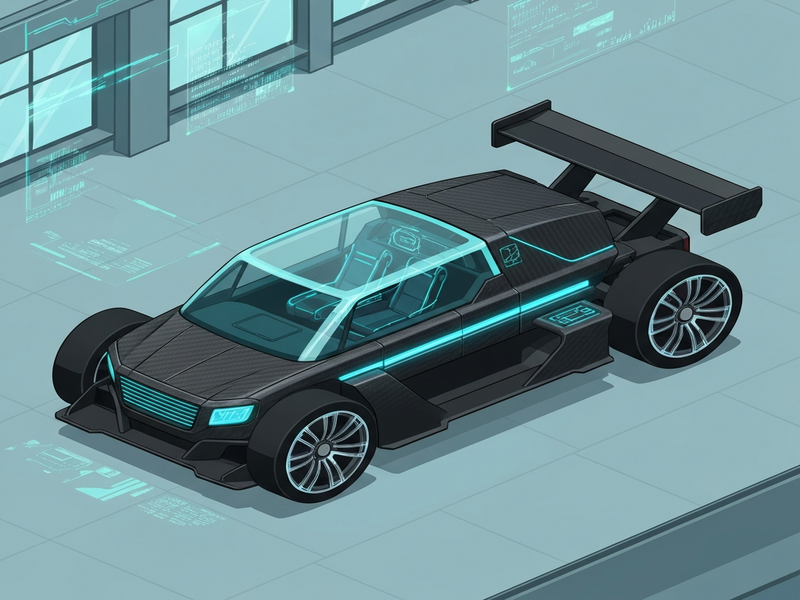
Universal EV Platform: The Backbone of Affordability
The new platform—dubbed the UEV (Universal Electric Vehicle) platform—serves as a single, clean‑sheet architecture that can underpin a midsize truck, sedan, crossover, three‑row SUV, or even a small commercial van. By standardizing on single‑piece aluminum unicastings and lithium‑iron‑phosphate (LFP) batteries licensed from CATL, Ford eliminates dozens of sub‑assemblies, slashing both material costs and assembly time.
Key attributes of the UEV platform include:
- Modular “Lego‑like” 3D‑printed components that can be swapped in minutes.
- Zonal electronics architecture with only five main control modules, reducing wiring by 4,000 feet and saving 22 lb per vehicle.
- 48‑volt auxiliary system that replaces traditional 12‑volt networks, cutting copper usage and improving efficiency.
For businesses looking to build similar modular solutions, the UBOS platform overview offers a low‑code environment that mirrors this component‑centric philosophy.
3D‑Printed Modules & the Bounty Program: Racing‑Team Discipline Meets Mass Production
Ford’s engineering squad, bolstered by former Formula 1 specialists, has embraced rapid prototyping. Thousands of precision‑toleranced parts are produced via high‑speed additive manufacturing, allowing designers to iterate aerodynamic surfaces in days rather than months.
To keep the focus razor‑sharp on cost and performance, Ford introduced a bounty program. Engineers earn points—and cash rewards—by meeting predefined metrics such as vehicle mass, drag coefficient, and part count. This data‑driven incentive system mirrors the performance‑based culture of elite motorsport teams.
One tangible outcome: the base trim includes power‑folding mirrors—normally a premium feature—because the reduced aerodynamic drag translates into measurable range gains, offsetting the part’s cost.
Companies seeking to replicate this incentive model can explore the UBOS partner program, which provides co‑development rewards for innovative component designs.
Cost‑Saving Tactics and the Target Market
Ford’s cost‑reduction roadmap hinges on three pillars:
- Material Efficiency: Aluminum unicastings replace welded steel frames, cutting weight by up to 15 %.
- Part Consolidation: A single electric motor drives both propulsion and auxiliary functions (e.g., mirror folding), eliminating redundant hardware.
- Digital Production: The 3D‑printed modular system reduces tooling expenses and enables on‑demand part fabrication.
These savings allow Ford to price the truck at $30,000, positioning it squarely against Chinese entrants such as BYD and Nio while appealing to:
- First‑time EV buyers seeking a budget‑friendly entry point.
- Small‑to‑mid‑size businesses that need a capable work truck without the diesel price tag.
- Tech‑savvy enthusiasts attracted to high‑performance engineering at an accessible price.
SMBs exploring similar electrification pathways can benefit from UBOS solutions for SMBs, which streamline fleet management and predictive maintenance using AI.
Executive Insight: A Vision for Mass‑Market EVs
“Our goal is to make electric trucks that anyone can afford without compromising on performance or durability,” said Alan Clarke, senior vice president of Ford’s EV program. “By borrowing the relentless efficiency mindset from Formula 1 and marrying it with modern manufacturing techniques, we can deliver a vehicle that’s both affordable and exciting to drive.”
How Ford Stacks Up Against the Competition
When measured against current market leaders, Ford’s upcoming truck offers distinct advantages:
| Feature | Ford $30k Truck | Rivian R1T | Tesla Cybertruck |
|---|---|---|---|
| Base Price | $30,000 | $70,000 | $39,900 |
| Platform Flexibility | Universal (truck, sedan, van) | Rivian-specific | Tesla-specific |
| Aerodynamic Efficiency | 15 % better than conventional trucks | ~10 % improvement | ~12 % improvement |
| Battery Chemistry | LFP (licensed from CATL) | NCA/NCM | NCA/NCM |
While Rivian and Tesla continue to target premium segments, Ford’s price‑point and modular architecture make it a compelling choice for cost‑conscious buyers.
For marketers wanting to track how this launch performs online, the AI SEO Analyzer can provide real‑time keyword rankings and competitor insights.
Future Outlook: Scaling the Platform Beyond Trucks
Ford plans to roll out the UEV platform across its entire lineup by 2028, potentially adding an all‑electric pickup, a compact SUV, and a light commercial van. The same Formula 1‑inspired efficiency principles will guide each new model, promising lower total cost of ownership and broader market reach.
As the automotive world watches, the $30,000 electric truck could become a benchmark for how legacy manufacturers reinvent themselves through modular design, AI‑driven incentives, and cross‑industry technology transfer.
Ready to explore how cutting‑edge AI can accelerate your own product development? Dive into the UBOS homepage for a suite of tools—from the Web app editor on UBOS to the Workflow automation studio—that empower innovators to build, test, and launch faster.
Whether you’re a startup, an SMB, or an enterprise, UBOS offers templates (UBOS templates for quick start), pricing flexibility (UBOS pricing plans), and a robust portfolio (UBOS portfolio examples) to help you stay ahead of the curve.
Stay informed, stay innovative, and watch the road ahead—because the future of affordable electric performance is already in motion.
For the full technical briefing, see the original story on TechCrunch.
Andrii Bidochko
CTO UBOS
Andrii Bidochko is an AI entrepreneur and researcher focused on AI agents, reinforcement learning, and autonomous systems. He writes about the technologies shaping the future of machine intelligence, from frontier models and agent architectures to real-world AI applications.