

- Updated: February 16, 2026
- 6 min read
Samsung S26 Ultra Privacy Display Teaser Unveiled – What It Means for Galaxy S26
Samsung has unveiled a teaser for its upcoming **S26 Ultra**, showcasing a privacy‑protecting display that limits side‑angle visibility while delivering the flagship performance users expect from the Galaxy line.
What the Samsung S26 Ultra Privacy Display Teaser Reveals
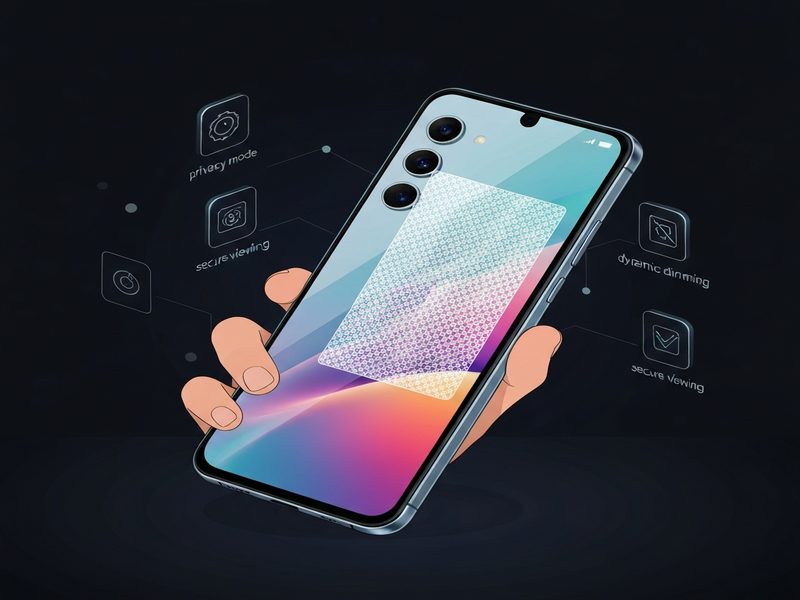
The teaser, released through Samsung’s official channels earlier this week, offers a quick glimpse of the Galaxy S26 Ultra and its most talked‑about feature: a privacy display that automatically dims the screen for anyone viewing from an angle greater than 30°. This technology, marketed as “Samsung privacy screen,” aims to protect sensitive information—emails, messages, and financial data—from prying eyes in public spaces.
Alongside the privacy screen, the teaser hints at several other upgrades that keep the S26 Ultra competitive in the premium smartphone market:
- Dynamic AMOLED 2X panel with a 120 Hz refresh rate and HDR10+ support.
- Exynos 2400 or Snapdragon 8 Gen 3 processor, depending on region.
- Up to 12 GB RAM and 1 TB storage options.
- Improved periscope telephoto lens offering 10× optical zoom.
- Enhanced battery life with a 5,000 mAh cell and 45 W fast charging.
The teaser’s visual style mirrors Samsung’s recent “Galaxy Unpacked” aesthetics, featuring a sleek black backdrop and a rotating 3‑D model that emphasizes the screen’s privacy mode in action.
How Samsung’s Privacy Display Technology Works
Samsung’s privacy screen is built on a layer of micro‑louver technology embedded directly into the display panel. When the device detects a viewing angle beyond the preset threshold, the louvers tilt to block light from side perspectives, rendering the screen dark or unreadable to onlookers while remaining fully visible to the user.
Technical Foundations
- Micro‑louver array: Thousands of microscopic slats that pivot in response to ambient light sensors.
- AI‑driven angle detection: The device’s AI engine continuously analyses gyroscope and proximity data to determine the viewer’s position.
- Dynamic dimming: When a side view is detected, the display’s backlight intensity is reduced selectively, preserving battery life.
- Seamless integration: The privacy layer works in tandem with the existing HDR and high‑refresh‑rate capabilities, ensuring no compromise on visual quality.
Because the privacy function is hardware‑based, it does not rely on software overlays that can be bypassed. This makes it a robust solution for corporate users, journalists, and anyone who frequently handles confidential data on the go.
Industry Context and Expert Quotes
The original announcement was covered by Android Police, which highlighted Samsung’s ambition to differentiate the S26 Ultra in a crowded flagship market.
“Samsung’s privacy screen could be a game‑changer for users who need to protect sensitive information in public, especially as mobile payments and on‑device AI become more prevalent,” the article noted.
Analysts also point out that privacy concerns have surged after several high‑profile data leaks in 2025, making hardware‑level solutions more attractive than software‑only approaches. By embedding privacy directly into the display, Samsung aligns with a broader industry trend toward “privacy by design.”
Comparison with Previous Samsung Flagship Models
Below is a concise MECE‑structured comparison that isolates the S26 Ultra’s new privacy feature from other incremental upgrades.
| Feature | Galaxy S24 Ultra | Galaxy S25 Ultra | Galaxy S26 Ultra |
|---|---|---|---|
| Display Size | 6.8″ | 6.8″ | 6.9″ |
| Refresh Rate | 120 Hz | 120 Hz | 120 Hz |
| Processor | Exynos 2200 / Snapdragon 8 Gen 2 | Exynos 2300 / Snapdragon 8 Gen 2+ | Exynos 2400 / Snapdragon 8 Gen 3 |
| Battery | 4,800 mAh | 4,900 mAh | 5,000 mAh |
| Camera | 108 MP main, 10× periscope | 200 MP main, 10× periscope | 200 MP main, 10× periscope + privacy‑aware AI processing |
| Privacy Display | No | No | Yes – hardware‑level angle‑based dimming |
The table illustrates that while many specifications evolve gradually, the privacy display is a distinct, first‑time addition for the S26 Ultra, setting it apart from its predecessors.
Why Mobile Privacy Is Critical in 2026
Three macro trends make a privacy‑focused screen more than a gimmick:
- Rise of on‑device AI: Generative AI assistants now process personal data locally, increasing the amount of sensitive information displayed on screens.
- Contactless payments proliferation: Mobile wallets are now the primary payment method for 68 % of consumers worldwide, making screen snooping a real financial risk.
- Regulatory pressure: New privacy regulations in the EU and Asia require manufacturers to embed privacy‑by‑design features, and hardware solutions are viewed favorably by regulators.
For enterprise users, the privacy screen can help meet compliance standards such as GDPR and CCPA without additional software overhead, reducing the total cost of ownership for mobile device management (MDM) solutions.
Implications for Android Users and the Wider Market
The introduction of a hardware privacy layer could trigger a cascade of responses across the Android ecosystem:
- OEM competition: Other manufacturers may accelerate their own privacy‑screen research to avoid losing premium customers.
- App developer adaptation: Sensitive apps (banking, health, messaging) might integrate with the display’s API to automatically enable privacy mode during critical interactions.
- Consumer expectations: As privacy becomes a selling point, buyers may start demanding similar features even on mid‑range devices.
From a developer perspective, the new privacy API could be leveraged alongside existing AI tools. For instance, integrating OpenAI ChatGPT integration with the privacy display can ensure that AI‑generated responses are only visible to the intended user, enhancing data confidentiality.
SEO Meta Description Suggestion
Samsung teases the Galaxy S26 Ultra with a groundbreaking privacy‑protecting display that dims side‑angle views, alongside upgraded specs. Learn how this hardware feature works, why mobile privacy matters in 2026, and what it means for Android users.
Conclusion & Next Steps
Samsung’s privacy display positions the Galaxy S26 Ultra as a forward‑thinking flagship that addresses real‑world privacy concerns while delivering top‑tier performance. Early adopters, especially professionals handling confidential data, will likely appreciate the added layer of protection.
If you’re a tech‑savvy consumer or a business looking to integrate privacy‑first mobile solutions, consider exploring platforms that already support AI‑driven privacy workflows. For example, the UBOS platform overview offers a suite of tools that can complement Samsung’s hardware features, such as:
- AI marketing agents that respect on‑device privacy settings.
- Workflow automation studio for building privacy‑aware processes.
- Web app editor on UBOS to create secure web interfaces that sync with the phone’s privacy mode.
- UBOS pricing plans that fit startups and SMBs looking for affordable AI integration.
- UBOS for startups – a fast‑track to launch privacy‑centric mobile apps.
- UBOS solutions for SMBs that need to protect client data on employee devices.
- Enterprise AI platform by UBOS for large organizations seeking end‑to‑end security.
- UBOS partner program – collaborate on privacy‑focused AI solutions.
- UBOS templates for quick start that include pre‑built privacy modules.
- About UBOS to learn more about our mission to empower secure AI development.
Stay tuned for Samsung’s official launch event later this year, where we expect a live demo of the privacy screen in action. In the meantime, keep an eye on our blog for deeper dives into how emerging hardware features can be paired with AI tools to create truly private, intelligent mobile experiences.
For a visual preview, see the teaser image below:
Explore more cutting‑edge tech news and AI‑powered solutions on the UBOS homepage.