

- Updated: February 15, 2026
- 7 min read
Hideki Sato, Sega Console Pioneer, Dies at 75 – Legacy and Impact
Hideki Sato, the visionary engineer behind virtually every Sega home console, passed away this weekend at the age of 77, leaving an indelible mark on the video‑game industry.
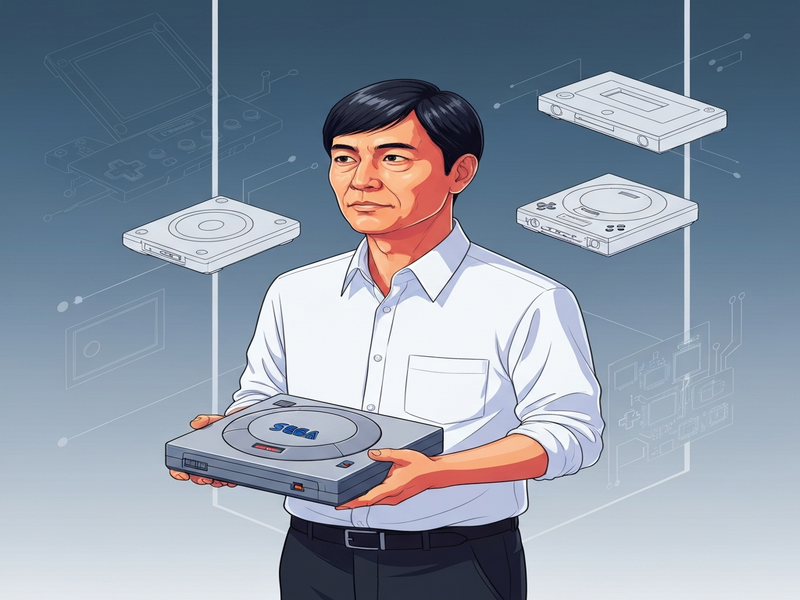
A Pioneer Who Bridged Arcade and Home Gaming
Hideki Sato joined Sega in 1971, a time when the company was still a pure arcade‑machine manufacturer. Over the next four decades, he steered Sega’s hardware evolution from the modest SC‑3000 to the ambitious Dreamcast, guiding the firm through the “bit wars” that defined an era. His tenure also included a stint as acting president from 2001 to 2003, and he remained with the company until his retirement in 2008. Sato’s philosophy—“home consoles are an extension of arcade technology”—remains a cornerstone of modern console design.
For a deeper dive into how classic consoles have shaped today’s AI‑driven platforms, explore the UBOS gaming history page.
Career Overview: From SC‑3000 to Dreamcast
Sato’s career can be divided into four pivotal phases, each aligned with a flagship Sega console:
- Early 8‑bit era: Development of the SC‑3000 and Master System.
- 16‑bit breakthrough: Creation of the Mega Drive/Genesis.
- Transition to 32‑bit: Engineering the Saturn.
- Leap to online gaming: The Dreamcast’s innovative network features.
The Master System – Sega’s First Home Console Challenge
In 1985, Sega launched the Master System, its first serious attempt to compete with Nintendo’s NES. Sato’s team repurposed arcade‑grade hardware for the living‑room, emphasizing durability and color graphics. Although sales lagged behind Nintendo in the West, the Master System thrived in Europe and Brazil, establishing Sega as a global contender.
The console’s architecture—featuring a Zilog Z80 CPU and a custom video display processor—reflected Sato’s belief that “arcade technology should be accessible to home users.” This mindset would later fuel the 16‑bit revolution.
The same principle of repurposing powerful tech for broader audiences is echoed in the UBOS platform overview, where enterprise‑grade AI tools are made available to SMBs and startups.
Genesis / Mega Drive – The 16‑Bit Game‑Changer
By the late 1980s, arcade titles were already running on 16‑bit CPUs. Sato recognized the opportunity to bring that power home. “Two years after we started development, it was done: a 16‑bit CPU home console, the Megadrive,” he recalled in a 2021 interview with Beep21. The console’s Motorola 68000 processor, which had just become affordable, enabled richer graphics, faster gameplay, and a library that included Sonic the Hedgehog, a mascot that would become synonymous with speed.
The Genesis’ success was not merely technical; it was cultural. Sato’s emphasis on “arcade‑first” design gave developers a familiar hardware base, accelerating porting and fostering a vibrant third‑party ecosystem.
Today, the concept of “arcade‑first” translates to rapid AI deployment, as seen with AI marketing agents that bring cutting‑edge models to campaigns without extensive re‑engineering.
Saturn – The Ambitious 32‑Bit Leap
Launched in 1994, the Saturn represented Sega’s boldest hardware gamble. Sato pushed for a dual‑CPU architecture, aiming to outpace Sony’s PlayStation. While the console delivered impressive 2D performance, its complex hardware made development challenging, leading to a fragmented game library.
Sato later reflected, “We tried to bring the future too early; the market wasn’t ready for such a steep learning curve.” Nonetheless, the Saturn’s advanced video capabilities laid groundwork for later 3D innovations.
The lesson of timing resonates with modern innovators. The UBOS for startups program emphasizes launching with the right balance of technology and market readiness.
Dreamcast – Pioneering Online Play and Communication
The Dreamcast, released in 1998, embodied Sato’s vision of “play and communication.” He introduced a built‑in modem and the innovative Visual Memory Unit (VMU), allowing players to exchange data, download mini‑games, and even chat. “The ultimate form of communication is a direct connection with another,” Sato said, highlighting the console’s forward‑thinking network features.
Although marketed as a “128‑bit” system—a claim Sato himself joked about—the Dreamcast’s SH‑4 processor, heavily customized, delivered performance that rivaled contemporary competitors. Its early adoption of broadband connectivity foreshadowed today’s always‑online consoles.
The Dreamcast’s automation of data exchange mirrors the capabilities of the Workflow automation studio, where developers can orchestrate complex AI workflows with a few clicks.
Assessing Hideki Sato’s Legacy
Hideki Sato’s influence extends beyond the consoles he helped build. His approach—leveraging cutting‑edge arcade tech for the home market—set a template for hardware innovation that persists in today’s console cycles. Moreover, his leadership style, characterized by collaborative R&D and a willingness to experiment, inspired a generation of engineers.
Industry analysts note that without Sato’s push for networked gaming, the early 2000s online console boom might have been delayed by several years. The Dreamcast’s modem and VMU can be seen as the direct ancestors of modern services like Xbox Live and PlayStation Network.
“From the beginning, Sega’s home console development has always been influenced by our arcade development,” Sato told Famitsu, underscoring a philosophy that still guides hardware makers today.
For the full obituary and additional details, read the original report on VideogamesChronicle.
How Sato’s Vision Aligns with Modern AI Platforms
The principles that guided Sato’s hardware designs—speed, accessibility, and connectivity—are echoed in today’s AI ecosystems. Platforms like Enterprise AI platform by UBOS aim to deliver enterprise‑grade performance while keeping the user experience intuitive, much like the Dreamcast’s user‑first network features.
Developers can now prototype AI‑driven experiences using the Web app editor on UBOS, a visual environment that mirrors the rapid prototyping Sato championed for arcade titles.
For businesses seeking cost‑effective AI solutions, the UBOS pricing plans provide transparent tiers, ensuring that even small studios can afford the tools that once required massive R&D budgets.
Templates That Echo Classic Game Design
UBOS’s templates for quick start include the “AI Video Generator” and “AI Game Analytics” modules, enabling creators to build modern gaming experiences with the same agility Sato applied to hardware.
Notable examples from the UBOS Template Marketplace, such as the AI YouTube Comment Analysis tool and the AI SEO Analyzer, demonstrate how AI can now augment the very marketing and community engagement that Sega relied on during the console wars.
Collaborating with UBOS: A Modern Partner Ecosystem
Just as Sega partnered with hardware manufacturers and game studios, the UBOS partner program invites developers, agencies, and enterprises to co‑create AI‑enhanced products, fostering an ecosystem reminiscent of Sega’s collaborative R&D culture.
Real‑World Success: UBOS Portfolio
The UBOS portfolio examples showcase projects ranging from AI‑driven customer support bots to immersive virtual experiences—paralleling the diverse game libraries that defined each Sega console era.
Remembering a Visionary, Looking Toward the Future
Hideki Sato’s passing marks the end of an era, but his design philosophy lives on in every console that strives to bring arcade‑level excitement to the living room. As we celebrate his contributions, we also recognize that the spirit of innovation he embodied continues to drive today’s AI and gaming convergence.
If you’re a developer, historian, or gaming enthusiast eager to explore how classic console design principles can inspire modern AI projects, visit the UBOS homepage and discover tools that empower the next generation of creators.
Stay informed, stay inspired, and keep the legacy of pioneers like Hideki Sato alive in every line of code you write.