

- Updated: February 15, 2026
- 6 min read
Git as a File System: Transforming Version Control into a Code Database
Git can be used as a file system, and a new proposal envisions it as a full‑featured code database that streamlines version control, storage, and retrieval of source code.
Introduction: Why Git Is More Than a Version Control Tool
Developers have long relied on Git for tracking changes, branching, and collaborating on code. However, recent discussions—most notably the original gist that sparked a community debate—suggest that Git’s underlying data model can double as a robust file system. This perspective opens the door to a code database that treats every object in a repository as a queryable entity, blurring the line between source control and data storage.
In this article we will unpack the core ideas behind using Git as a file system, explore the proposed code‑database architecture, and examine how this shift could reshape development workflows for startups, SMBs, and enterprises alike.
Git as a File System: The Core Concept
Git stores every file, directory, and commit as an immutable object identified by a SHA‑1 hash. These objects are linked together in a directed acyclic graph (DAG), which makes Git inherently a content‑addressable storage system. When you treat the .git/objects directory as a low‑level file system, you gain several powerful capabilities:
- Atomic snapshots: Each commit represents a complete snapshot of the project, not just a diff.
- Deduplication: Identical blobs are stored only once, reducing storage overhead.
- Historical access: Any file version can be retrieved instantly by its hash.
- Distributed consistency: Clones contain the full history, enabling offline access.
These properties align closely with the requirements of a modern code database, where fast, reliable retrieval of any code artifact is essential.
From File System to Code Database: The Proposal
The proposal builds on Git’s content‑addressable nature and adds a query layer that treats code objects as rows in a database. The key components include:
- Metadata Indexing: Each blob, tree, and commit is enriched with metadata (author, timestamp, tags, language, dependencies).
- SQL‑like Query Engine: A lightweight engine translates queries such as
SELECT * FROM blobs WHERE language='Python' AND size<10KBinto Git object lookups. - API Layer: RESTful and GraphQL endpoints expose the database to CI/CD pipelines, IDE plugins, and AI agents.
- Integration Hooks: Native support for AI services (e.g., OpenAI ChatGPT integration) enables on‑the‑fly code analysis.
This architecture transforms a traditional Git repository into a searchable, programmable knowledge base for code, making it possible to answer questions like “Which functions in this project use the requests library?” without scanning the entire source tree.
Benefits and Potential Impact on Development Workflows
Adopting Git as a code database can deliver tangible advantages across the software development lifecycle:
Accelerated Code Search
Developers can locate snippets, functions, or configuration files in milliseconds, reducing time spent on manual grep searches.
Enhanced CI/CD Automation
Build pipelines can query the code database to fetch only the assets needed for a specific stage, cutting down build times.
AI‑Powered Insights
Integrations like Chroma DB integration enable semantic search, allowing LLMs to retrieve context‑aware code examples for automated refactoring or documentation.
Improved Compliance & Auditing
Metadata indexing makes it straightforward to generate compliance reports (e.g., “list all files that contain hard‑coded credentials”).
For startups and SMBs, the reduced operational overhead translates into faster time‑to‑market. Enterprises gain a unified view of code assets across multiple teams, facilitating governance and reducing technical debt.
Visual Overview
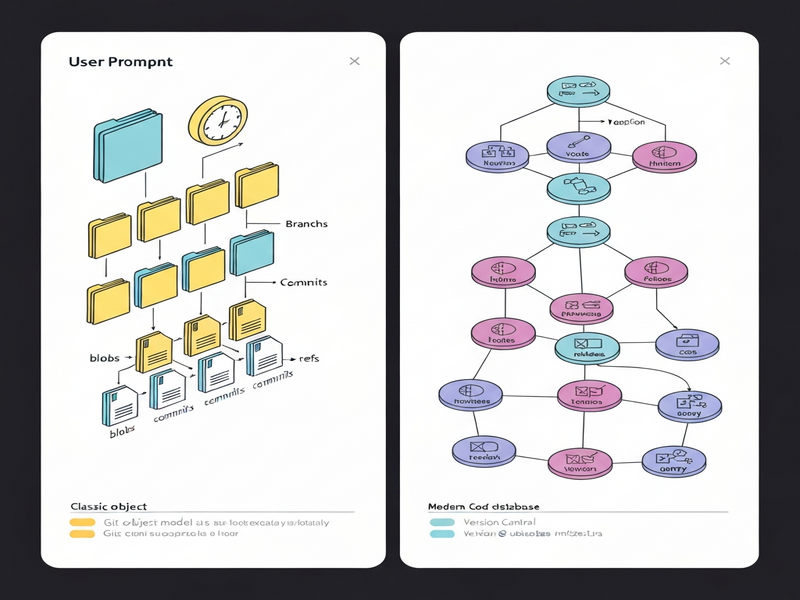
Figure 1: Git’s DAG structure repurposed as a searchable code database.
How UBOS Can Accelerate the Transition
UBOS offers a suite of tools that align perfectly with the code‑database vision. Below are key platforms and services you can leverage:
- UBOS homepage – Your entry point to a unified AI‑driven development environment.
- UBOS platform overview – Provides the underlying infrastructure for hosting Git‑based code databases.
- UBOS for startups – Offers rapid prototyping with pre‑built templates.
- UBOS solutions for SMBs – Scales the code‑database model without heavy ops overhead.
- Enterprise AI platform by UBOS – Integrates AI agents for intelligent code queries.
- Web app editor on UBOS – Lets you build custom UI layers on top of the code database.
- Workflow automation studio – Automates repository‑level tasks using the new query API.
- UBOS pricing plans – Flexible pricing that fits both hobbyists and large enterprises.
- UBOS portfolio examples – Real‑world case studies of code‑database implementations.
- UBOS templates for quick start – Jump‑start your project with ready‑made Git‑based data models.
By combining these services, teams can create a seamless pipeline where code is stored, queried, and acted upon—all within a single, AI‑enhanced platform.
AI‑Enhanced Extensions That Complement the Code Database
Beyond the core storage layer, UBOS’s ecosystem offers AI integrations that turn raw code data into actionable intelligence:
- ChatGPT and Telegram integration – Receive instant code‑search results via chat bots.
- ElevenLabs AI voice integration – Convert code documentation into spoken tutorials.
- AI marketing agents – Generate release notes and changelogs automatically from commit metadata.
- UBOS partner program – Collaborate with third‑party AI vendors to extend functionality.
- Talk with Claude AI app – Leverage Claude for natural‑language queries over the code database.
- AI SEO Analyzer – Optimize documentation and README files directly from the repository.
- AI Article Copywriter – Auto‑generate technical blog posts from code changes.
- AI Video Generator – Create walkthrough videos of new features using code diffs as input.
These extensions illustrate how a Git‑based code database becomes a living knowledge hub when paired with generative AI.
Getting Started: A Step‑by‑Step Guide
Below is a concise roadmap for teams ready to experiment with the code‑database model:
| Step | Action | UBOS Resource |
|---|---|---|
| 1 | Create a Git repository and push existing code. | Git File System Docs |
| 2 | Enable metadata indexing via UBOS’s Code Database module. | Code Database Overview |
| 3 | Deploy the query API and test with simple SELECT statements. | Version Control Integration |
| 4 | Connect AI services (e.g., OpenAI ChatGPT integration) for natural‑language queries. | OpenAI Integration Guide |
| 5 | Build UI components using the Web app editor on UBOS to visualize query results. | Web App Editor Docs |
Conclusion: A New Paradigm for Code Management
Reimagining Git as a file system and extending it into a code database unlocks unprecedented efficiency, searchability, and AI integration potential. Whether you are a solo developer, a fast‑growing startup, or a multinational enterprise, the shift promises to reduce friction, improve compliance, and empower intelligent tooling.
Ready to explore this frontier? Dive deeper into UBOS’s ecosystem, experiment with the Git innovation blog, and start building your own code‑centric AI applications today.
Take the next step: Contact UBOS for a personalized demo and see how a Git‑based code database can transform your development workflow.
Andrii Bidochko
CTO UBOS
Andrii Bidochko is an AI entrepreneur and researcher focused on AI agents, reinforcement learning, and autonomous systems. He writes about the technologies shaping the future of machine intelligence, from frontier models and agent architectures to real-world AI applications.