

- Updated: February 14, 2026
- 6 min read
AI Avatars Set to Transform Rural Healthcare – UBOS Tech News
Dr. Mehmet Oz proposes deploying AI‑driven avatars to extend clinical reach in rural America, aiming to multiply the capacity of existing providers while tackling chronic workforce shortages.
Why AI Avatars Are Suddenly on the Rural Health Agenda
A recent NPR report highlighted Dr. Oz’s bold plan to use artificial‑intelligence avatars as a stop‑gap for dwindling rural medical staff. The proposal is part of a broader $50 billion federal initiative to modernize health delivery in underserved counties. By turning conversational AI into a virtual health aide, the CMS hopes to bring basic triage, health education, and follow‑up care to patients who would otherwise travel hours for a single appointment.
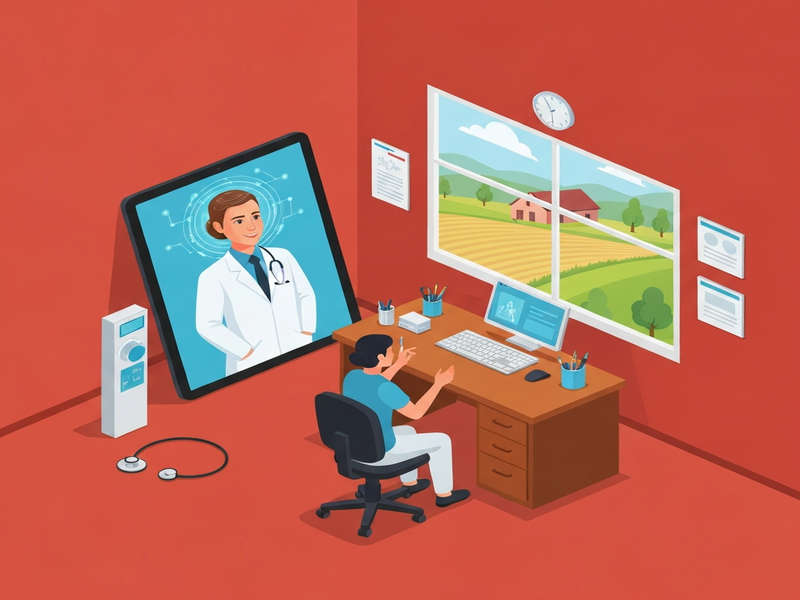
Illustration: AI avatars interacting with patients in a remote clinic.
What Dr. Oz Is Actually Proposing
Dr. Oz, now Administrator of the Centers for Medicare & Medicaid Services (CMS), outlined a three‑pronged strategy:
- Deploy AI avatars that can conduct symptom check‑ins, schedule appointments, and provide medication reminders.
- Integrate robotic diagnostic tools (e.g., AI‑guided ultrasound wands) for remote imaging.
- Leverage autonomous drones to deliver essential medicines to isolated pharmacies.
The core premise is that an avatar, powered by large language models such as ChatGPT, can “multiply the reach of doctors fivefold,” according to Oz’s remarks at the Action for Progress summit. Importantly, the CMS stresses that these tools are meant to **extend** licensed clinicians, not replace them outright.
Potential Benefits for Rural Communities
When implemented responsibly, AI avatars can address several chronic pain points:
- 24/7 Access: Patients receive immediate triage, reducing unnecessary ER visits.
- Reduced Administrative Load: Avatars can automate intake forms and prior‑authorization requests, freeing clinicians for direct care.
- Scalable Health Education: Tailored health messages can be delivered in local dialects, improving health literacy.
- Data‑Driven Insights: Continuous interaction feeds anonymized data into analytics pipelines, informing public‑health interventions.
UBOS, a leading UBOS platform overview provider, already offers a suite of AI‑enabled services that align with these goals. Their AI marketing agents can be repurposed to send personalized preventive‑care reminders, while the Web app editor on UBOS lets health agencies rapidly prototype avatar interfaces without deep coding expertise.
Moreover, the Chroma DB integration enables secure, searchable storage of patient‑generated data, ensuring compliance with HIPAA while supporting real‑time analytics. For voice‑enabled interactions, the ElevenLabs AI voice integration provides natural‑sounding speech synthesis, making avatars feel less robotic and more conversational.
Challenges and Criticisms
Despite the promise, several stakeholders raise legitimate concerns:
- Human Connection: Rural patients value long‑standing relationships with local clinicians; an avatar may feel impersonal.
- Broadband Gaps: Reliable high‑speed internet is still scarce in many counties, limiting real‑time AI interactions.
- Digital Literacy: Older adults and low‑income households may struggle to navigate avatar interfaces.
- Equity Risks: If AI tools are deployed unevenly, they could widen the care gap rather than close it.
- Economic Impact: Replacing staff with bots could reduce local employment, affecting community economies.
Academic voices, such as Dr. Carrie Henning‑Smith of the University of Minnesota, warn that “health care has always been about humanity and relationship.” She argues that avatars cannot read facial expressions, tone, or cultural nuances that build trust. The UBOS partner program acknowledges these concerns and emphasizes co‑creation with local health systems to ensure cultural relevance.
Technical skeptics also point to the need for robust validation. The OpenAI ChatGPT integration must be rigorously tested in clinical settings to avoid misdiagnoses. Additionally, the Workflow automation studio can help health administrators map out safe hand‑off points between AI and human providers.
Broadband, Digital Literacy, and Policy Support
The success of AI avatars hinges on a solid digital backbone. Federal programs such as the Rural Digital Opportunity Fund are expanding fiber and satellite coverage, but gaps remain. An Enterprise AI platform by UBOS (Enterprise AI platform by UBOS) can operate in low‑bandwidth modes, caching conversational models locally to reduce latency.
Parallel to infrastructure, community‑based digital‑literacy training is essential. UBOS’s UBOS templates for quick start include step‑by‑step guides for patients to interact with avatars via smartphones or community kiosks. These templates can be customized for local dialects, leveraging the ChatGPT and Telegram integration to deliver low‑data chat experiences over existing messaging apps.
Policymakers are also encouraged to fund “digital health navigators” who assist residents in setting up devices, troubleshooting connectivity, and interpreting AI‑generated health advice. By aligning broadband subsidies with health‑tech rollouts, the risk of a two‑tiered system—high‑tech urban vs. low‑tech rural—can be mitigated.
Looking Ahead: A Hybrid Future for Rural Care
AI avatars are unlikely to replace the bedside presence of a trusted nurse or physician overnight. Instead, they will serve as a **hybrid layer**—handling routine screenings, medication reminders, and health education—while flagging complex cases for human follow‑up. This model mirrors successful tele‑triage programs that have already reduced unnecessary hospital admissions in remote Alaska and Appalachia.
As broadband expands and digital‑literacy programs mature, the cost‑benefit calculus will shift in favor of AI augmentation. The CMS’s cautious language—“responsibly explore tools”—suggests a phased rollout with continuous outcome monitoring. If early pilots demonstrate safety, patient satisfaction, and cost savings, broader adoption could become a cornerstone of the $50 billion rural health modernization plan.
“Technology should amplify, not replace, the human touch that defines quality care.” – Dr. Carrie Henning‑Smith, University of Minnesota
Take the Next Step: Build Your Own AI Health Avatar
If you’re a health administrator, startup founder, or community leader ready to explore AI‑driven solutions, UBOS offers a complete toolbox:
- AI Article Copywriter – generate patient education content at scale.
- AI Video Generator – create culturally relevant health videos.
- AI Chatbot template – launch a conversational health assistant in days.
- GPT‑Powered Telegram Bot – leverage low‑bandwidth messaging for rural outreach.
- AI YouTube Comment Analysis tool – monitor community sentiment on health topics.
- AI Image Generator – produce visual aids for patient instructions.
- AI Email Marketing – keep patients informed about new avatar services.
- UBOS pricing plans – flexible subscription models for small clinics to large health systems.
Explore the UBOS for startups or the UBOS solutions for SMBs to see how quickly you can prototype a rural health avatar that complies with HIPAA and integrates with existing EMR systems.
Ready to transform rural health delivery? Visit the UBOS homepage and start building a future where no patient is left behind.