

- Updated: February 13, 2026
- 6 min read
Odido Data Breach Impacts Over 6.2 Million Customers – Major Telecom Hack
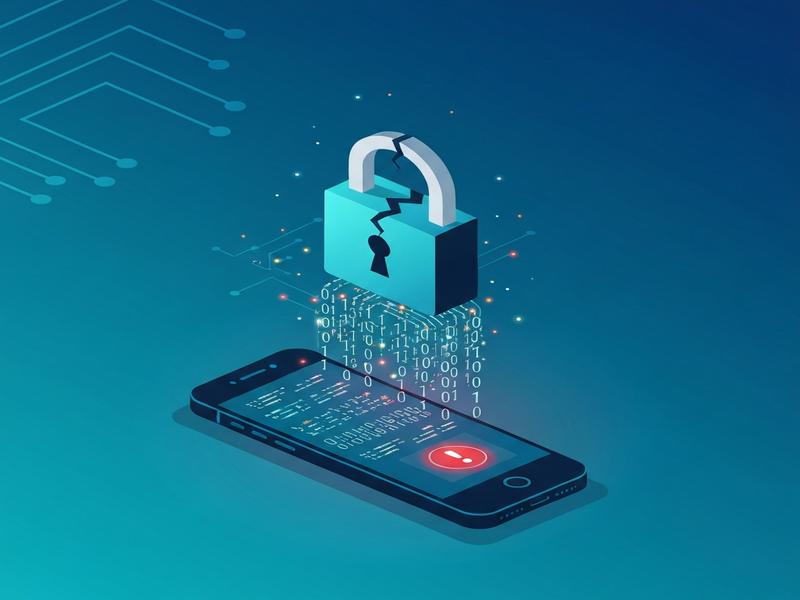
Odido, the Dutch telecom giant, confirmed a massive data breach that exposed personal information of more than 6.2 million customers, making it one of the largest telecom security incidents in Europe this year.
Odido Data Breach: What Happened, Who Was Affected, and What It Means for Telecom Security
On February 13, 2026, Odido announced that unidentified hackers infiltrated its customer‑contact system and extracted a trove of sensitive data. The breach, which also impacted its subsidiary Ben NL, has sent shockwaves through the telecom sector and raised fresh concerns about privacy, regulatory compliance, and the growing sophistication of cyber‑espionage groups targeting communication providers.
Key Takeaway
- Over 6.2 million Dutch residents had their personal data compromised.
- Stolen data includes names, phone numbers, addresses, dates of birth, IBANs, and government‑issued ID details.
- Odido’s core network services (voice, internet, TV) remained operational.
- The breach underscores the urgent need for stronger telecom security measures across Europe.
Who Was Affected and What Data Was Leaked?
Odido’s statement to Dutch media indicated that the breach impacted roughly one‑third of the Netherlands’ population. Both current subscribers and former customers who used Odido or Ben NL services within the past two years are included in the affected pool.
Personal Information Compromised
The hackers accessed the following data fields:
- Full name
- Mobile and landline phone numbers
- Postal and email addresses
- Date of birth
- Bank account numbers (IBAN)
- Government‑issued ID numbers (passport, driver’s licence) and their validity dates
Crucially, the breach did not include call‑record logs, real‑time location data, billing statements, or scanned images of IDs, which mitigates some of the potential damage.
Business Customers Remain Unaffected
Odido emphasized that corporate accounts were excluded from the compromised dataset. The intrusion was limited to the consumer‑facing contact database, leaving enterprise services untouched.
Odido’s Immediate Response and Ongoing Mitigation
Following discovery of the breach, Odido launched a multi‑phase response plan designed to contain the incident, notify affected users, and reinforce its security posture.
Containment and Investigation
- All external access to the compromised contact system was revoked within 24 hours.
- An independent forensic firm was engaged to trace the intrusion vector and assess the scope of data exfiltration.
- Odido’s internal security team began a full audit of privileged accounts and API keys.
Customer Notification and Support
Customers received email alerts outlining the breach, recommended steps to protect their identities, and a dedicated hotline for further assistance. Odido also offered free enrollment in a credit‑monitoring service for one year.
Long‑Term Security Enhancements
To prevent recurrence, Odido announced several strategic upgrades:
- Implementation of zero‑trust network architecture across all internal services.
- Deployment of AI‑driven anomaly detection via the Enterprise AI platform by UBOS, enabling real‑time threat hunting.
- Adoption of multi‑factor authentication (MFA) for all privileged accounts.
- Regular penetration testing in partnership with external security firms.
What This Breach Means for the Telecom Industry
The Odido incident is part of a broader wave of attacks targeting telecom operators worldwide. Recent disclosures have linked state‑backed groups—such as the China‑affiliated “Salt Typhoon”—to systematic espionage campaigns against phone carriers in Canada, Norway, the United Kingdom, and the United States.
Regulatory Pressure Is Intensifying
European regulators are tightening data‑protection requirements under the GDPR. Companies that fail to demonstrate robust security controls risk hefty fines and reputational damage. The About UBOS team notes that “privacy‑by‑design” is becoming a mandatory clause in new telecom contracts.
AI as a Double‑Edged Sword
While AI can accelerate threat detection, it also equips adversaries with sophisticated tools for credential stuffing and social engineering. Leveraging the AI marketing agents platform, telecoms can automate phishing‑resistance training for employees, reducing human error.
The Rise of Integrated Security Suites
Modern telecom operators are moving toward unified security stacks that combine SIEM, SOAR, and AI analytics. UBOS’s Workflow automation studio enables rapid orchestration of incident‑response playbooks, cutting mean‑time‑to‑contain (MTTC) from days to minutes.
Expert Opinions on the Odido Breach
“The scale of the Odido breach illustrates that even well‑funded telcos are vulnerable when legacy contact systems remain unpatched,” says Dr. Lina Verhoeven, senior analyst at the European Cybersecurity Institute.
Dr. Verhoeven adds that “adopting zero‑trust models and AI‑enhanced monitoring is no longer optional—it’s a regulatory expectation.”
“Customers often underestimate the risk of identity theft from exposed IBANs and passport numbers. Telecoms must treat this data with the same rigor as financial institutions,” remarks Marco De Luca, chief security officer at a leading Dutch bank.
How You Can Strengthen Your Own Data Protection Strategy
If you’re a business professional or a tech‑savvy consumer, consider the following actionable steps:
- Enable multi‑factor authentication on all personal and work accounts.
- Regularly review your credit reports and set up fraud alerts.
- Adopt AI‑powered security tools—such as the OpenAI ChatGPT integration—to automate phishing detection.
- Leverage the AI SEO Analyzer to audit your own web assets for data leakage.
- Explore the UBOS templates for quick start to build secure internal dashboards without writing code.
For startups looking to embed security from day one, the UBOS for startups program offers a sandboxed environment with built‑in compliance checks.
SMBs can benefit from the UBOS solutions for SMBs, which include pre‑configured data‑encryption modules and automated incident‑response workflows.
Enterprises seeking a holistic AI‑driven security platform should explore the Enterprise AI platform by UBOS, which integrates threat intelligence, user behavior analytics, and compliance reporting.
Ready to see how AI can protect your data? Try the AI Article Copywriter to generate security policies, or experiment with the AI Chatbot template for 24/7 user support.
Further Reading
For a detailed investigative report, see the original coverage by TechCrunch. The article provides additional context on the hacking group suspected of orchestrating the attack.
Bottom Line
The Odido data breach serves as a stark reminder that telecom operators hold a treasure trove of personal data, making them prime targets for sophisticated cyber‑espionage campaigns. By embracing zero‑trust architectures, AI‑enhanced monitoring, and proactive customer communication, companies can mitigate risk and restore trust.
Stay informed, stay protected, and consider leveraging modern AI platforms—like those offered by UBOS—to future‑proof your security strategy.
Andrii Bidochko
CTO UBOS
Andrii Bidochko is an AI entrepreneur and researcher focused on AI agents, reinforcement learning, and autonomous systems. He writes about the technologies shaping the future of machine intelligence, from frontier models and agent architectures to real-world AI applications.