

- Updated: February 4, 2026
- 7 min read
Roblox Unveils Real‑Time Dreaming AI World Model: A New Era for Gaming AI
Roblox’s “real‑time dreaming” is an AI‑powered world model that enables creators to generate and modify immersive 3D experiences instantly using natural‑language prompts.
Introduction
In early February 2026, Roblox announced a bold new research initiative called real‑time dreaming. The concept promises to let developers and hobbyists alike conjure entire game worlds, objects, and narrative events on the fly, simply by typing or speaking a prompt. This move arrives just days after Google unveiled Project Genie, a generative AI system that also creates 3D scenes from text. Both platforms are racing to redefine how interactive content is built, but Roblox’s approach is uniquely tied to its massive creator ecosystem and its vision of “4D creation” – a blend of 3D visuals with real‑time interactivity.
For readers who follow the latest AI breakthroughs in gaming, this article breaks down the technical underpinnings of Roblox’s real‑time dreaming, compares it with Google’s offering, captures industry sentiment, and looks ahead to the upcoming 4D creation tools that could reshape the future of user‑generated content.
What Is Roblox’s Real‑Time Dreaming AI World Model?
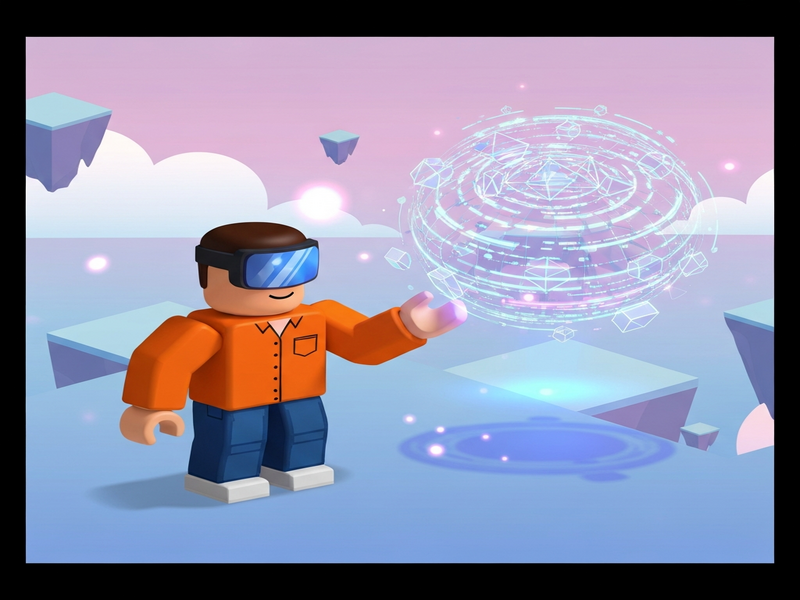
Roblox describes real‑time dreaming as a “research‑stage AI world model that translates natural‑language prompts into mutable 3D assets, environments, and behaviors without leaving the editor.” In practice, creators type a command such as “add a snowy mountain with a hidden cave” and the system instantly spawns the terrain, textures, and collision meshes, ready for immediate testing.
Core Technology and Workflow
- Large‑scale diffusion model: Trained on billions of Roblox assets, the model learns the statistical relationships between textual descriptors and 3D geometry.
- Neural scene representation: Instead of exporting static meshes, the AI produces a latent scene graph that can be edited in real time, allowing on‑the‑fly adjustments.
- Prompt‑to‑action pipeline: Natural‑language input is parsed, mapped to a set of procedural generation rules, and executed within Roblox’s existing physics engine.
- Feedback loop: Creators can refine results by iterating prompts (“make the mountain taller”) or by providing visual feedback (selecting generated objects for fine‑tuning).
Key Capabilities
- Instant world building: Entire landscapes, structures, and NPCs appear within seconds.
- Dynamic modification: Existing scenes can be altered without re‑exporting assets, supporting live events and rapid prototyping.
- Cross‑modal integration: Voice commands, chat inputs, and even image references can trigger generation, thanks to multimodal training.
- Collaborative editing: Multiple creators can issue prompts simultaneously, with the AI reconciling changes in a shared session.
Roblox’s senior vice‑president of engineering, Anupam Singh, emphasized that the system is still experimental: “If you can dream it, you should be able to bring it to life,” he wrote in a recent blog post. The company is positioning the technology as a catalyst for its creator community rather than a replacement for traditional game development pipelines.
How It Stacks Up Against Google’s Project Genie
Both Roblox’s real‑time dreaming and Google’s Project Genie aim to democratize 3D content creation through generative AI, yet they diverge in scope, integration, and target audience.
Similarities
- Use of large diffusion models trained on extensive 3D datasets.
- Natural‑language to 3D conversion as the primary interaction mode.
- Focus on lowering the technical barrier for non‑programmers.
Differences
| Aspect | Roblox Real‑Time Dreaming | Google Project Genie |
|---|---|---|
| Platform Integration | Built directly into Roblox Studio; leverages existing asset marketplace. | Standalone web‑based sandbox; requires export to game engines. |
| Real‑time Editing | Supports live modifications during gameplay or testing. | Primarily static scene generation; no live editing. |
| Target Audience | Mass‑market creator community (ages 13+). | Professional developers and designers. |
| Monetization Model | Free during research phase; future revenue via premium assets. | Paid API usage and enterprise licensing. |
While Project Genie excels at high‑fidelity asset generation for seasoned developers, Roblox’s strength lies in its seamless integration with a platform that already hosts millions of user‑generated games. This distinction could determine which tool gains broader adoption among hobbyist creators.
Industry Reactions and Expert Opinions
Reactions have been a mix of excitement and cautious skepticism. Below are selected viewpoints from analysts, developers, and legal experts.
“Real‑time dreaming could be a game‑changer for the creator economy, but the quality‑control pipeline will be crucial,” says Dr. Maya Patel, senior analyst at TechFuture Research.
“Google’s Genie is impressive technically, yet it still feels like a prototype. Roblox’s approach, embedded in a live platform, may deliver immediate user value,” notes James Liu, lead engineer at PlayForge Studios.
“We must watch for copyright implications. Both companies are training on massive user‑generated datasets, which could raise legal challenges,” warns Laura Chen, IP counsel at Digital Rights Law Group.
Many developers echo the sentiment that AI should augment, not replace, creative judgment. As Karun Channa, senior director of product at Roblox, put it, “We don’t see a model replacing the creative part; it’s a tool that amplifies imagination.”
For a broader perspective on how AI is reshaping the gaming sector, explore our gaming AI hub, which tracks similar innovations across the industry.
Future Implications and the Upcoming 4D Creation Tools
Roblox’s roadmap extends beyond text‑to‑world generation. The company announced an open beta for “4D creation” tools that let players summon interactive objects directly within a game session.
What 4D Creation Means for Developers
- Object‑level prompting: Users can type “spawn a hovercraft” and receive a fully rigged, physics‑enabled vehicle ready to drive.
- Live gameplay integration: Generated assets become part of the physics simulation instantly, enabling emergent gameplay.
- Iterative design loops: Developers can prototype mechanics by having testers generate assets on the fly, shortening development cycles.
Potential Use‑Cases
- Education & Training: Teachers could create custom simulations in real time for STEM lessons.
- Live Events: Streamers might trigger audience‑driven world changes during broadcasts.
- Rapid Prototyping: Indie studios can test level concepts without manual asset creation.
These capabilities align with a broader industry trend toward “generative pipelines,” where AI assists at every stage—from concept art to final code. Companies like Unity and Epic Games are also experimenting with similar workflows, suggesting a convergence toward AI‑first development environments.
For readers interested in how AI platforms like UBOS are enabling comparable workflows, see our AI news section, which regularly covers emerging generative tools for creators.
Conclusion: What This Means for the Gaming AI Landscape
Roblox’s real‑time dreaming initiative signals a decisive shift from static asset libraries to dynamic, prompt‑driven world building. While still in research, the technology already demonstrates that AI can act as a co‑author, instantly translating imagination into playable environments. Compared with Google’s Project Genie, Roblox offers tighter integration with an existing creator ecosystem and real‑time editability—features that could accelerate adoption among hobbyists and smaller studios.
However, success will hinge on three factors:
- Quality control: Maintaining visual fidelity and performance at scale.
- Legal safeguards: Addressing copyright concerns inherent in training on user‑generated content.
- Community trust: Providing transparent tools that empower rather than replace creators.
As the line between AI and traditional development blurs, platforms that blend seamless integration, robust moderation, and genuine creative empowerment—like Roblox and emerging solutions from UBOS—are poised to lead the next wave of interactive experiences.
Stay tuned for updates on the open beta of 4D creation tools and further refinements to real‑time dreaming. The future of gaming AI is being written in real time, and developers who master prompt‑driven workflows will have a distinct competitive edge.
For the original announcement and demo video, refer to the report on The Verge.