

- Updated: January 28, 2026
- 6 min read
Amazon CEO Andy Jassy Says Tariffs Are Creeping Into Pricing, Impacting Consumers
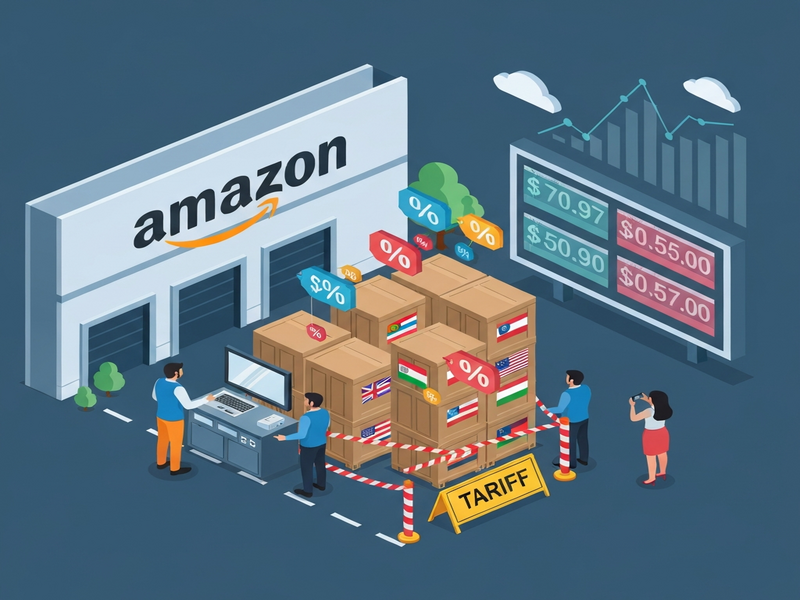
Amazon’s CEO Andy Jassy confirmed that newly‑imposed tariffs are already “creeping into” the prices of millions of items on the platform, signaling a shift that will affect both shoppers and third‑party sellers across the e‑commerce ecosystem.
Introduction: Tariffs Meet the World’s Largest Marketplace
In a candid interview with CNBC, Andy Jassy disclosed that the inventory Amazon and its third‑party sellers stocked in early 2025 to shield customers from price spikes has largely been depleted. As a result, “you start to see some of the tariffs creep into some of the prices.” This admission follows a recent study by the Kiel Institute, which found that 96 % of tariff costs are passed on to U.S. consumers. For tech‑savvy shoppers and business professionals tracking e‑commerce pricing, the news marks a pivotal moment where trade policy directly reshapes the digital storefront.
Understanding how these tariffs translate into price changes on Amazon requires a look at supply‑chain dynamics, seller strategies, and broader economic trends. Below, we break down the mechanics, compare Amazon’s response with other retailers, and explore what this means for your next purchase.
CEO Andy Jassy’s Statements – What He Actually Said
“Some sellers are deciding that they’re passing on those higher costs to consumers in the form of higher prices. Some are deciding that they’ll absorb it to drive demand.” – Andy Jassy, CNBC interview, Jan 2026.
Jassy emphasized two key points:
- Inventory purchased before the tariff wave is exhausted, removing a price‑buffer.
- Seller decisions now hinge on cost‑absorption versus price‑pass‑through, creating a mixed‑price environment.
He also noted the impact of the “de‑minimis” loophole closure, which eliminated duty‑free entry for low‑value goods, further tightening margins for both Amazon and its marketplace partners.
How Tariffs Are Influencing Product Prices on Amazon
The tariff mechanism works through three primary channels:
- Direct cost increase: Imported goods face additional duties, raising the landed cost for sellers.
- Inventory depletion: Amazon’s pre‑purchased stock, which previously insulated shoppers, is now exhausted, exposing the full tariff impact.
- Seller pricing strategies: Vendors decide whether to absorb the cost, shift it to consumers, or adjust product mix.
For example, a popular electronics accessory that previously sold for $19.99 may now appear at $21.49 after a 7 % tariff is applied and the seller opts to pass the cost forward. Conversely, a niche home‑goods item might retain its price if the seller believes a higher price would deter demand.
UBOS platform overview shows how AI‑driven pricing engines can help sellers model these cost shifts in real time, balancing competitiveness with margin protection.
Broader Economic Implications for Consumers and Sellers
The ripple effects extend beyond the checkout page:
Consumer Impact
- Higher average basket values, especially for imported categories like electronics, apparel, and toys.
- Potential shift toward domestic alternatives, boosting U.S. manufacturers.
- Increased price volatility as sellers experiment with promotional tactics to retain market share.
Seller Impact
- Margin compression for low‑margin sellers, prompting automation adoption.
- Strategic inventory planning—many are turning to AI‑powered tools like Workflow automation studio to forecast tariff‑driven cost changes.
- Greater reliance on multi‑channel distribution to offset Amazon‑specific price pressures.
Companies that already leverage AI for pricing, such as those using AI marketing agents, are better positioned to react swiftly, preserving both sales velocity and profitability.
Comparison with Other Retailers and Historical Tariff Effects
Amazon is not alone in feeling the tariff pinch. Historical data from the 2018‑2019 trade wars reveal similar patterns across major retailers:
| Retailer | Tariff Response | Price Change (Avg.) |
|---|---|---|
| Walmart | Increased private‑label sourcing | +2‑4 % |
| Target | Selective price hikes on electronics | +3‑5 % |
| Best Buy | Promotional discounts to mask costs | +1‑2 % |
Compared with these peers, Amazon’s scale amplifies the effect: a broader product assortment and a higher proportion of third‑party sellers mean the tariff impact is more diffused but also more visible across categories.
Historically, when tariffs were introduced in 2018, the original Verge article highlighted a similar “creeping” phenomenon, but at that time the price adjustments were modest. Today’s higher duty rates and the removal of the de‑minimis exemption have accelerated the pass‑through.
What This Means for Shoppers Moving Forward
For the everyday buyer, the tariff‑driven price shift translates into actionable steps:
- Track price history: Use tools like AI SEO Analyzer or browser extensions that log price fluctuations.
- Leverage coupons and Subscribe & Save: These programs can offset modest increases.
- Consider domestic alternatives: Products made in the U.S. are exempt from most import tariffs.
- Watch for “Lightning Deals”: Sellers often use limited‑time promotions to maintain volume while absorbing costs.
Businesses that sell on Amazon should also revisit their cost structures. Integrating AI Article Copywriter for product descriptions can improve conversion rates, helping offset higher acquisition costs.
Conclusion: Navigating a Tariff‑Sensitive Marketplace
Andy Jassy’s acknowledgment that tariffs are “creeping into” Amazon pricing is more than a headline—it’s a signal that trade policy now directly shapes the digital shopping experience. While some sellers will absorb costs to stay competitive, many will pass them on, leading to a patchwork of price adjustments across categories.
Shoppers can mitigate the impact by staying informed, using price‑tracking tools, and exploring domestic alternatives. Sellers, meanwhile, should adopt AI‑driven pricing and automation solutions—such as the Web app editor on UBOS and Enterprise AI platform by UBOS—to stay agile in a volatile cost environment.
For a deeper dive into how AI can future‑proof your e‑commerce strategy, explore our UBOS pricing plans and see how the UBOS partner program can accelerate your growth.
Further Reading & Tools from UBOS
- About UBOS – Our mission to empower AI‑first businesses.
- UBOS solutions for SMBs – Tailored AI tools for small and medium enterprises.
- UBOS for startups – Accelerate product launch with AI templates.
- UBOS portfolio examples – Real‑world case studies of AI integration.
- UBOS templates for quick start – Jump‑start your AI projects.
- AI Video Generator – Create marketing videos at scale.
- AI LinkedIn Post Optimization – Boost B2B engagement.