

- Updated: January 24, 2026
- 6 min read
Milk‑V Titan Mini‑ITX Board Launches RISC‑V Ecosystem with UR‑DP1000 Processor
The Milk‑V Titan Mini‑ITX board with the UR‑DP1000 processor is a groundbreaking RISC‑V motherboard that brings affordable, high‑performance DIY PC building to hobbyists, developers, and engineers looking for an open‑source hardware platform.
In a market dominated by x86 and ARM solutions, Milk‑V’s latest offering stands out by delivering a fully‑featured Mini‑ITX board powered by an eight‑core Ultra‑RISC UR‑DP1000 CPU. Whether you’re assembling a compact workstation, a development sandbox, or a prototype for an edge‑AI device, the Titan board promises a blend of flexibility, low power consumption, and a price point that makes RISC‑V experimentation truly accessible.
For a deeper dive into the specifications and real‑world performance, you can read the original Tom’s Hardware article.
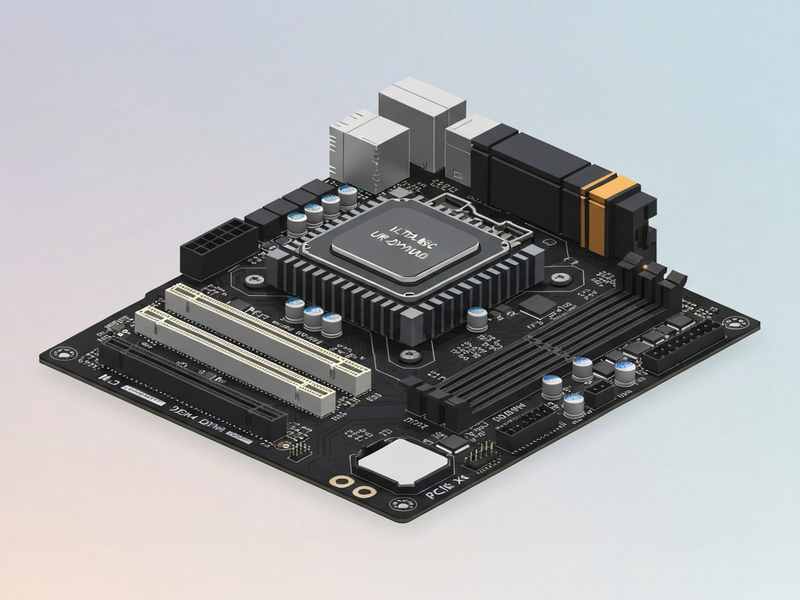
Overview of Milk‑V Titan Mini‑ITX Board Specifications
The Titan board follows a clean Mini‑ITX form factor (17 × 17 cm) while packing a surprising amount of connectivity and expandability. Below is a concise breakdown of its core components.
Core Processor – UR‑DP1000
- Eight cores organized into four dual‑cluster cores.
- 4 MiB L2 cache per cluster, 16 MiB shared L3 cache.
- Base clock of 2 GHz, built on the 7 nm process node.
- Full compliance with the RVA‑22 instruction set and partial RVA‑23 support (excluding the vector extension).
- Hardware virtualization (VT‑RISC‑V) for hypervisor‑based workloads.
Memory, Storage, and Connectivity
- Two DDR4 DIMM slots, supporting up to 64 GB at 3200 MT/s (dual‑channel).
- One M.2 2280 slot (PCIe 4.0 x4) for NVMe SSDs.
- Gigabit Ethernet RJ45 port with optional PoE support.
- USB‑A (2 × 3.0) and USB‑C (1 × 3.1 Gen 2) ports.
- Dedicated BMC (Baseboard Management Controller) for out‑of‑band management.
Expansion and Debugging Features
- PCIe 4.0 x16 slot (electrically x16) for discrete graphics or accelerator cards.
- 3‑pin UART header and USB‑C debug port for low‑level CPU debugging.
- No integrated GPU; users must install a compatible graphics card (Radeon 7000 series works well today).
- Audio is omitted, but USB audio adapters are fully supported.
- Power consumption: ~14 W idle, ~45 W under moderate load.
Significance for the RISC‑V Ecosystem
The RISC‑V community has long awaited a mainstream, ready‑to‑use Mini‑ITX board that bridges the gap between research‑grade development kits and consumer‑grade hardware. The Milk‑V Titan does exactly that, and its impact can be measured across three key dimensions.
Accelerating Adoption
By offering a complete motherboard kit at a sub‑$300 price (pre‑order discount applied), the Titan lowers the financial barrier for universities, makerspaces, and independent developers. This democratization fuels a larger pool of contributors to the RISC‑V software stack, from Linux kernel patches to AI inference frameworks.
Developer‑Friendly Environment
The board’s built‑in BMC and debug ports enable remote management and low‑level troubleshooting without additional hardware. Coupled with the ability to run mainstream Linux distributions (Ubuntu, Debian, Fedora) out of the box, developers can focus on application code rather than board bring‑up.
Compatibility with Existing Tools
Milk‑V has partnered with several open‑source projects to ensure that toolchains like OpenAI ChatGPT integration and Chroma DB integration run smoothly on the Titan. This synergy means you can prototype AI‑driven edge applications directly on the board, leveraging UBOS’s low‑code environment.
Pricing, Availability and Purchase Options
Pre‑order Details
The official pre‑order runs through Arace Tech’s storefront. The standard retail price is $329 (≈ 288 €), but a limited‑time $50 discount reduces the cost to $279 for early adopters. Shipping is currently limited to North America, Europe, and selected Asian markets, with an estimated delivery window of 2‑4 weeks after order confirmation.
Where to Buy
You can secure your unit directly from the UBOS homepage, where the board is featured under the “Hardware” section. For bulk purchases or enterprise licensing, the UBOS partner program offers volume discounts and priority support.
Cost Comparison
| Platform | CPU | RAM Support | Price (USD) |
|---|---|---|---|
| Milk‑V Titan | UR‑DP1000 (8‑core RISC‑V) | Up to 64 GB DDR4 | $279 (pre‑order) |
| Raspberry Pi 5 (Mini‑ITX‑style) | Broadcom BCM2712 (ARM) | Up to 8 GB LPDDR4X | $75 (board only) |
| ASRock B550M‑ITX/ax | AMD Ryzen 5 5600X (x86) | Up to 64 GB DDR4 | $149 (board only) |
Comparison with Competing Platforms
Against x86 Mini‑ITX Boards
Traditional x86 Mini‑ITX boards, such as those based on Intel’s 12th‑gen or AMD’s Ryzen series, excel in raw performance and have mature driver ecosystems. However, they come at a higher price point and lock developers into proprietary instruction sets. The Milk‑V Titan, by contrast, offers an open ISA, enabling custom extensions and lower licensing fees—critical for startups and research labs.
Against ARM‑Based Mini‑PCs
ARM solutions like the Raspberry Pi 5 provide excellent power efficiency but are limited to 8 GB of RAM and lack PCIe x16 lanes for discrete GPUs. The Titan’s PCIe 4.0 x16 slot opens the door to high‑performance graphics or AI accelerators, making it a more versatile platform for AI‑heavy workloads while still maintaining a modest power envelope.
Feature‑by‑Feature Table
| Feature | Milk‑V Titan | Typical x86 Mini‑ITX | Typical ARM Mini‑PC |
|---|---|---|---|
| CPU Architecture | RISC‑V (UR‑DP1000) | x86‑64 (Intel/AMD) | ARMv8‑A |
| PCIe Slots | 1 × PCIe 4.0 x16 | 1 × PCIe 3.0 x4 (typical) | None |
| Maximum RAM | 64 GB DDR4 | 64 GB DDR4/DDR5 | 8 GB LPDDR4X |
| Open‑Source ISA | Yes | No | Partial (ARM licensing) |
| Price (Board Only) | $279 (pre‑order) | $149‑$199 | $75 |
Real‑World Use Cases Powered by UBOS
The Milk‑V Titan’s open architecture pairs naturally with UBOS’s low‑code AI platform. Below are a few scenarios where developers can accelerate time‑to‑value:
- Deploy an AI marketing agent that scrapes social media trends and generates real‑time ad copy directly on the board.
- Build a voice‑enabled chatbot using the ElevenLabs AI voice integration for on‑premise customer support.
- Run a local Chroma DB integration to store and query embeddings for fast semantic search.
- Create a custom workflow with the Workflow automation studio that triggers edge‑AI inference whenever new sensor data arrives.
These examples illustrate how the Titan can become the hardware backbone of a full‑stack AI solution without requiring a cloud subscription, preserving data sovereignty and reducing latency.
Conclusion and Call to Action
The Milk‑V Titan Mini‑ITX board with the UR‑DP1000 processor marks a pivotal moment for the RISC‑V community. By delivering a production‑ready, affordable, and feature‑rich platform, it empowers developers to move from simulation to real hardware faster than ever before. Whether you are a startup looking to prototype an AI‑driven edge device, an educator seeking a hands‑on RISC‑V teaching kit, or a hobbyist eager to experiment with open‑source silicon, the Titan offers a compelling proposition.
Ready to start building? Visit the UBOS portfolio examples for inspiration, explore the UBOS templates for quick start, and secure your Milk‑V Titan today through the UBOS homepage.
Stay ahead of the hardware curve—join the RISC‑V revolution with Milk‑V and UBOS, and turn your next DIY PC into a powerful, open‑source AI engine.
Learn more about UBOS’s broader ecosystem: About UBOS, UBOS platform overview, UBOS for startups, UBOS solutions for SMBs, Enterprise AI platform by UBOS, Web app editor on UBOS, and UBOS pricing plans.