

- Updated: January 18, 2026
- 7 min read
BugBot: Autonomous AI‑Powered Code Review Agent Transforms Development
BugBot is an autonomous AI‑powered code‑review agent that automatically scans pull requests for logic bugs, performance bottlenecks, and security vulnerabilities, achieving a resolution‑rate above 70 % and continuously improving through agentic architecture and hill‑climbing experiments.
Introduction: Why BugBot Matters for Modern Development Teams
In an era where AI automation is reshaping software delivery, developers need tools that can keep pace with rapid code changes. Cursor’s original blog post introduced BugBot as a breakthrough in autonomous debugging, but the story has evolved dramatically since its first prototype. This article walks you through BugBot’s journey—from a modest experiment to a production‑grade agent that now reviews millions of pull requests each month—while highlighting how its evolution aligns with broader trends in autonomous agents and AI‑driven quality assurance.
Origins: The Humble Beginnings of BugBot
BugBot started as a curiosity project in late 2024. The initial goal was simple: detect obvious syntax errors in pull requests using the then‑available language models. Early prototypes suffered from high false‑positive rates and limited context awareness, making them more of a nuisance than a help.
Key lessons from this phase included:
- Model capacity matters—early models lacked the depth to understand complex control flow.
- Parallel analysis improves signal strength—running multiple passes with varied diff ordering surfaced different reasoning paths.
- Human‑in‑the‑loop feedback is essential for rapid iteration.
These insights laid the groundwork for a systematic redesign that would later incorporate majority voting across parallel passes, dramatically reducing noise and setting the stage for production readiness.
From Prototype to Production: Milestones and Metrics
Transitioning BugBot from a lab experiment to a reliable service required three core pillars:
- Robust infrastructure: The team rewrote the Git integration in Rust, slashing latency and enabling efficient batch fetching of diffs.
- Scalable architecture: Rate‑limit monitoring, request throttling, and proxy‑based routing ensured compliance with GitHub’s API limits.
- Custom rule engine: Teams could now encode repository‑specific invariants (e.g., unsafe migrations) without hard‑coding them into BugBot.
Version 1 launched in July 2025, followed by rapid iterations. By January 2026, Version 11 was live, delivering a resolution‑rate increase from 52 % to over 70 % and raising the average bugs flagged per run from 0.4 to 0.7. This translates to more than double the number of bugs actually fixed per pull request.
Measuring What Matters: The Resolution‑Rate Metric
Without a quantitative signal, improvements were speculative. The team invented the resolution‑rate metric, which uses a secondary AI model to verify, at merge time, whether a bug reported by BugBot was truly resolved in the final code. Spot‑checks with engineers confirmed >95 % accuracy.
Why resolution‑rate matters:
- It provides a clear, objective KPI for product managers.
- It enables hill‑climbing—systematic, data‑driven experimentation.
- It builds trust with engineering teams, turning BugBot from a noisy bot into a valued reviewer.
The metric is now a centerpiece of the BugBot dashboard, allowing teams to track progress over weeks, months, or entire release cycles.
Hill‑Climbing Experiments: From Intuition to Data‑Driven Gains
Armed with resolution‑rate, the team launched over 40 controlled experiments, each tweaking a single variable—model version, prompt style, number of parallel passes, validator thresholds, or toolset composition. The process followed a classic MECE (Mutually Exclusive, Collectively Exhaustive) framework:
| Experiment Category | Key Change | Result (Δ Resolution‑Rate) |
|---|---|---|
| Model Upgrade | Switch to GPT‑4‑Turbo | +4.2 % |
| Prompt Aggressiveness | Add “investigate every suspicious pattern” | +3.1 % |
| Validator Model | Introduce secondary LLM for false‑positive filtering | +2.5 % |
Many experiments, surprisingly, regressed performance—reinforcing the value of a hard metric over gut feeling.
Shift to an Agentic Architecture: The Game‑Changer
In late 2025, the team replaced the static pipeline with a fully agentic design. Instead of a fixed sequence of passes, the BugBot agent now:
- Analyzes the diff holistically.
- Calls external tools (e.g., static analyzers, test runners) on demand.
- Iteratively refines its hypothesis, pulling in additional context only when needed.
This dynamic loop unlocked two major benefits:
- Higher recall: The agent can dive deeper into complex code paths, catching bugs that static passes missed.
- Lower false positives: By validating findings with tool‑backed evidence, the system self‑corrects.
Prompt engineering also evolved. Early versions used conservative prompts to avoid noise; the agentic era flipped the script, employing aggressive prompts that encourage exhaustive exploration, then relying on the validator to prune excess.
Future Roadmap: Autofix, Continuous Scanning, and Model Improvements
BugBot’s journey is far from over. The roadmap focuses on three pillars:
1. BugBot Autofix (Beta)
Autofix spawns a lightweight cloud agent that automatically generates a patch for verified bugs, submits a pull request, and awaits reviewer approval. Early trials show a time‑to‑resolution reduction of 40 % for low‑complexity issues.
2. Always‑On Continuous Scanning
Instead of waiting for a PR, BugBot will monitor the entire repository in near‑real‑time, flagging regressions as soon as they land on the main branch. This proactive stance aims to catch “snowball” bugs before they propagate.
3. Model‑Agnostic Harness Design
Future releases will support a plug‑and‑play model hub, allowing teams to swap in specialized LLMs (e.g., code‑focused Claude, Gemini) without code changes. This flexibility ensures BugBot stays ahead of the rapid AI model evolution curve.
Illustration: Visualizing BugBot’s Evolution
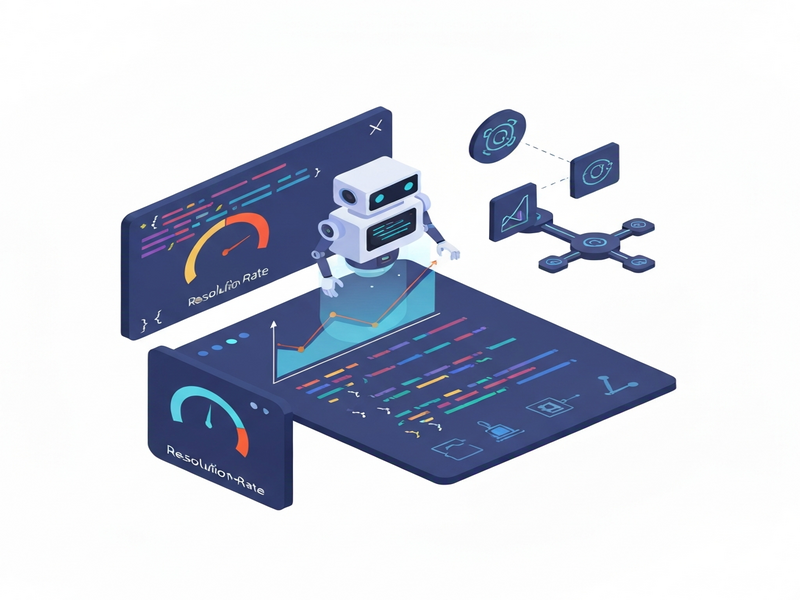
The diagram above captures the key phases—from early prototype, through production rollout, to the agentic architecture that powers today’s Autofix beta.
Related UBOS AI Solutions for Developers and Product Teams
While BugBot showcases the power of autonomous agents in code review, UBOS offers a broader ecosystem of AI‑driven tools that can complement or extend your development workflow.
- UBOS homepage – the central hub for all UBOS AI products.
- About UBOS – learn about the team behind the platform.
- UBOS platform overview – a deep dive into the modular architecture that powers AI agents.
- AI solutions – a catalog of ready‑to‑use AI services, from text generation to vision.
- AI marketing agents – automate campaign creation, copywriting, and performance analysis.
- UBOS partner program – collaborate with UBOS to co‑create AI solutions.
- UBOS for startups – fast‑track AI adoption with low‑cost plans.
- UBOS solutions for SMBs – scalable AI tools for growing businesses.
- Enterprise AI platform by UBOS – enterprise‑grade security, compliance, and governance.
- Web app editor on UBOS – build custom AI‑enhanced web apps without writing boilerplate code.
- Workflow automation studio – orchestrate multi‑step AI pipelines with a visual canvas.
- UBOS pricing plans – transparent pricing for every team size.
- UBOS portfolio examples – real‑world case studies of AI in action.
- UBOS templates for quick start – jump‑start projects with pre‑built AI templates.
- AI SEO Analyzer – automatically audit and improve your site’s SEO.
- AI Article Copywriter – generate high‑quality content at scale.
- AI Video Generator – turn scripts into engaging videos with a single click.
- AI Chatbot template – deploy conversational agents for support or sales.
- GPT-Powered Telegram Bot – integrate ChatGPT‑style interactions into Telegram.
Conclusion: BugBot Sets a New Standard for Autonomous Code Review
BugBot’s evolution—from a fragile prototype to a high‑performing, agentic system—demonstrates how AI automation can be systematically refined using clear metrics, hill‑climbing experiments, and modular architecture. For tech enthusiasts, AI developers, and product managers, the key takeaways are:
- Define a concrete success metric (resolution‑rate) early to guide development.
- Adopt a MECE‑based experimentation framework to isolate variables.
- Leverage agentic designs to let models call tools and fetch context dynamically.
- Plan for continuous improvement—Autofix, always‑on scanning, and model‑agnostic harnesses keep the system future‑proof.
As autonomous agents become the backbone of modern software pipelines, BugBot stands out as a benchmark for what’s possible when AI meets disciplined engineering. Explore UBOS’s broader AI suite to accelerate your own automation initiatives, and stay tuned for the next wave of BugBot enhancements that promise even faster, smarter, and more reliable code quality assurance.