

- Updated: January 18, 2026
- 7 min read
Cloudflare Anycast IP Generates Traffic from Unrealistic Global Locations – Insights and Mitigation
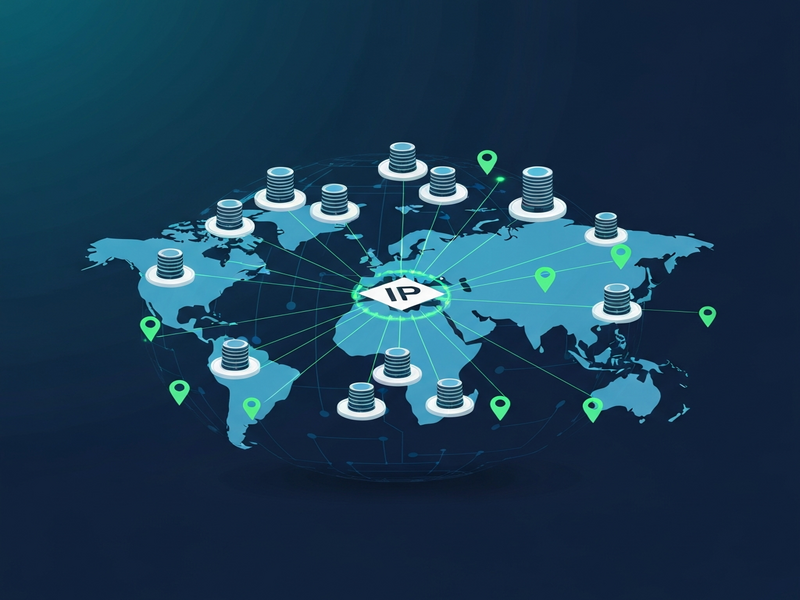
The phenomenon you’re seeing is caused by Cloudflare’s anycast routing, which can make a single IP address appear to originate from many geographic locations at once. In practice, the IP you see in your logs is often a Cloudflare edge node that forwards the request to your origin, while the true client IP is hidden in HTTP headers such as X‑Forwarded‑For or CF‑Connecting‑IP.
What the Hacker News Thread Revealed
A recent Hacker News discussion sparked curiosity when a user reported that a single IP (173.245.58.0) seemed to generate traffic from dozens of U.S. data‑center locations—Chicago, San Jose, Los Angeles, Atlanta, Dallas‑Fort Worth, Newark, Washington, Miami, Boston, and even Singapore. The user, who runs an e‑commerce site, observed hundreds of requests per day from that IP and wondered why Cloudflare would show such geographically impossible patterns.
Community members quickly identified the IP as belonging to Cloudflare’s network (Cloudflare IP list) and explained that the apparent multi‑location traffic is a classic symptom of anycast. The thread also surfaced other possible culprits—iCloud Private Relay, Apple’s WARP VPN, and generic proxy services—each of which can mask the original client location behind a Cloudflare edge node.
Anycast 101: How a Single IP Can Be Everywhere
Anycast is a routing technique where the same IP prefix is announced from multiple points of presence (PoPs) across the globe. Routers on the internet automatically select the “closest” PoP based on BGP metrics, delivering the request to the nearest edge server. Cloudflare leverages anycast for both inbound (ingress) and, to a limited extent, outbound traffic.
- Ingress anycast: All client requests to a Cloudflare‑protected domain resolve to the same IP, but the traffic lands at the nearest Cloudflare PoP.
- Egress anycast (limited): When Cloudflare’s edge servers make outbound calls (e.g., DNS queries, API calls), they may use a shared anycast range, causing the source IP to appear from many locations.
- Granularity: Cloudflare announces /24 blocks as anycast; individual /32 addresses are tied to a specific PoP, but the logs you see often aggregate the /24, making it look like the same IP is everywhere.
The result is that a single IP address can legitimately show up in traffic reports from multiple cities, which is why the Hacker News user observed the “unrealistic” distribution.
What Might Be Behind the Requests?
a) Legitimate Bot Traffic via Cloudflare
Many SEO, monitoring, and security tools run their crawlers from Cloudflare’s network. Because they use Cloudflare’s edge as a forward proxy, the origin sees the Cloudflare IP rather than the bot’s real address. These bots can generate hundreds of hits per day, especially on e‑commerce sites with product pages that are attractive for price‑scraping.
b) iCloud Private Relay & Apple WARP
Apple’s iCloud Private Relay routes user traffic through a pool of Cloudflare‑owned IPs to hide the user’s IP. The same applies to the ChatGPT and Telegram integration that can be configured to use Apple’s relay for privacy. When users enable these services, their requests appear to come from Cloudflare edge nodes scattered across the United States and even overseas.
c) VPNs, Proxies, and WARP
Commercial VPNs (e.g., Telegram integration on UBOS) and Cloudflare’s own WARP service also use anycast IP ranges. A single VPN provider can have exit nodes in many data centers, all sharing the same advertised IP block.
d) Malicious Scrapers & AI‑Powered Bots
AI‑driven scrapers often rotate through large pools of residential or datacenter proxies. When they route through Cloudflare, the origin sees the same anycast IP, making it look like a single source is generating massive traffic. Tools such as the AI SEO Analyzer can be misused for aggressive crawling if not properly throttled.
Getting to the Real Source: Header Inspection
Cloudflare injects several HTTP headers that preserve the original client IP:
| Header | Purpose |
|---|---|
CF-Connecting-IP |
Direct client IP as seen by Cloudflare. |
X-Forwarded-For |
Chain of IPs when multiple proxies are involved. |
True-Client-IP |
Alternative header for the original IP (if enabled). |
By logging these headers instead of the remote address, you can differentiate between genuine Cloudflare edge traffic and the actual visitor. Most modern web frameworks (Node, Django, Laravel) have built‑in support for extracting these values.
How to Tame the Unexpected Traffic
a) Enable Cloudflare Bot Management
Cloudflare’s AI marketing agents include a Bot Management module that classifies traffic into good bots, bad bots, and human visitors. Turning it on automatically challenges suspicious requests with JavaScript challenges or CAPTCHAs.
b) Rate Limiting & IP Reputation
Set up Rate Limiting rules for high‑frequency endpoints (e.g., product search, checkout API). Combine this with Cloudflare’s IP reputation lists to block known malicious ASNs. For example, you can block traffic from the ASN that owns the iCloud Private Relay range if it’s not needed for your audience.
c) Use Firewall Rules Based on ASN or Country
If you notice a pattern (e.g., most unwanted traffic originates from a specific ASN), create a firewall rule to drop or challenge that ASN. Cloudflare’s UI lets you filter by cf.asn or cf.ipCountry.
d) Leverage UBOS for Automated Defense
The Workflow automation studio can ingest Cloudflare logs in real time, parse the X‑Forwarded‑For header, and trigger automated actions—such as updating firewall rules or notifying a Slack channel—without writing custom code.
e) Adopt a Zero‑Trust Architecture
Combine Cloudflare’s Zero‑Trust Access with your own authentication layer. This ensures that even if a bot reaches your edge, it cannot access protected resources without a valid token.
Why UBOS Is the Perfect Companion for CDN Security
UBOS offers a suite of AI‑enhanced tools that simplify the implementation of the mitigation steps described above. Below are a few ways you can integrate UBOS into your security workflow:
- Enterprise AI platform by UBOS can analyze traffic patterns across multiple sites and suggest optimal firewall policies.
- Web app editor on UBOS lets you quickly spin up a dashboard that visualizes Cloudflare analytics in real time.
- UBOS templates for quick start include pre‑built “Bot‑Detection” and “IP‑Reputation” modules that you can drop into any Node or Python project.
- AI Article Copywriter can generate custom incident reports for security teams, saving hours of manual documentation.
- AI Survey Generator helps you collect feedback from legitimate users about false‑positive challenges.
Whether you’re a startup or an established SMB, UBOS provides a scalable path:
- UBOS for startups – fast deployment, low cost.
- UBOS solutions for SMBs – pre‑configured security stacks.
- UBOS pricing plans – transparent, pay‑as‑you‑grow.
Actionable Checklist
- Confirm Cloudflare is in front of your domain (check DNS CNAMEs).
- Log
CF-Connecting-IPandX-Forwarded-Forinstead of the raw remote address. - Enable Cloudflare Bot Management and set appropriate challenge levels.
- Configure Rate Limiting for high‑traffic endpoints (e.g.,
/search,/api). - Review Cloudflare Analytics for spikes and identify suspicious ASNs.
- Use the Workflow automation studio to auto‑update firewall rules based on log insights.
- Consider Zero‑Trust Access for admin panels and API endpoints.
- Periodically audit your About UBOS integrations to ensure they’re not unintentionally exposing your site.
Wrapping Up
The “single IP, many locations” mystery is a natural side‑effect of Cloudflare’s powerful anycast architecture. By understanding how anycast works, inspecting the proper headers, and applying targeted mitigation—especially with the help of AI‑driven platforms like UBOS—you can turn this apparent anomaly into a manageable part of your security posture.
Ready to automate your traffic analysis and fortify your site against bot abuse? Explore the UBOS partner program for exclusive resources, or dive straight into the UBOS homepage to start a free trial today.