

- Updated: November 12, 2025
- 3 min read
Google Revives Cameyo to Enable Windows Apps on ChromeOS
Google Cameyo Relaunch: Transforming ChromeOS with Cross-Platform Virtualization
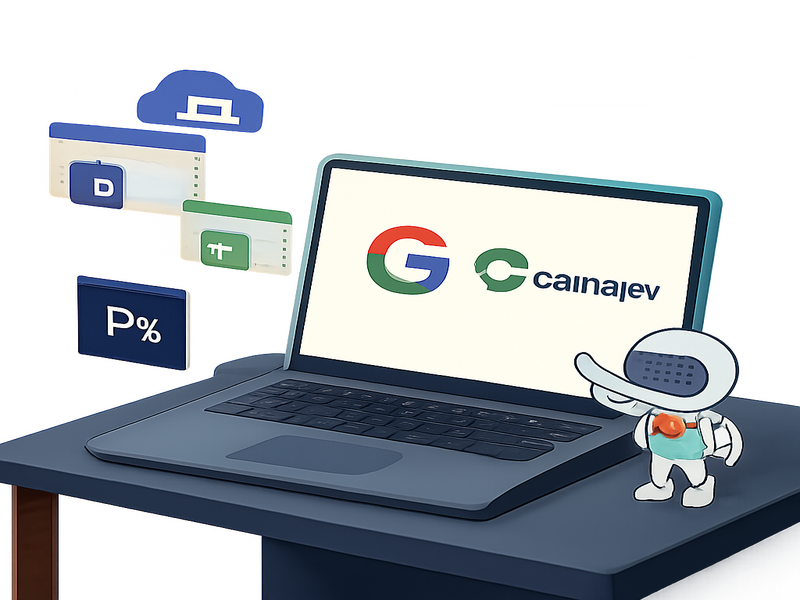
In a significant move to bridge the gap between ChromeOS and Windows applications, Google has relaunched its virtualization service, Cameyo. This strategic relaunch aims to entice businesses towards ChromeOS by offering seamless integration and compatibility with Windows-based applications.
Understanding Cameyo’s Evolution
Originally acquired by Google in 2024, Cameyo is a virtualization software designed to facilitate the use of Windows applications on non-Windows platforms. Prior to its acquisition, Cameyo had established itself as a reliable solution for organizations looking to break free from the constraints of traditional operating systems. The relaunch marks a new chapter in Cameyo’s journey, positioning it as a key player in the realm of cross-platform app solutions.
Relaunching on ChromeOS: New Capabilities
With the relaunch, Cameyo introduces a Virtual App Delivery (VAD) solution that allows users to run legacy Windows apps directly in the Chrome browser or as web apps. This innovation eliminates the need for full virtual desktop environments, offering a more efficient approach by enabling users to stream specific applications rather than entire desktops. This means applications like Excel and AutoCAD can run alongside Chrome and other web apps, providing businesses with the flexibility to utilize a mix of Microsoft and Google services.
Benefits for Users and Businesses
The integration of Cameyo into ChromeOS presents numerous benefits for both users and businesses. For enterprises, this means reduced dependency on Microsoft’s ecosystem, allowing for a more modern and collaborative productivity suite built for the web. Additionally, organizations can now access specialized Windows apps crucial to their workflows without being tied to a specific operating system.
Moreover, Chromebooks are often more cost-effective compared to traditional Windows-based hardware. As more applications transition to cloud or web-based platforms, the adoption of ChromeOS becomes increasingly attractive, especially for businesses looking to optimize costs while maintaining access to essential software.
Expert Analysis: A Strategic Move by Google
Industry experts view this relaunch as a strategic move by Google to increase ChromeOS adoption in enterprise environments. By addressing the “app gap” — the need for specific Windows applications — Google positions ChromeOS as a viable alternative to traditional operating systems. This move not only enhances Google’s ecosystem but also aligns with the broader trend of cloud computing and virtualization.
For developers and tech-savvy professionals, this development represents a significant opportunity. The ability to run Windows apps on ChromeOS without the need for additional hardware or software solutions simplifies operations and reduces overheads, making it an attractive proposition for businesses of all sizes.
Call to Action: Exploring UBOS Solutions
As the landscape of cross-platform applications evolves, businesses and developers can explore additional solutions offered by UBOS. The Telegram integration on UBOS and the OpenAI ChatGPT integration are just a few examples of how UBOS is revolutionizing the integration of AI and cloud services.
For those interested in enhancing their marketing strategies, the AI marketing agents and the Revolutionizing marketing with generative AI articles provide valuable insights into leveraging AI for business growth.
For more information on how UBOS is transforming various industries, visit the UBOS platform overview and explore the Enterprise AI platform by UBOS.
Visual Insight
Conclusion
Google’s relaunch of Cameyo for ChromeOS is a pivotal step towards enhancing cross-platform compatibility and virtualization. By addressing the long-standing “app gap” and offering a seamless integration of Windows applications, Google positions ChromeOS as a formidable contender in the enterprise space. As businesses continue to seek efficient and cost-effective solutions, Cameyo’s relaunch is set to play a crucial role in shaping the future of cloud-based computing.
For further reading on this development, visit the original article on The Verge.
Andrii Bidochko
CTO UBOS
Andrii Bidochko is an AI entrepreneur and researcher focused on AI agents, reinforcement learning, and autonomous systems. He writes about the technologies shaping the future of machine intelligence, from frontier models and agent architectures to real-world AI applications.