

- Updated: November 12, 2025
- 3 min read
Australian Spy Chief Warns Chinese Hackers of Pre‑Positioned Sabotage Threats to Critical Networks amid Taiwan Tensions
Australian Spy Chief Warns of Chinese Hackers Targeting Critical Networks
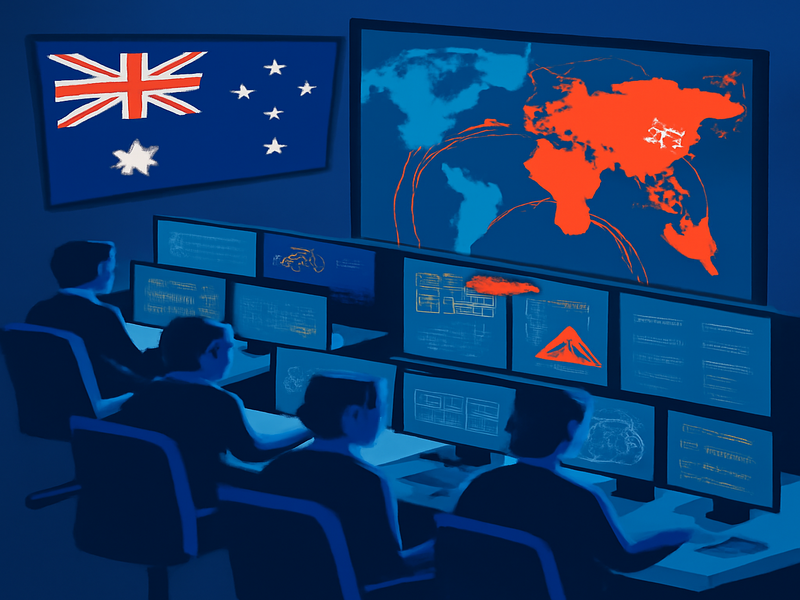
In a recent statement that has sent ripples across the cybersecurity community, Australia’s intelligence chief, Mike Burgess, has issued a stark warning about the activities of Chinese hackers. According to Burgess, these hackers are actively “probing” Australia’s critical networks, with intentions that could range from espionage to sabotage. This announcement underscores the growing threat of cyberattacks on national infrastructure and highlights the need for robust cybersecurity measures.
Understanding the Threat: Chinese Hacker Groups
The warning from Burgess specifically points to two notorious hacker groups: Volt Typhoon and Salt Typhoon. These groups are believed to be backed by the Chinese government and have been implicated in a series of cyber intrusions aimed at critical infrastructure. Volt Typhoon, in particular, has been attempting to infiltrate networks related to power, water, and transportation systems. The potential impact of these intrusions is significant, as they could lead to disruptions in energy and water supplies, causing widespread outages.
Moreover, Salt Typhoon has been targeting telecommunications infrastructure, hacking into networks of phone and internet companies to steal sensitive data. This group has reportedly breached over 200 phone and internet companies, including major players like AT&T and Verizon, raising alarms about the security of telecommunications networks worldwide.
Geopolitical Context: The China-Taiwan Tensions
The activities of these hacker groups cannot be viewed in isolation. They are part of a broader geopolitical strategy that involves tensions between China and Taiwan. The U.S. government has previously warned that these hacking campaigns are designed to disrupt responses to a potential future invasion of Taiwan by China. This geopolitical backdrop adds a layer of complexity to the cybersecurity threats faced by countries like Australia.
Implications for Australian Critical Infrastructure
The implications of these cyber threats for Australia’s critical infrastructure are profound. Successful cyberattacks could cripple essential services, leading to economic and societal disruptions. The potential for such attacks to impact national security cannot be overstated, and it highlights the need for enhanced cybersecurity measures to protect critical networks.
Expert Analysis and Recommendations
Experts in the field of cybersecurity have echoed the concerns raised by Burgess. They emphasize the importance of proactive measures to safeguard critical infrastructure. This includes investing in advanced cybersecurity technologies and fostering international cooperation to combat cyber threats. Additionally, organizations are encouraged to adopt end-to-end encryption and other security measures to protect sensitive data from being accessed by malicious actors.
Organizations can also leverage the power of AI to enhance their cybersecurity strategies. For instance, the AI-powered chatbot solutions on the UBOS platform can be integrated into existing systems to detect and respond to cyber threats in real-time, offering a robust defense against potential attacks.
Call to Action: Strengthening Cybersecurity
The warning from Australia’s spy chief serves as a wake-up call for governments and organizations worldwide to strengthen their cybersecurity measures. By investing in advanced technologies and fostering international collaboration, it is possible to mitigate the risks posed by cyber threats. For more insights on how AI is transforming cybersecurity, explore the revolutionizing AI projects with UBOS.
For further reading, you can refer to the original TechCrunch article that provides additional insights into this critical issue.
Andrii Bidochko
CTO UBOS
Andrii Bidochko is an AI entrepreneur and researcher focused on AI agents, reinforcement learning, and autonomous systems. He writes about the technologies shaping the future of machine intelligence, from frontier models and agent architectures to real-world AI applications.