

- Updated: July 12, 2025
- 5 min read
AI-Powered Avatars Transform Refugee Education
AI and Refugee Education: Pioneering New Frontiers
In the rapidly evolving landscape of technology, artificial intelligence (AI) continues to make significant strides, impacting various sectors, including education. One such intriguing development is the integration of AI in refugee education, a concept that holds the potential to revolutionize learning for displaced communities. This article delves into the recent initiatives involving AI avatars designed to educate people about refugee issues, while exploring the broader implications and ethical considerations of AI in education.
AI-Powered Avatars: A New Educational Tool
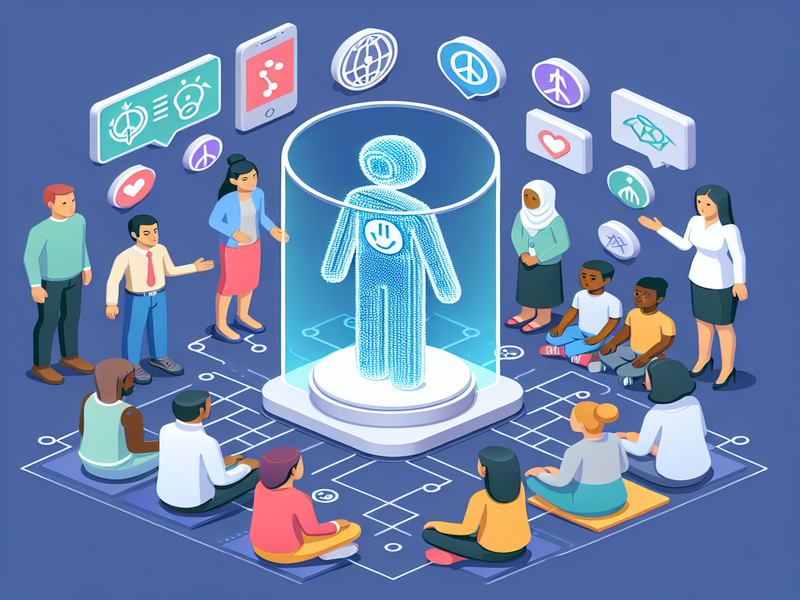
Recently, a research institute affiliated with the United Nations introduced a groundbreaking project involving AI-powered avatars. These avatars, named Amina and Abdalla, were created as part of an experiment conducted by the United Nations University Center for Policy Research. Amina represents a fictional woman who fled Sudan and resides in a refugee camp in Chad, while Abdalla is depicted as a fictional soldier from the Rapid Support Forces in Sudan. The aim of these avatars is to provide an interactive platform for users to engage with and learn about the complexities of refugee life.
Key Facts and Context
According to a report from 404 Media, the development of these AI avatars was initially an experimental exercise, not intended as a definitive solution for the United Nations. The avatars were designed to facilitate discussions and raise awareness about refugee issues. However, the reception from workshop attendees was mixed. Some participants expressed concerns that the avatars might overshadow the real voices of refugees, who are capable of advocating for themselves in real life.
Despite these concerns, the potential applications of AI in refugee education remain vast. By leveraging AI technology, educational content can be tailored to meet the specific needs of refugee learners, providing them with personalized learning experiences. This approach aligns with the broader trend of using technology to enhance education, as seen in various initiatives and platforms, such as the Enterprise AI platform by UBOS, which offers innovative solutions for educational and business purposes.
Implications of AI in Education
The integration of AI in refugee education presents both opportunities and challenges. On the positive side, AI can facilitate access to quality education for refugees, who often face barriers such as language differences and limited resources. AI-powered tools can provide language translation, personalized learning paths, and interactive learning experiences, making education more accessible and engaging.
Moreover, AI can play a crucial role in bridging educational gaps by offering real-time feedback and support to learners. This capability is particularly valuable in refugee settings, where traditional educational resources may be scarce. By utilizing AI, educators can create adaptive learning environments that cater to the diverse needs of refugee students.
For instance, platforms like the Workflow automation studio on UBOS enable the development of customized educational applications, leveraging AI to enhance the learning experience. These tools can be instrumental in creating educational content that resonates with refugee learners, fostering a more inclusive and supportive educational environment.
Ethical Considerations and Public Reception
While the potential benefits of AI in refugee education are significant, it is essential to address the ethical considerations associated with its implementation. One major concern is the risk of AI overshadowing the authentic voices of refugees. As highlighted by workshop participants, refugees are fully capable of advocating for themselves, and their stories should not be replaced by AI-generated narratives.
Additionally, there are concerns about data privacy and security. The use of AI in education involves the collection and analysis of personal data, which raises questions about how this data is stored, used, and protected. Ensuring the ethical use of AI in education requires robust data protection measures and transparency in how AI systems operate.
Public reception of AI in refugee education is likely to be varied, with some embracing the technology’s potential to enhance learning, while others remain cautious about its implications. Engaging stakeholders, including educators, policymakers, and refugee communities, in meaningful discussions about the ethical use of AI is crucial for gaining public trust and ensuring that AI solutions are developed and implemented responsibly.
Conclusion: A Call to Action
The integration of AI in refugee education represents a promising avenue for enhancing learning opportunities for displaced communities. By leveraging AI technology, educational content can be tailored to meet the unique needs of refugee learners, providing them with personalized and engaging learning experiences. However, it is essential to navigate the ethical considerations and ensure that AI solutions are developed and implemented responsibly.
As we continue to explore the potential of AI in education, it is crucial to engage in open and inclusive discussions with all stakeholders. By working collaboratively, we can harness the power of AI to create educational solutions that empower refugee communities and contribute to a more equitable and inclusive world.
For more insights on how AI is transforming various industries, visit the UBOS homepage and explore the AI-powered chatbot solutions that are shaping the future of education and beyond.
Andrii Bidochko
CTO UBOS
Andrii Bidochko is an AI entrepreneur and researcher focused on AI agents, reinforcement learning, and autonomous systems. He writes about the technologies shaping the future of machine intelligence, from frontier models and agent architectures to real-world AI applications.