

- Updated: May 16, 2025
- 3 min read
The Future of Work: AI and the Role of Human Creativity
AI and the Job Market: Embracing Human Traits in an Evolving Landscape
In today’s rapidly evolving technological landscape, the impact of artificial intelligence (AI) on the job market is a topic of considerable debate. As we navigate through this transformative era, it’s crucial to understand the unique value of human traits like creativity and empathy, which AI cannot replicate. This article delves into the role of liberal arts education in the tech industry and encourages graduates to leverage their unique skills amidst AI advancements.
AI’s Impact on the Job Market
AI has revolutionized numerous industries, from healthcare to finance, by automating tasks that were traditionally performed by humans. While this has led to increased efficiency and cost savings, it has also raised concerns about job displacement. However, it’s important to recognize that AI can complement human efforts rather than replace them entirely. For instance, AI can handle repetitive tasks, allowing humans to focus on more complex and creative endeavors.
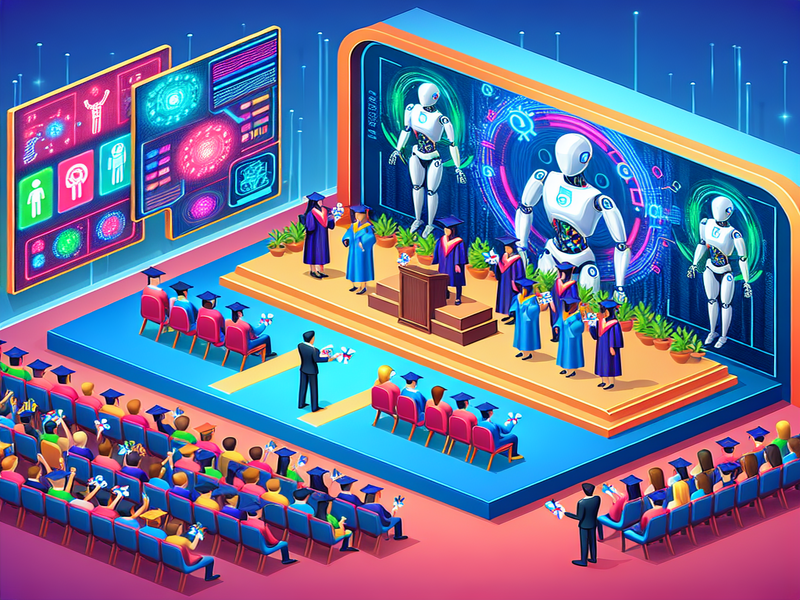
The Importance of Human Traits: Creativity and Empathy
Despite AI’s capabilities, there are certain human traits that remain irreplaceable. Creativity, the ability to generate novel ideas and solutions, is a distinctly human trait that AI struggles to replicate. Similarly, empathy, the capacity to understand and share the feelings of others, is essential for building meaningful human connections. These traits are crucial in fields such as psychology, sociology, and the arts, where understanding human behavior is paramount.
The Role of Liberal Arts Education in Tech
Liberal arts education plays a vital role in bridging the gap between technology and humanity. Graduates with a background in liberal arts bring valuable skills such as critical thinking, ethical reasoning, and effective communication to the tech industry. These skills are essential for addressing complex societal challenges and ensuring that technological advancements align with human values. Companies are increasingly recognizing the value of liberal arts graduates in roles that require a deep understanding of human behavior and culture.
Encouragement for Graduates to Leverage Unique Skills
As AI continues to evolve, it’s imperative for graduates to leverage their unique skills and perspectives. By embracing their creativity, empathy, and critical thinking abilities, graduates can excel in roles that require a human touch. They can also use AI as a tool to enhance their work, automating mundane tasks and allowing them to focus on more meaningful and impactful projects. Platforms like UBOS offer solutions that empower individuals to harness the power of AI while maintaining their distinct human qualities.
Conclusion: A Forward-Looking Perspective
In conclusion, while AI is transforming the job market, it also presents opportunities for individuals to leverage their unique human traits. By embracing creativity, empathy, and the skills acquired through liberal arts education, graduates can navigate their careers successfully in an AI-driven world. The future belongs to those who can blend technology with humanity, creating solutions that benefit society as a whole. As we look ahead, it’s essential to remember that the human touch remains irreplaceable, and our unique abilities will continue to shape the future of work.
For more insights on how AI is influencing various industries, explore our article on AI in stock market trading. Additionally, discover how generative AI agents for businesses are driving innovation and growth.
Andrii Bidochko
CTO UBOS
Andrii Bidochko is an AI entrepreneur and researcher focused on AI agents, reinforcement learning, and autonomous systems. He writes about the technologies shaping the future of machine intelligence, from frontier models and agent architectures to real-world AI applications.