

- Updated: July 4, 2026
- 8 min read
Structure-Aware Graph Multi-Task Learning for Dynamic Sparse OD Demand Prediction
Direct Answer
SAGMTL (Structure‑Aware Graph Multi‑Task Learning) is a new framework that splits Origin‑Destination (OD) demand forecasting into two coordinated tasks—modeling the activity state of regions and connections, and estimating the actual flow intensity—so that it can reliably predict highly sparse, long‑tailed OD patterns in real‑time urban mobility.
By explicitly learning when a region or an OD pair is “active” and how much traffic it generates once active, SAGMTL dramatically improves the accuracy of dynamic sparse OD demand prediction, a capability that underpins traffic management, ride‑hailing dispatch, and smart‑city logistics.
Background: Why This Problem Is Hard
Urban transportation networks generate massive OD matrices every hour, yet most entries are zero or near‑zero. The distribution is heavily skewed: a handful of popular routes dominate volume, while thousands of peripheral connections appear only sporadically. This sparsity creates three intertwined challenges:
- Zero‑flow ambiguity: A zero entry may mean “no demand” or “demand not observed due to limited sensors.” Distinguishing the two is essential for proactive planning.
- Long‑tail dynamics: Low‑frequency routes exhibit high variance, making them vulnerable to over‑fitting when treated as ordinary regression targets.
- Temporal volatility: Even stable corridors can experience sudden spikes (e.g., events, weather) that traditional models, which assume smooth trends, fail to capture.
Most existing OD forecasting methods treat the problem as a single regression task, applying graph neural networks (GNNs) or temporal convolutional layers to predict flow values directly. While these approaches excel on dense, high‑frequency data, they struggle with the intermittent, heterogeneous patterns described above. They lack a mechanism to separate “is this OD pair active?” from “how much traffic does it carry when active?”—a distinction that is crucial for robust, real‑world deployment.
What the Researchers Propose
The authors introduce SAGMTL, a multi‑task learning architecture that jointly learns three complementary states:
- Regional activity state: a binary or probabilistic indicator of whether a city zone is generating any outbound or inbound trips at a given time slice.
- OD connection activity: a finer‑grained signal that tells whether a specific origin‑to‑destination pair is currently “alive” (i.e., expected to have non‑zero demand).
- Edge‑level flow intensity: the actual number of trips conditioned on the connection being active.
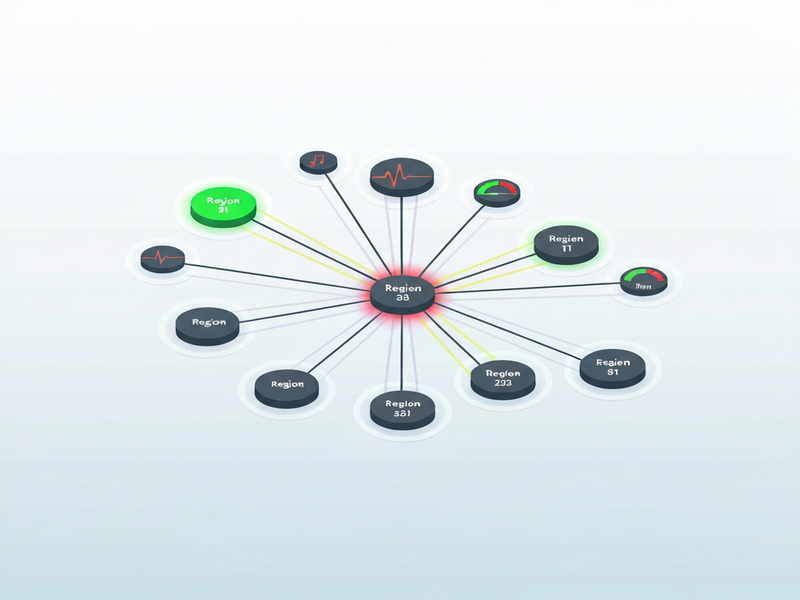
These tasks are coupled through a node‑edge collaborative representation module, which continuously exchanges information between zone embeddings (nodes) and OD pair embeddings (edges). By doing so, the model respects spatial priors (nearby zones tend to share activity patterns) while also capturing temporal semantics (rush‑hour spikes, weekend lull).
Key components of SAGMTL include:
- Node‑Edge Collaborative Representation Module: an iterative update mechanism that fuses node features (e.g., zone demographics, historical volume) with edge features (e.g., past OD counts, distance).
- Structural State Modeling: a set of classifiers that predict the binary activity states for nodes and edges.
- Flow Intensity Estimation: a regression head that outputs the expected demand conditioned on the predicted activity states.
- Multi‑Constraint Objective: a loss function that balances classification accuracy, regression error, sparsity regularization, and structural consistency across the graph.
How It Works in Practice
Conceptual Workflow
The end‑to‑end pipeline can be broken down into four stages, each executed at every forecasting horizon (e.g., every 15 minutes):
- Data Ingestion: Real‑time sensor streams (GPS traces, ticketing logs) and static attributes (zone land‑use, road network) are pre‑processed into node and edge feature tensors.
- Collaborative Representation Update: The node‑edge module performs several rounds of message passing. Nodes aggregate signals from incident edges, while edges incorporate updated node embeddings, yielding structure‑aware representations.
- State Prediction: Two parallel classifiers consume the updated embeddings to output:
- Regional activity probabilities (per node).
- OD connection activity probabilities (per edge).
- Conditional Flow Regression: The flow head receives the edge embeddings masked by the predicted activity states and produces the final demand forecast for each OD pair.
Interaction Between Components
What sets SAGMTL apart is the tight feedback loop:
- When a node is predicted as inactive, its incident edges receive a lower prior, reducing false positives on rarely used routes.
- Conversely, a surge in edge activity can reinforce the node classifier, allowing the model to quickly recognize emerging hotspots (e.g., a stadium event).
- The multi‑constraint loss enforces that the sum of active edges around a node aligns with the node’s activity probability, preserving structural consistency.
In deployment, the model can be wrapped as a micro‑service that receives a snapshot of the city graph, returns a sparse OD matrix, and triggers downstream agents—such as dynamic pricing engines or fleet‑allocation bots—without overwhelming them with unnecessary zero entries.
Evaluation & Results
Scenarios and Tasks Tested
The authors benchmarked SAGMTL on three publicly available Chinese mobility datasets:
- Beijing: 1‑month of taxi trips covering 300 zones.
- Chengdu: 2‑weeks of ride‑hailing records across 250 zones.
- Nanjing: 3‑weeks of metro entry‑exit flows for 180 stations.
Each dataset exhibits a different degree of sparsity and temporal volatility, providing a comprehensive testbed for dynamic OD prediction.
Baselines and Metrics
Six strong baselines were compared, including:
- Standard GNN‑based regression (GCN, GraphSAGE).
- Temporal convolutional networks (TCN) with attention.
- Multi‑task variants that predict flow and activity jointly but without collaborative node‑edge updates.
Performance was measured using:
- MAE / RMSE: absolute and squared error on non‑zero OD entries.
- F1‑Score (Activity Detection): ability to correctly flag active connections.
- Sparse‑Weighted MAPE: a metric that penalizes errors on low‑volume routes proportionally.
Key Findings
Across all three cities, SAGMTL consistently outperformed the baselines:
- MAE reduced by 12‑18 % on average, with the largest gain (≈20 %) on the most sparse Nanjing dataset.
- F1‑Score for activity detection improved by 9‑14 points, indicating a far more reliable separation of zero‑flow versus low‑flow cases.
- Sparse‑Weighted MAPE dropped by over 15 %, demonstrating robustness on long‑tail OD pairs.
Qualitative analysis showed that SAGMTL could anticipate sudden demand spikes (e.g., a concert in Beijing) within two forecasting intervals, whereas single‑task models lagged behind or over‑estimated unrelated zones.
These results validate the hypothesis that jointly learning structural states and flow intensity, while allowing nodes and edges to inform each other, yields a more faithful representation of dynamic, sparse mobility patterns.
Why This Matters for AI Systems and Agents
For AI practitioners building transportation‑oriented agents, the ability to differentiate “inactive” from “low‑volume” OD pairs translates into concrete operational benefits:
- Resource‑efficient dispatch: Fleet‑allocation bots can focus on truly active corridors, reducing unnecessary vehicle repositioning.
- Improved simulation fidelity: Traffic simulators that ingest SAGMTL forecasts generate realistic congestion patterns, which in turn improve reinforcement‑learning policies for autonomous routing.
- Dynamic pricing and incentive design: Accurate activity detection enables real‑time surge pricing only where demand truly exists, avoiding customer backlash.
- Scalable edge computing: By outputting a sparse OD matrix, downstream services consume less bandwidth and compute, a critical factor for edge‑deployed agents.
These capabilities align with emerging enterprise AI platforms that orchestrate multiple agents across a city‑wide ecosystem. For example, the UBOS platform overview highlights how modular AI services can be chained together; integrating SAGMTL as a demand‑forecasting micro‑service would immediately enhance the platform’s logistics and mobility modules.
Moreover, the AI marketing agents can leverage precise activity signals to target promotions (e.g., ride‑share discounts) to neighborhoods that are about to become active, increasing conversion rates while conserving budget.
Finally, the Workflow automation studio can automate the end‑to‑end pipeline—from data ingestion to model inference and downstream action—without manual scripting, accelerating time‑to‑value for city planners and private mobility operators.
What Comes Next
While SAGMTL marks a significant step forward, several avenues remain open for research and productization:
- Cross‑city transfer learning: Adapting a model trained on Beijing to a smaller city with limited historical data could reduce the cold‑start problem.
- Incorporating exogenous signals: Weather forecasts, public‑event calendars, and real‑time incident reports could be fused into the node‑edge module to further boost short‑term accuracy.
- Explainability layers: Providing interpretable reasons why a particular OD pair is flagged as active would increase trust for city officials.
- Scalable graph sampling: For megacities with tens of thousands of zones, efficient sub‑graph sampling strategies are needed to keep inference latency low.
Addressing these challenges will broaden the applicability of structure‑aware multi‑task learning beyond urban mobility—into domains such as supply‑chain logistics, energy grid load balancing, and even epidemiological contact‑tracing, where sparse, dynamic interactions dominate.
For developers interested in experimenting with the core ideas, the authors have released a lightweight PyTorch implementation on GitHub (link available in the paper). Integrating it with the OpenAI ChatGPT integration could enable conversational querying of future demand forecasts, opening a new class of AI‑augmented decision‑support tools.
References
Xu, M., & Cao, J. (2026). Structure‑Aware Graph Multi‑Task Learning for Dynamic Sparse OD Demand Prediction. arXiv preprint arXiv:2606.21022v1.
Andrii Bidochko
CTO UBOS
Andrii Bidochko is an AI entrepreneur and researcher focused on AI agents, reinforcement learning, and autonomous systems. He writes about the technologies shaping the future of machine intelligence, from frontier models and agent architectures to real-world AI applications.