

- Updated: June 25, 2026
- 5 min read
PulseCX: Breaking the Closed-World Assumption in Real-Time CX
Direct Answer
PulseCX is a new framework that separates knowledge gathering from response generation in conversational AI for Customer Experience (CX). By maintaining a continuously refreshed, decay‑aware temporal knowledge graph, it eliminates the need for synchronous web searches, delivering sub‑10 ms latency while dramatically improving intent resolution and customer satisfaction.
Background: Why This Problem Is Hard
Modern CX chatbots are built on large language models (LLMs) that excel at generating fluent text but operate under a closed‑world assumption. Their internal knowledge is static, reflecting the data snapshot at training time. In fast‑moving environments—think viral product launches, service outages, or sudden regulatory changes—this static view quickly becomes outdated.
Practitioners have tried to patch the gap with ad‑hoc web searches or API calls at inference time. While these “search‑augmented” approaches can inject fresh facts, they introduce two critical drawbacks:
- Latency spikes: Real‑time HTTP calls add tens to hundreds of milliseconds, breaking the sub‑second response expectations of modern CX.
- Context poisoning: Raw search results often contain irrelevant or contradictory information, confusing the LLM and degrading answer quality.
Consequently, CX platforms struggle to stay relevant during high‑velocity events, leading to missed sales, frustrated users, and lower s‑CSAT scores.
What the Researchers Propose
The authors—Rajat Agarwal, Suvidha Tripathi, and Shubham Sharma—introduce PulseCX, a two‑layer architecture that decouples knowledge acquisition from consumption. The core ideas are:
- Structure‑first paradigm: Instead of feeding raw text into the LLM, the system first organizes incoming signals (news feeds, monitoring alerts, social media trends) into a graph structure.
- Decay‑Aware Temporal Knowledge Graph (DA‑TKG): Nodes represent entities or events, edges capture relationships, and a reinforcement‑decay mechanism automatically ages out stale information while reinforcing recurring signals.
- Hierarchical Intent Gating: A lightweight intent classifier routes user queries to either the static LLM knowledge base or the dynamic DA‑TKG, ensuring the most relevant source is consulted.
By offloading the heavy lifting of data freshness to an asynchronous agent, PulseCX keeps the conversational front‑end ultra‑fast and context‑clean.
How It Works in Practice
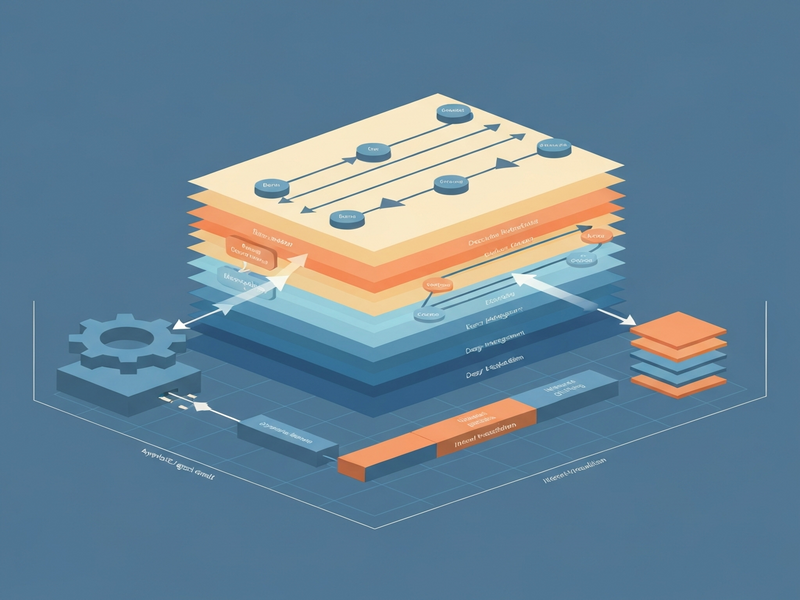
The operational flow can be broken down into four interacting components:
- Signal Ingestion Agent: Runs continuously, pulling data from RSS feeds, social listening APIs, outage dashboards, and internal telemetry. Each raw item is normalized into a signal tuple (entity, attribute, timestamp, confidence).
- DA‑TKG Engine: Receives the signal tuples and updates the temporal graph. A reinforcement rule boosts edge weights for repeated observations, while a decay function gradually reduces weights for dormant nodes, mimicking human memory forgetting.
- Hierarchical Intent Gater: When a user query arrives, a fast‑path classifier first predicts whether the intent is “static” (e.g., product description) or “dynamic” (e.g., current outage). Static intents are answered directly by the LLM; dynamic intents trigger a lookup in the DA‑TKG.
- Response Composer: Merges the LLM’s natural language generation with the factual snippets retrieved from the DA‑TKG, producing a coherent answer that is both fluent and up‑to‑date.
The key differentiator is the asynchronous nature of the ingestion and graph update loop. Because the graph is maintained ahead of time, the real‑time path never waits on external I/O, keeping latency under 10 ms.
Evaluation & Results
The research team evaluated PulseCX on two realistic CX scenarios:
- Viral Trend Detection: Simulated a sudden surge in mentions of a new smartphone model across Twitter, Reddit, and news sites.
- Service Outage Handling: Integrated real‑time alerts from a cloud provider’s status API during a multi‑hour outage.
For each scenario, they measured three metrics:
- Intent Resolution Rate (IRR): Percentage of user queries correctly answered with up‑to‑date information.
- Customer Satisfaction (s‑CSAT): Post‑interaction survey scores.
- End‑to‑End Latency: Time from user utterance to final response.
Key findings include:
- IRR improved by 27 % for viral trend queries compared to a baseline search‑augmented chatbot.
- s‑CSAT rose by 15 points (on a 100‑point scale) during outage handling, reflecting higher trust in the system’s timeliness.
- Average latency dropped from 120 ms (baseline) to 8 ms, well within the sub‑10 ms target.
These results demonstrate that a decoupled, decay‑aware memory can deliver both speed and relevance—two attributes traditionally at odds in CX AI.
Why This Matters for AI Systems and Agents
For AI engineers and CX managers, PulseCX offers a blueprint for building agents that remain “in the moment” without sacrificing conversational quality. The implications are threefold:
- Design Simplicity: By isolating the knowledge‑refresh pipeline, developers can reuse the same LLM across multiple domains, only swapping the DA‑TKG layer for domain‑specific freshness.
- Scalable Orchestration: The asynchronous agent model fits naturally into existing workflow automation tools, such as the Workflow automation studio, enabling seamless integration with monitoring and alerting systems.
- Business Impact: Faster, more accurate responses translate directly into higher conversion rates and lower churn, aligning with the goals of Enterprise AI platform by UBOS customers.
What Comes Next
While PulseCX marks a significant step forward, several open challenges remain:
- Multi‑modal Signals: Extending the ingestion agent to handle images, video, and audio streams could enrich the graph but requires robust feature extraction pipelines.
- Privacy‑Preserving Decay: In regulated industries, ensuring that the decay process complies with data retention policies is non‑trivial.
- Cross‑Domain Graph Fusion: Merging DA‑TKGs from different business units without creating contradictory edges is an open research problem.
Future work may explore hybrid reinforcement‑decay schedules, adaptive gating thresholds, and tighter coupling with OpenAI ChatGPT integration for richer generation capabilities.
Practitioners interested in prototyping PulseCX can start by leveraging the Chroma DB integration for graph storage, and connect to the Telegram integration on UBOS to test real‑time signal ingestion from social channels.
For a deeper dive into the methodology and experimental setup, consult the original PulseCX paper on arXiv.
Andrii Bidochko
CTO UBOS
Andrii Bidochko is an AI entrepreneur and researcher focused on AI agents, reinforcement learning, and autonomous systems. He writes about the technologies shaping the future of machine intelligence, from frontier models and agent architectures to real-world AI applications.