

- Updated: July 16, 2026
- 6 min read
Predicting Male Fertility Using Machine Learning: A Semen Parameters Based Analysis with the VISEM Dataset
Direct Answer
The paper introduces a machine‑learning pipeline that classifies male fertility status—fertile, sub‑fertile, or infertile—using only three standard semen parameters (concentration, motility, morphology) from the newly released VISEM dataset. By achieving over 94 % accuracy with a simple Nearest Centroid model, the study demonstrates that AI can deliver fast, objective, and clinically relevant assessments of semen quality, potentially reshaping diagnostic workflows in andrology.
Background: Why This Problem Is Hard
Male infertility accounts for roughly half of all couples’ difficulty conceiving, yet it remains under‑diagnosed because traditional semen analysis is labor‑intensive, subject to inter‑observer variability, and often interpreted through coarse WHO thresholds. Clinicians must balance sensitivity (detecting subtle defects) against specificity (avoiding false alarms), a trade‑off that is hard to optimize with manual microscopy alone.
Existing computational approaches typically rely on large‑scale image‑based deep‑learning pipelines that demand thousands of labeled sperm images, expensive hardware, and extensive preprocessing. Moreover, many studies treat fertility as a binary problem, ignoring the clinically important “sub‑fertile” middle ground where treatment decisions differ. These limitations create a bottleneck for clinics that need rapid, reproducible, and cost‑effective decision support.
What the Researchers Propose
The authors present a lightweight, tabular‑data‑centric framework that leverages the VISEM dataset—85 anonymized semen samples annotated into three WHO‑based categories. The core idea is to treat the three routinely measured parameters as a feature vector and let a suite of off‑the‑shelf classifiers compete for the best predictive performance. Using the LazyPredict library, they automatically benchmarked more than 40 algorithms, ultimately selecting the Nearest Centroid classifier for its superior balance of accuracy, interpretability, and computational efficiency.
Key components of the proposed system include:
- Data preprocessing & feature engineering: outlier removal, normalization, and optional synthetic minority oversampling to address class imbalance.
- Model selection engine: LazyPredict runs parallel training and validation across a broad algorithmic portfolio, reporting metrics such as accuracy, macro‑averaged ROC‑AUC, and cross‑validation stability.
- Final inference module: a Nearest Centroid classifier that computes Euclidean distances from a new sample to the centroids of each fertility class, returning the most likely label.
How It Works in Practice
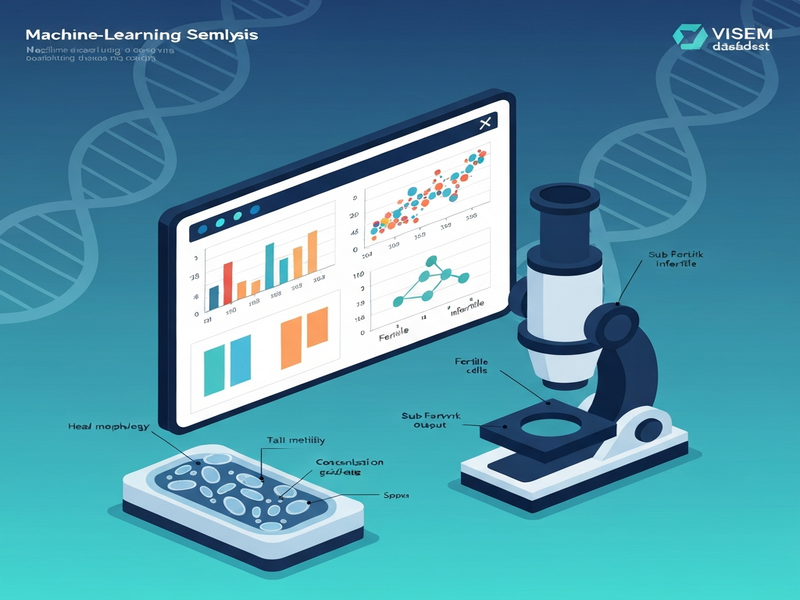
The workflow can be visualized as a three‑stage pipeline that fits easily into a clinic’s existing laboratory information system (LIS):
- Input capture: Technicians record sperm concentration (million/ml), progressive motility (%), and normal morphology (%) for each sample.
- Automated preprocessing: A lightweight script normalizes the values, flags outliers, and, if needed, applies SMOTE‑style oversampling to balance the training set.
- Classification: The preprocessed vector is fed to the Nearest Centroid model, which instantly computes distances to the three class centroids and outputs a probability‑scaled fertility label.
What sets this approach apart is its minimal hardware footprint—no GPU is required, and inference completes in milliseconds—making it suitable for point‑of‑care deployment on standard desktop computers or even embedded devices. The model’s transparency also allows clinicians to inspect the distance scores, fostering trust and facilitating audit trails.
Evaluation & Results
To validate the pipeline, the authors performed a 5‑fold stratified cross‑validation on the full VISEM cohort. They compared the top‑performing models—Nearest Centroid, Support Vector Machine, Quadratic Discriminant Analysis, and a few ensemble methods—using both accuracy and macro‑averaged ROC‑AUC as primary metrics.
- Accuracy: Nearest Centroid achieved 94.2 % overall, outpacing SVM (89.1 %) and QDA (86.5 %).
- ROC‑AUC: The multiclass ROC‑AUC for the centroid model was 0.97, indicating excellent discriminative power across all three fertility states.
- Stability: Across the five folds, the centroid model’s accuracy variance was under 1 %, demonstrating robust performance despite the modest sample size.
These results suggest that, for the specific feature set of concentration, motility, and morphology, a simple distance‑based classifier can capture the underlying class structure as effectively as more complex algorithms. The authors also performed an ablation study, confirming that removing any single parameter drops accuracy by 3–5 %, underscoring the complementary nature of the three measurements.
Why This Matters for AI Systems and Agents
From an AI‑systems perspective, the study offers a compelling case for “lean AI” in clinical settings: high performance without deep neural networks, massive data, or specialized hardware. This paradigm aligns with emerging trends in edge‑AI and autonomous agents that must operate under strict latency, privacy, and interpretability constraints.
Practical implications include:
- Rapid decision support: Integration into electronic health records (EHR) can trigger real‑time alerts when a sample falls into the sub‑fertile or infertile centroid region, prompting immediate follow‑up.
- Agent‑driven workflow automation: An AI agent could orchestrate the entire pipeline—collecting lab values, invoking the classifier, and drafting a concise report for the physician—without human intervention.
- Scalable deployment: Because the model is lightweight, it can be packaged as a microservice on platforms like the UBOS platform overview, enabling federated deployments across multiple clinics.
- Explainability for regulatory compliance: Distance scores and centroid coordinates provide a transparent audit trail, satisfying emerging AI‑in‑healthcare guidelines.
What Comes Next
While the results are promising, several limitations warrant further investigation:
- Dataset size and diversity: The VISEM cohort includes only 85 samples from a single geographic region. Expanding the dataset to encompass varied ethnicities, age groups, and lifestyle factors will test the model’s generalizability.
- Feature enrichment: Incorporating additional biomarkers—such as DNA fragmentation index, oxidative stress markers, or hormonal profiles—could improve discrimination, especially for borderline cases.
- Longitudinal validation: Prospective studies tracking couples’ actual conception outcomes would confirm whether the classifier’s predictions translate into real‑world fertility success.
- Integration pathways: Building end‑to‑end pipelines that combine the classifier with patient‑facing chatbots (e.g., ChatGPT and Telegram integration) could deliver personalized counseling while preserving privacy.
Future research may also explore hybrid models that blend the interpretability of centroid‑based methods with the pattern‑recognition strength of deep learning on sperm morphology images, creating a multimodal diagnostic engine.
References
Qureshi, S., Shahzad, R. K., Fozan, M., Kawal, E., Shah, S. A., Al‑Anazi, S., & Iqbal, S. M. Z. (2026). Predicting Male Fertility Using Machine Learning: A Semen Parameters Based Analysis with the VISEM Dataset. arXiv preprint arXiv:2607.08429.
Andrii Bidochko
CTO UBOS
Andrii Bidochko is an AI entrepreneur and researcher focused on AI agents, reinforcement learning, and autonomous systems. He writes about the technologies shaping the future of machine intelligence, from frontier models and agent architectures to real-world AI applications.