

- Updated: July 12, 2026
- 7 min read
Playing ZendoWorld: Challenging AI Agents on Active Visual Concept Induction
Direct Answer
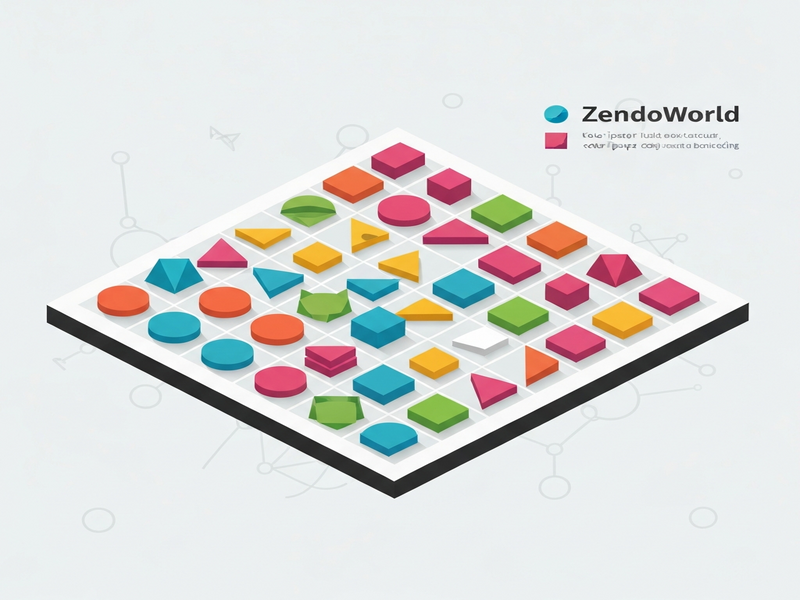
The paper Playing ZendoWorld: Challenging AI Agents on Active Visual Concept Induction introduces ZendoWorld, a sandbox environment where AI agents must infer hidden logical rules from visual scenes, actively propose new scenes to test hypotheses, and iteratively refine their understanding. This matters because it isolates the intertwined challenges of perception, hypothesis generation, and experiment design—core capabilities for any system that aims to discover scientific laws or automate complex decision‑making.
Background: Why This Problem Is Hard
Real‑world intelligence rarely operates on static datasets. Scientists, engineers, and even everyday users constantly interact with the world: they observe, form conjectures, and design experiments to confirm or falsify those conjectures. Replicating this loop in artificial agents faces three intertwined bottlenecks:
- Perceptual grounding: Translating raw pixels into symbolic representations that are reliable enough for logical reasoning.
- Concept induction: Searching a combinatorial space of possible rules to find the one that best explains observed data.
- Active experimentation: Selecting the most informative next observation rather than passively consuming whatever data is presented.
Existing benchmarks—image classification, static visual question answering, or passive few‑shot learning—typically evaluate only the first two components. They provide no mechanism for an agent to choose its next input, leaving a critical gap for research on autonomous discovery.
What the Researchers Propose
To close this gap, the authors present ZendoWorld, a controlled, game‑like environment inspired by the tabletop puzzle Zendo. The core idea is simple yet powerful:
- An unseen logical rule governs whether a presented visual scene is labeled “valid” or “invalid.”
- The agent receives a handful of labeled examples.
- Based on its current hypothesis set, the agent proposes a new scene (i.e., an experiment).
- The environment returns the true label, allowing the agent to update its belief state.
Four families of agents are evaluated:
- Pure Vision‑Language Model (VLM) reasoning: Agents that rely on large‑scale pretrained models to map images to textual hypotheses.
- Bayesian particle filtering: Probabilistic trackers that maintain a distribution over possible rules.
- Dynamic concept discovery: Systems that incrementally construct symbolic representations from visual features.
- Neuro‑symbolic hybrids: Architectures that combine neural perception with symbolic reasoning modules.
How It Works in Practice
The ZendoWorld loop can be broken down into three conceptual stages, each implemented as a distinct software component:
1. Perception Module
Receives a rendered 3D scene (e.g., colored blocks, geometric shapes) and outputs a structured description—either a set of object attributes or a latent embedding. In VLM agents, this step is handled by a frozen vision‑language encoder; in neuro‑symbolic agents, a dedicated object detector extracts discrete symbols.
2. Hypothesis Engine
Maintains a belief state over candidate logical rules. For Bayesian particle filters, each particle encodes a concrete rule (e.g., “all red cubes must be adjacent”). The engine updates particle weights using Bayes’ rule after each label feedback. Neuro‑symbolic agents generate candidate rules via a grammar‑based search, scoring them with a neural plausibility predictor.
3. Experiment Planner
Given the current belief distribution, the planner selects the next scene to maximize expected information gain. In theory, this is an active learning problem: choose the scene that most reduces hypothesis entropy. The paper finds that VLM‑based planners often default to near‑random scenes, highlighting a gap between perception strength and strategic experiment design.
All three components communicate through a lightweight API, enabling rapid swapping of perception back‑ends or hypothesis representations. This modularity mirrors real‑world AI pipelines where perception, reasoning, and planning are often sourced from different teams or vendors.
Evaluation & Results
The authors construct a suite of 12 rule families ranging from simple (single‑attribute constraints) to complex (nested relational conditions). For each rule, agents receive 5 labeled examples and are allowed up to 10 active queries. Evaluation focuses on two axes:
- Label prediction accuracy: How often the agent correctly classifies unseen scenes.
- Rule recovery rate: Whether the agent’s final hypothesis matches the ground‑truth logical rule.
Key observations:
- High accuracy does not guarantee rule recovery. VLM agents quickly learn to mimic the label distribution but often converge on spurious rules that happen to fit the limited examples.
- Perception vs. induction bottlenecks differ by agent class. Bayesian filters excel when perception is reliable but struggle with combinatorial rule spaces; neuro‑symbolic agents handle complex rules but are hampered by noisy object detection.
- Active experiment design is the weakest link for VLM‑only agents. Their planners propose scenes that add little new information, leading to slower convergence compared to particle‑filter agents that explicitly maximize information gain.
Human participants were also recruited to solve a subset of the tasks. Even expert users showed a noticeable drop in rule recovery for the most intricate rule families, underscoring that ZendoWorld captures a genuine cognitive challenge rather than an artifact of artificial benchmarks.
Why This Matters for AI Systems and Agents
From a product‑engineer’s perspective, ZendoWorld offers a concrete testbed for the next generation of self‑directed AI systems—agents that can not only interpret data but also decide what data to collect next. This has three immediate implications:
- Design of autonomous scientific assistants. Platforms that help researchers hypothesize and design experiments (e.g., drug discovery, materials science) can benchmark their active‑learning loops against ZendoWorld’s metrics.
- Improved evaluation of multimodal agents. Traditional benchmarks overlook the planning dimension; ZendoWorld forces developers to expose and improve the experiment‑selection logic.
- Integration with enterprise AI pipelines. Companies building Enterprise AI platform by UBOS can embed ZendoWorld‑style loops to let bots autonomously refine classification rules for dynamic business data, reducing manual labeling overhead.
What Comes Next
While ZendoWorld marks a significant step forward, several avenues remain open for research and productization:
Limitations
- Scalability of rule space. Current rule families are handcrafted; scaling to richer first‑order logic or probabilistic rules will stress both perception and inference modules.
- Real‑world visual fidelity. The synthetic scenes lack the noise, occlusion, and lighting variations found in camera data, potentially over‑estimating perception performance.
- Planner sophistication. Simple information‑gain heuristics suffice for small hypothesis sets but may falter when the belief distribution becomes multimodal.
Future Research Directions
- Integrate Chroma DB integration to store and retrieve past experiments, enabling agents to reuse knowledge across tasks.
- Explore meta‑learning approaches where agents learn a universal experiment‑selection policy transferable to new rule families.
- Combine language models with symbolic planners to generate natural‑language experiment descriptions that can be executed by robotic platforms.
Potential Applications
Beyond academic curiosity, ZendoWorld‑style loops could power:
- Automated compliance checking, where agents hypothesize policy violations from transaction logs and request targeted audits.
- Adaptive marketing AI, using AI marketing agents that iteratively test audience segments to discover the most persuasive creative elements.
- Intelligent tutoring systems that infer a student’s misconception rule set and generate custom problem instances to resolve gaps.
Developers interested in prototyping such capabilities can start with the UBOS platform overview, which offers modular workflow orchestration and a Workflow automation studio for stitching perception, reasoning, and planning services together.
Conclusion
ZendoWorld reframes visual concept induction as an interactive, hypothesis‑driven game, exposing the hidden dependencies between perception accuracy, symbolic reasoning, and active experiment design. The paper’s findings—especially the disconnect between label accuracy and true rule recovery—serve as a cautionary tale for developers who rely solely on static benchmarks. By providing a reproducible, extensible environment, ZendoWorld invites the community to build agents that not only see but also ask, test, and ultimately understand the world in a manner closer to human scientific inquiry.
Andrii Bidochko
CTO UBOS
Andrii Bidochko is an AI entrepreneur and researcher focused on AI agents, reinforcement learning, and autonomous systems. He writes about the technologies shaping the future of machine intelligence, from frontier models and agent architectures to real-world AI applications.