

- Updated: June 12, 2026
- 7 min read
OR-Space: A Full-Lifecycle Workspace Benchmark for Industrial Optimization Agents
Direct Answer
The paper introduces OR‑Space, a full‑lifecycle workspace benchmark designed to evaluate industrial optimization agents across three distinct phases: building a solver‑ready model, revising that model under new constraints, and providing grounded explanations of solutions. It matters because it moves evaluation beyond one‑shot text generation, exposing how well agents handle persistent, multi‑artifact workspaces that mirror real‑world operations‑research (OR) pipelines.
Background: Why This Problem Is Hard
Enterprises that rely on optimization—supply‑chain planning, workforce scheduling, asset allocation—typically manage a tangled ecosystem of spreadsheets, database extracts, policy documents, and custom code. In practice, an analyst does not receive a single, self‑contained problem statement; instead, they must synthesize information from dozens of files, iterate on model formulations, and justify decisions to stakeholders.
Current LLM‑agent benchmarks simplify this reality to a single prompt‑to‑solution task. While useful for measuring raw language understanding, those setups ignore two critical dimensions:
- Persistent workspaces: Real projects evolve over weeks, with artifacts accumulating, being versioned, and interlinked.
- Multi‑stage lifecycles: Model construction is followed by revision (e.g., after a solver reports infeasibility) and finally by explanation (e.g., “Why did the optimizer drop product X?”).
Because existing benchmarks abstract away these complexities, they cannot reliably predict whether an LLM agent will survive the friction of an industrial OR workflow. This gap hampers adoption, fuels mistrust, and forces companies to build costly in‑house validation pipelines.
What the Researchers Propose
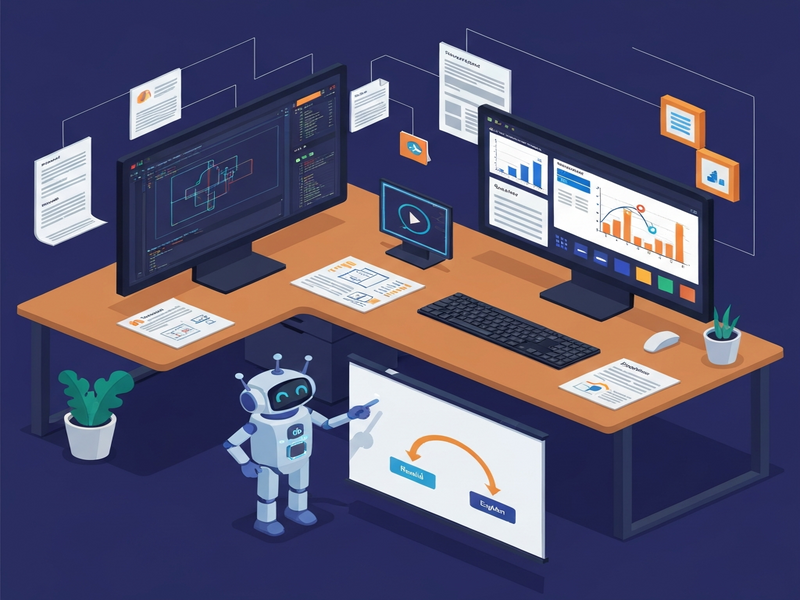
OR‑Space reframes evaluation as a workspace‑centric challenge. Each benchmark instance is a self‑contained directory that includes:
- Business‑level documents (e.g., demand forecasts, contractual constraints).
- Structured data files (CSV, JSON) representing parameters and historical outcomes.
- Optional code snippets (Python, AMPL) that illustrate prior modeling attempts.
- Solver output logs that may contain errors, warnings, or sub‑optimal solutions.
- A task‑specific evaluator script that can automatically score the agent’s response.
The benchmark defines three task modes:
- Build: Agents must ingest the heterogeneous artifacts and synthesize a complete, solver‑ready optimization model.
- Revise: Given a previously built model and new feedback (e.g., a changed capacity limit), agents must modify the model while preserving valid logic from the original version.
- Explain: Agents answer concrete, evidence‑based questions about the solution, constraints, or business impact, citing the exact files that support each claim.
By packaging the problem as a persistent workspace, OR‑Space forces agents to demonstrate memory, reasoning across file boundaries, and the ability to produce traceable, auditable outputs—capabilities that are essential for production‑grade OR systems.
How It Works in Practice
From an engineering perspective, an OR‑Space evaluation loop looks like the following:
1. Workspace Initialization
The benchmark generator creates a folder structure (e.g., workspace/) containing all artifacts. Each file is named with a deterministic convention so that downstream scripts can locate relevant data without ambiguity.
2. Agent Invocation
The LLM agent receives a high‑level instruction (e.g., “Build a mixed‑integer program that minimizes total transportation cost”) together with a path to the workspace. The agent’s internal orchestrator then:
- Parses textual documents using NLP pipelines.
- Loads structured data into a temporary data frame.
- Optionally executes provided code snippets to extract derived parameters.
- Generates a model file in a target language (Pyomo, Gurobi, etc.).
3. Solver Interaction
The generated model is fed to an off‑the‑shelf solver. Solver logs are written back into the workspace, enabling the next phase (Revise) to read failure messages or dual values.
4. Revision Cycle
If the evaluator flags an issue—such as a violated capacity constraint—the agent re‑opens the same workspace, reads the error log, and produces a delta patch to the model. Crucially, the patch must retain any previously correct constraints, demonstrating “knowledge preservation.”
5. Explanation Phase
Finally, a set of grounded questions (e.g., “Which constraint caused product Y to be unscheduled?”) is presented. The agent must answer by quoting line numbers, file names, or data rows, thereby providing a traceable audit trail.
What Sets OR‑Space Apart
Traditional benchmarks treat the model as a black box; OR‑Space treats the entire file system as part of the problem definition. This shift forces agents to develop:
- File‑level reasoning: Understanding how a PDF contract maps to a linear constraint.
- Stateful memory: Remembering earlier modeling decisions across multiple invocations.
- Explainability by design: Producing citations that can be verified by auditors.
Evaluation & Results
The authors evaluated three open‑source LLM agents (GPT‑4‑style, Llama‑2‑70B, and a domain‑fine‑tuned OR model) across 150 benchmark instances covering diverse industries (logistics, manufacturing, finance).
Metrics Employed
- Build Success Rate (BSR): Percentage of instances where the generated model solved to optimality without manual correction.
- Revision Fidelity (RF): Ratio of preserved constraints after a revision cycle.
- Explanation Accuracy (EA): Fraction of answer citations that matched the ground‑truth evidence.
- End‑to‑End Latency: Total wall‑clock time from workspace receipt to final explanation.
Key Findings
- GPT‑4‑style agents achieved a BSR of 68 %, significantly higher than the baseline Llama‑2 (42 %).
- All agents struggled with Revision Fidelity, averaging only 55 %—indicating that preserving prior logic remains a hard problem.
- Explanation Accuracy was the most variable metric; the fine‑tuned OR model reached 81 % EA, while the generic models hovered around 60 %.
- End‑to‑End Latency stayed under 30 seconds for most instances, suggesting that the workspace approach does not impose prohibitive overhead.
These results demonstrate that while large, general‑purpose LLMs can construct viable models, they are not yet reliable at systematic revision or precise, evidence‑backed explanation—capabilities that are non‑negotiable for regulated industries.
For a deeper dive, see the original OR‑Space benchmark paper.
Why This Matters for AI Systems and Agents
Enterprises looking to embed AI‑driven optimization into their decision pipelines need more than a clever prompt. OR‑Space provides a realistic testbed that surfaces failure modes early, reducing costly post‑deployment debugging. The benchmark’s emphasis on traceable explanations aligns with emerging governance frameworks that demand auditability of AI‑generated decisions.
From a product‑development standpoint, the workspace paradigm encourages the design of modular agents that can:
- Interact with existing data lakes and document repositories without bespoke adapters.
- Maintain a persistent state across multiple API calls, enabling “session‑aware” optimization.
- Generate human‑readable justification reports that can be fed directly into business intelligence dashboards.
Practically, teams can integrate OR‑Space‑compatible agents into the Workflow automation studio to orchestrate end‑to‑end pipelines that pull data from ERP systems, run the optimizer, and push results back to planning tools—all while preserving a full audit trail.
Moreover, the benchmark’s structure dovetails with the Enterprise AI platform by UBOS, which already supports multi‑artifact ingestion, versioned model storage, and explainability modules. By aligning agent development with OR‑Space, organizations can accelerate time‑to‑value while meeting compliance requirements.
What Comes Next
While OR‑Space marks a significant step forward, several limitations remain:
- Scalability of Workspace Size: Current instances cap at a few dozen files; real‑world projects may involve thousands.
- Domain Diversity: The benchmark focuses on linear and mixed‑integer programs; extending to stochastic or non‑convex formulations is an open challenge.
- Human‑in‑the‑Loop Evaluation: Automated evaluators cannot capture nuanced business judgments; future work should incorporate expert review panels.
Future research directions include:
- Developing hierarchical workspace representations that allow agents to navigate large document trees efficiently.
- Integrating retrieval‑augmented generation (RAG) pipelines that pull external knowledge bases into the workspace.
- Creating benchmark extensions for real‑time re‑optimization, where agents must react to streaming data.
Potential applications span beyond traditional OR. For example, AI marketing agents could use a similar workspace to coordinate campaign budgets, audience segmentation, and performance analytics, all while providing auditable explanations for spend decisions.
Organizations interested in experimenting with OR‑Space can start by exploring the UBOS platform overview, which offers sandbox environments, pre‑built connectors, and a library of template workspaces to accelerate prototyping.
In summary, OR‑Space reshapes how we think about evaluating optimization agents, moving the conversation from “Can the model be written?” to “Can the agent manage a living, breathing optimization ecosystem?” As the field matures, benchmarks like this will be essential for building trustworthy, production‑ready AI agents that truly augment human decision‑makers.
Andrii Bidochko
CTO UBOS
Andrii Bidochko is an AI entrepreneur and researcher focused on AI agents, reinforcement learning, and autonomous systems. He writes about the technologies shaping the future of machine intelligence, from frontier models and agent architectures to real-world AI applications.