

- Updated: February 14, 2026
- 3 min read
Prompt to Planet Unveils AI‑Generated Planets with Text‑to‑3D Procedural Technology
# Prompt to Planet Brings AI‑Generated Planets to the Masses\n\n*Published by UBOS News*\n\n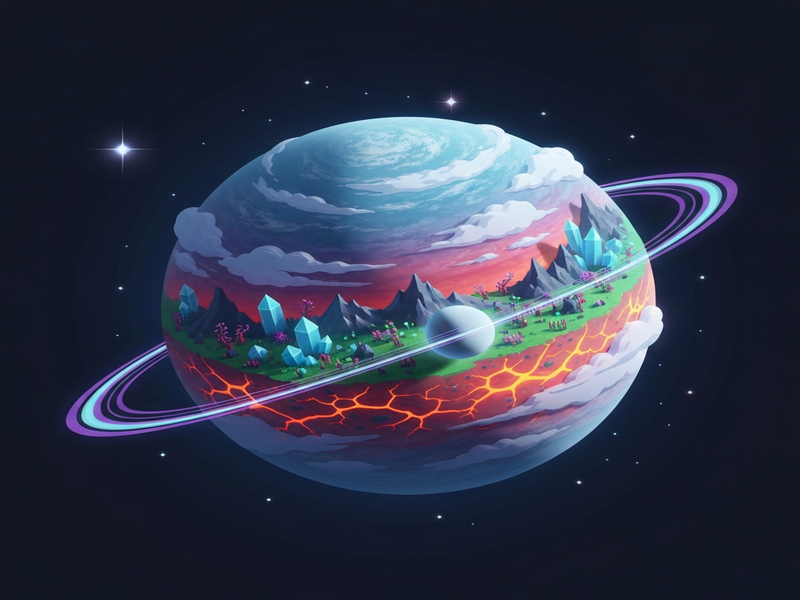\n\n**Alt text:** A vivid, procedurally‑generated planet rendered in 3‑D, showcasing the power of text‑to‑3D AI technology.\n\n—\n\n## A New Frontier in Procedural Planet Generation\n\nThe web‑based service **Prompt to Planet** has just launched, promising to turn simple textual prompts into fully realized, high‑resolution planetary models. Leveraging the latest advances in **generative AI**, the platform allows creators, game developers, and educators to generate unique worlds with a single line of description – a true *text‑to‑3D* experience.\n\n## How It Works\n\nAt its core, Prompt to Planet combines a large‑language model for understanding natural‑language prompts with a diffusion‑based 3‑D generator that constructs planetary terrain, atmosphere, and surface details. Users input commands such as *“a turquoise ocean world with towering crystal spires”* and receive a downloadable OBJ/GLTF file within seconds. The service also provides an interactive viewer so users can rotate, zoom, and explore their creations before exporting.\n\n## Key Features and Technology Stack\n\n- **AI‑driven text parsing** – The system interprets nuanced descriptors, handling color, climate, and geological features.\n- **Procedural generation pipelines** – Uses noise functions, height‑map synthesis, and shader‑based texturing to produce realistic terrain.\n- **Cloud‑based rendering** – GPU‑accelerated servers ensure fast turnaround even for complex scenes.\n- **Export flexibility** – Models are available in common 3‑D formats (OBJ, GLTF, FBX) ready for Unity, Unreal, or Blender.\n\n## Community Reception and Impact\n\nEarly adopters have praised the tool for lowering the barrier to entry for 3‑D content creation. Indie game studios report cutting development time by up to 70 %, while educators use the platform to illustrate planetary science concepts in classrooms. The ability to generate **AI‑generated planets** on demand also opens new possibilities for virtual reality experiences, scientific visualizations, and digital art.\n\n## Why It Matters for Generative AI and 3‑D Content\n\nPrompt to Planet exemplifies the convergence of **generative AI** and procedural graphics, two fields that have traditionally operated separately. By uniting natural‑language understanding with 3‑D synthesis, the service pushes the envelope of what AI can create, moving beyond images and text into fully navigable virtual worlds. This aligns with broader industry trends toward *text‑to‑3D* pipelines that promise to democratize content creation for creators of all skill levels.\n\n## Looking Ahead\n\nThe team behind Prompt to Planet plans to expand the platform with multi‑planet system generation, atmospheric simulation, and integration with popular game engines via plug‑ins. As the technology matures, we can expect richer, more detailed worlds generated from ever‑more complex prompts, further blurring the line between human imagination and machine‑crafted reality.\n\n—\n\nFor the full original announcement, visit the [Prompt to Planet website](https://prompttoplanet.n4ze3m.com/).\n\n### Related UBOS Resources\n\n- Explore more AI breakthroughs on our [AI News](/ai-news) page.\n- Dive deeper into generative‑AI techniques at [Generative AI](/generative-ai).\n- Learn about 3‑D modeling workflows on our [3D Modeling](/3d-modeling) hub.\n\n—\n\n**Meta Description Suggestion:** Discover how Prompt to Planet uses generative AI to turn text prompts into stunning AI‑generated planets. Learn about its text‑to‑3D technology, key features, community impact, and future roadmap.\n\n*Stay tuned to UBOS for more updates on AI innovations shaping the future of digital creation.*
Andrii Bidochko
CTO UBOS
Andrii Bidochko is an AI entrepreneur and researcher focused on AI agents, reinforcement learning, and autonomous systems. He writes about the technologies shaping the future of machine intelligence, from frontier models and agent architectures to real-world AI applications.