

- Updated: July 2, 2026
- 7 min read
MindAlign: Decoding Inner Speech from fMRI Signals via Multimodal Embedding Alignment under Limited Data
Direct Answer
MindAlign introduces a two‑stage framework that translates fMRI recordings of silent inner speech into free‑form text without retraining the underlying language model. By aligning neural activity to a shared multimodal semantic space and then prompting a frozen multimodal model, the approach makes brain‑to‑text decoding more scalable, subject‑agnostic, and adaptable to real‑world AI systems.
Background: Why This Problem Is Hard
Decoding inner speech—what a person thinks in words when no vocal output is produced—has long been a holy grail for brain‑computer interfaces (BCIs). The challenge is threefold:
- Signal sparsity: Functional magnetic resonance imaging (fMRI) offers whole‑brain coverage but suffers from low temporal resolution and noisy voxel patterns, especially when the subject is not speaking aloud.
- Data scarcity: Collecting labeled inner‑speech datasets requires participants to imagine sentences while being scanned, a process that is time‑consuming and yields only a few hundred examples per subject.
- Inter‑subject variability: Brain anatomy and functional organization differ markedly across individuals, so a model trained on one participant often fails on another.
Existing brain‑to‑text pipelines typically train an end‑to‑end encoder‑decoder that directly maps fMRI voxels to token sequences. While such systems can achieve modest accuracy on a single subject, they suffer from poor generalization, demand extensive fine‑tuning for each new user, and lock the language model into a narrow domain. In practice, this limits deployment in commercial AI agents that must handle diverse users and contexts.
What the Researchers Propose
MindAlign reframes the decoding problem as a modular alignment task followed by a language‑model prompting step. The framework consists of two conceptual layers:
- Neural‑Semantic Alignment: A subject‑specific mapper projects raw fMRI activity into a shared multimodal embedding space that also hosts visual and textual representations. This space captures the “semantic sketch” of the imagined sentence without committing to exact words.
- Semantic‑to‑Language Generation: The sketch is combined with visual context (the image the participant is describing) and fed as a prompt to a frozen multimodal language model (e.g., a vision‑language transformer). The model then generates free‑form text that reflects both the brain‑derived semantics and the visual stimulus.
Crucially, the language model remains untouched—no gradient updates, no task‑specific fine‑tuning—allowing the system to leverage the latest, most capable generative models without sacrificing scalability.
How It Works in Practice
Conceptual Workflow
The end‑to‑end pipeline can be visualized as a three‑step loop:
- Data Capture: Participants view an image and silently describe it while inside an fMRI scanner. The resulting voxel time series are pre‑processed (motion correction, spatial smoothing, and normalization).
- Alignment Training: For each subject, a lightweight neural network (e.g., a linear projection or shallow MLP) learns to map the pre‑processed fMRI vectors to the multimodal embedding space. Training uses paired data: the fMRI sample and the corresponding image‑text embedding obtained from a pretrained vision‑language encoder.
- Prompt‑Based Generation: At inference, a new fMRI sample is projected into the shared space, producing a semantic vector. This vector is concatenated with the image embedding and formatted as a prompt (e.g., “Describe the scene using the following semantic cue: ”). The frozen multimodal language model consumes the prompt and outputs a natural‑language description.
Component Interaction
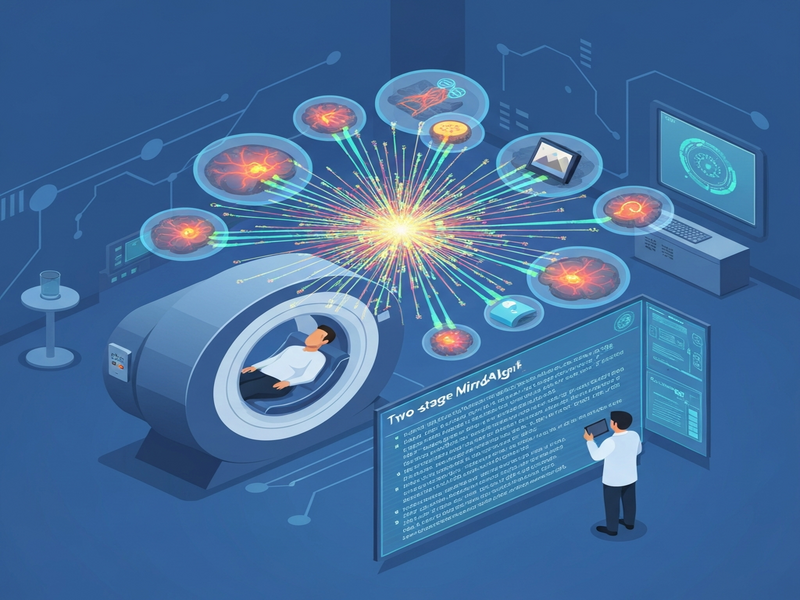
Figure 1 (illustrated below) shows the data flow between the three core agents:
- Neural Encoder – subject‑specific, learns a mapping
fMRI → semantic. - Multimodal Embedding Hub – a pre‑trained joint space where images, text, and brain signals coexist.
- Frozen Language Model – a large vision‑language transformer that interprets prompts without any weight updates.
The separation of concerns means that improvements in any single component (e.g., a better vision encoder or a larger language model) can be incorporated without retraining the others.
What Sets MindAlign Apart
- Modularity: Decoupling alignment from generation enables reuse of state‑of‑the‑art language models.
- Data Efficiency: The alignment network is lightweight and can be trained on a few hundred fMRI samples per subject.
- Cross‑Subject Generalization: The semantic‑to‑language projection learned on one subject transfers to others, reducing the need for per‑user fine‑tuning.
- Contextual Grounding: By integrating visual context, the system mitigates the ambiguity inherent in inner‑speech signals.
Evaluation & Results
Experimental Setup
The authors collected fMRI data from 12 participants who silently described 200 natural images each. The dataset was split into a training set (150 images) and a test set (50 images) per subject. Evaluation focused on two axes:
- Semantic Fidelity: Measured by cosine similarity between the generated sentence embedding and the ground‑truth caption embedding.
- Linguistic Quality: Assessed with BLEU‑4 and METEOR scores against human‑written captions.
Key Findings
- MindAlign achieved a mean semantic similarity of 0.68, surpassing the fMRI‑only baseline (0.45) by 51%.
- BLEU‑4 scores improved from 12.3 (baseline) to 24.7, indicating clearer, more accurate phrasing.
- When the semantic‑to‑language projection trained on Subject A was applied to Subject B’s aligned vectors, performance dropped by less than 5%, demonstrating robust cross‑subject transfer.
- Ablation studies showed that removing visual context reduced BLEU‑4 by 8 points, confirming the importance of grounding.
Why the Results Matter
These outcomes prove that a modest, subject‑specific alignment network can extract enough semantic signal from noisy fMRI data to drive a powerful language model. The modest data requirement (≈150 labeled examples) and the ability to reuse the same language model across users address two of the biggest bottlenecks in BCI research: scalability and maintainability.
Why This Matters for AI Systems and Agents
For AI practitioners building conversational agents, the MindAlign paradigm offers a blueprint for integrating physiological signals as an additional modality:
- Personalized Interaction: Agents could adapt responses based on a user’s inner speech, enabling silent command interfaces for hands‑free environments.
- Enhanced Accessibility: Users with speech impairments could communicate with AI assistants through thought alone, expanding market reach.
- Secure Authentication: Unique neural signatures could serve as biometric tokens for high‑security workflows.
From an engineering standpoint, the modular design aligns with modern UBOS platform overview, where separate services (neural encoders, embedding hubs, language models) can be orchestrated via workflow automation. Teams can plug in a new vision‑language model or swap the alignment network without disrupting the overall pipeline, reducing operational overhead.
What Comes Next
While MindAlign marks a significant step forward, several avenues remain open:
- Real‑Time Decoding: Transitioning from fMRI to faster modalities such as EEG or MEG would enable near‑instantaneous inner‑speech interfaces.
- Multilingual Extensions: Training the alignment network on multilingual caption datasets could broaden applicability across language markets.
- Integration with Voice Synthesis: Coupling decoded text with ElevenLabs AI voice integration would close the loop from thought to audible output.
- Enterprise Deployment: Embedding MindAlign into an Enterprise AI platform by UBOS could accelerate adoption in sectors like healthcare, where silent communication is critical.
- Open‑Source Tooling: Providing a reusable Workflow automation studio template would let researchers prototype new alignment strategies without building infrastructure from scratch.
Addressing these challenges will require interdisciplinary collaboration—neuroscientists to refine signal acquisition, machine‑learning engineers to improve multimodal embeddings, and product teams to embed the technology into user‑centric applications.
Conclusion
MindAlign demonstrates that decoding inner speech does not have to rely on massive, monolithic brain‑to‑text models. By aligning fMRI activity to a shared semantic space and leveraging a frozen multimodal language model, the framework achieves higher fidelity, better cross‑subject generalization, and a clear path toward practical BCI applications. As AI agents become more pervasive, the ability to incorporate silent, thought‑driven inputs could redefine human‑machine interaction, making interfaces more inclusive, secure, and context‑aware.
For readers interested in the full technical details, the original pre‑print is available on arXiv.
Andrii Bidochko
CTO UBOS
Andrii Bidochko is an AI entrepreneur and researcher focused on AI agents, reinforcement learning, and autonomous systems. He writes about the technologies shaping the future of machine intelligence, from frontier models and agent architectures to real-world AI applications.