WinTerm MCP: Bridging AI with the Windows Command Line
In the evolving landscape of AI-driven automation, seamless integration with existing systems is paramount. WinTerm MCP (Model Context Protocol) emerges as a pivotal solution, designed to provide AI models with programmatic access to the Windows terminal. This server acts as a crucial bridge, enabling AI to interact with the Windows command-line interface (CLI) through a standardized protocol, unlocking a new realm of possibilities for automation and intelligent system management.
At its core, WinTerm MCP adheres to the principles of the Model Context Protocol (MCP), an open standard that facilitates the exchange of contextual information between applications and Large Language Models (LLMs). By implementing the MCP standard, WinTerm MCP enables AI agents to understand and interact with the Windows terminal in a structured and predictable manner. This standardized approach is essential for building robust and reliable AI-powered automation workflows.
Key Features and Capabilities
WinTerm MCP boasts a comprehensive set of features that empower AI models to effectively control and monitor the Windows terminal:
- Write to Terminal: This feature allows AI models to execute commands or write text directly to the Windows terminal. This opens up avenues for automating tasks such as software deployment, system configuration, and data processing.
- Read Terminal Output: AI models can retrieve output from previously executed commands, providing valuable feedback and enabling data-driven decision-making. This feature is crucial for monitoring the progress of automated tasks and detecting potential issues.
- Send Control Characters: WinTerm MCP allows AI models to send control signals (e.g., Ctrl+C) to the terminal, enabling them to interrupt or manage running processes. This capability is essential for handling complex automation scenarios that require real-time intervention.
- Windows-Native: Built specifically for Windows command-line interaction, WinTerm MCP ensures seamless integration and optimal performance within the Windows environment.
Use Cases: Unleashing the Power of AI in Windows Environments
WinTerm MCP unlocks a wide range of use cases across various industries and applications. Here are a few compelling examples:
- Automated Software Testing: AI models can leverage WinTerm MCP to automate software testing processes, executing test scripts, analyzing results, and identifying potential bugs. This can significantly reduce testing time and improve software quality.
- System Administration and Monitoring: IT professionals can use AI agents powered by WinTerm MCP to automate routine system administration tasks such as server maintenance, log analysis, and performance monitoring. This frees up valuable time and resources, allowing IT teams to focus on more strategic initiatives.
- Robotic Process Automation (RPA): WinTerm MCP can be integrated into RPA workflows to automate tasks that involve interacting with Windows command-line applications. This can streamline business processes and improve efficiency.
- Cybersecurity Threat Detection and Response: AI models can analyze terminal output and identify suspicious activities, enabling proactive threat detection and automated incident response. This can significantly enhance cybersecurity posture and protect against malicious attacks.
- Data Science and Analytics: Data scientists can use WinTerm MCP to automate data extraction and preprocessing tasks, enabling them to efficiently analyze large datasets and gain valuable insights.
Installation and Configuration: Getting Started with WinTerm MCP
Setting up WinTerm MCP is a straightforward process. Follow these steps to get started:
Clone the Repository: Clone the WinTerm MCP repository from GitHub using the following command:
bash git clone https://github.com/capecoma/winterm-mcp.git cd winterm-mcp
Install Dependencies: Install the required dependencies using npm:
bash npm install
Build the Project: Build the project using the following command:
bash npm run build
Configure Claude Desktop: Add the server configuration to
%APPDATA%/Claude/claude_desktop_config.json:{ “mcpServers”: { “github.com/capecoma/winterm-mcp”: { “command”: “node”, “args”: [“path/to/build/index.js”], “disabled”: false, “autoApprove”: [] } } }
Note: Replace
"path/to/build/index.js"with the actual path to your builtindex.jsfile.
Available Tools: Interacting with the Terminal
WinTerm MCP provides a set of tools that enable AI models to interact with the terminal:
write_to_terminal: Writes text or commands to the terminal.{ “command”: “echo Hello, World!” }
read_terminal_output: Reads the specified number of lines from terminal output.{ “linesOfOutput”: 5 }
send_control_character: Sends a control character to the terminal (e.g., Ctrl+C).{ “letter”: “C” }
Development: Contributing to WinTerm MCP
For development with auto-rebuild, use the following command:
bash npm run dev
Licensing: MIT License
WinTerm MCP is licensed under the MIT License. See the LICENSE file for more information.
UBOS: Empowering AI Agent Development
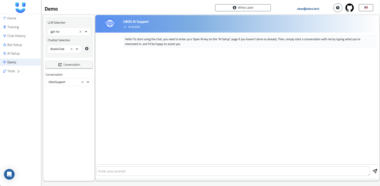
WinTerm MCP can be seamlessly integrated with the UBOS platform, a full-stack AI Agent development platform. UBOS empowers businesses to orchestrate AI Agents, connect them with enterprise data, build custom AI Agents with their own LLM models, and create sophisticated Multi-Agent Systems. By leveraging UBOS in conjunction with WinTerm MCP, organizations can unlock the full potential of AI-powered automation within their Windows environments.
UBOS provides a comprehensive suite of tools and services that streamline the AI Agent development lifecycle, including:
- Agent Orchestration: UBOS provides a visual interface for designing, deploying, and managing AI Agent workflows. This enables businesses to easily create complex automation scenarios that involve multiple AI Agents interacting with various systems and data sources.
- Data Integration: UBOS offers a secure and reliable platform for connecting AI Agents to enterprise data sources. This allows AI Agents to access the information they need to perform their tasks effectively.
- Custom LLM Integration: UBOS enables businesses to integrate their own LLM models into their AI Agents. This allows them to create AI Agents that are tailored to their specific needs and requirements.
- Multi-Agent Systems: UBOS supports the development of Multi-Agent Systems, which are collections of AI Agents that work together to achieve a common goal. This enables businesses to tackle complex problems that require the collaboration of multiple AI Agents.
By combining the power of WinTerm MCP with the capabilities of the UBOS platform, organizations can unlock a new era of AI-driven automation within their Windows environments, driving innovation, improving efficiency, and gaining a competitive edge.
WinTerm
Project Details
- capecoma/winterm-mcp
- MIT License
- Last Updated: 2/24/2025
Categories
Recomended MCP Servers
mcp server for tidb
An integration that allows LLMs to interact with Raindrop.io bookmarks using the Model Context Protocol (MCP).
🔎 A Model Context Protocol (MCP) server for integrating Perplexity's AI API with LLMs.
📧 MCP Mail Tool - AI-powered email management tool | 基于 MCP 的智能邮件管理工具
This is the most comprehensive wordpress mcp server. Includes functionality to perform CRUD operations on Users, Blogs, Categories...
WhatsApp MCP Server (TypeScript/Baileys)
Universal MCP-Server for your Databases optimized for LLMs and AI-Agents.
An MCP server that installs other MCP servers for you
PowerPlatform Model Context Protocol server
🗂️🤖 Airtable Model Context Protocol Server, for allowing AI systems to interact with your Airtable bases
MCP server enabling high-quality image generation via Together AI's Flux.1 Schnell model.
revit-mcp
Featured Templates
View More