UBOS Asset Marketplace: VideoLingo - Your AI-Powered Video Localization Solution
In today’s globalized world, video content has become a dominant force in communication, education, and entertainment. However, language barriers often limit the reach and impact of video content. Enter VideoLingo, an innovative asset available on the UBOS Asset Marketplace, designed to break down these barriers and make your videos accessible to a global audience.
VideoLingo is an all-in-one video translation, localization, and dubbing tool that leverages the power of AI to generate Netflix-quality subtitles. Unlike traditional translation methods that can result in stiff machine translations and multi-line subtitles, VideoLingo offers a seamless and high-quality solution for video localization. By incorporating high-quality dubbing, VideoLingo enables global knowledge sharing across language barriers, making it an indispensable tool for content creators, educators, and businesses alike.
Key Features and Benefits
VideoLingo boasts a comprehensive suite of features that streamline the video localization process and deliver exceptional results:
1. YouTube Video Download via yt-dlp
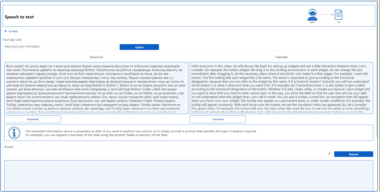
Effortlessly download YouTube videos directly into VideoLingo using yt-dlp, a powerful command-line program for downloading videos from YouTube and other video platforms. This feature allows you to quickly access and process video content for translation and localization.
2. Word-Level and Low-Illusion Subtitle Recognition with WhisperX
VideoLingo integrates WhisperX, a state-of-the-art speech recognition model, to provide accurate word-level subtitle recognition. WhisperX’s advanced algorithms ensure that subtitles are precisely aligned with the audio, minimizing the illusion of disconnect between the spoken words and the on-screen text. This feature is crucial for creating a seamless and engaging viewing experience.
3. NLP and AI-Powered Subtitle Segmentation
VideoLingo utilizes Natural Language Processing (NLP) and AI-powered subtitle segmentation to intelligently divide subtitles into meaningful segments. This ensures that subtitles are easy to read and follow, enhancing the overall viewing experience. The AI algorithms consider the context of the speech and break down sentences into natural-sounding phrases, avoiding awkward or confusing breaks.
4. Custom + AI-Generated Terminology for Coherent Translation
Maintaining consistency in terminology is essential for accurate and professional translations. VideoLingo allows you to create custom terminology lists and leverages AI to generate terminology suggestions based on the video content. This ensures that key terms are translated consistently throughout the video, maintaining the integrity and clarity of the message.
5. 3-Step Translate-Reflect-Adaptation for Cinematic Quality
VideoLingo employs a unique 3-step translation process that goes beyond simple word-for-word translation. The process involves:
- Translate: Initial translation of the video content into the target language.
- Reflect: Review and refinement of the translation to ensure accuracy and cultural appropriateness.
- Adapt: Adaptation of the translation to fit the cinematic context, ensuring that the subtitles complement the visuals and maintain the flow of the video.
This meticulous process results in cinematic-quality subtitles that enhance the viewing experience and effectively convey the intended message.
6. Netflix-Standard, Single-Line Subtitles Only
VideoLingo adheres to Netflix’s strict subtitle standards, ensuring that all subtitles are single-line and meet the platform’s technical requirements. Single-line subtitles are easier to read and less distracting for viewers, contributing to a more enjoyable viewing experience. This feature ensures that your videos are ready for distribution on Netflix and other major streaming platforms.
7. Dubbing with GPT-SoVITS, Azure, OpenAI, and More
In addition to subtitle generation, VideoLingo offers dubbing capabilities using a variety of text-to-speech (TTS) engines, including GPT-SoVITS, Azure, and OpenAI. This allows you to create fully dubbed versions of your videos, making them accessible to audiences who prefer to listen rather than read subtitles. The integration of multiple TTS engines provides flexibility and allows you to choose the voice that best suits your video content.
8. One-Click Startup and Processing in Streamlit
VideoLingo is designed for ease of use, with a one-click startup and processing feature in Streamlit. Streamlit is an open-source Python library that makes it easy to create interactive web applications for machine learning and data science. With Streamlit, you can quickly launch VideoLingo and start processing your videos with minimal setup.
9. Multi-Language Support in Streamlit UI
VideoLingo’s Streamlit UI supports multiple languages, making it accessible to users around the world. The multilingual interface ensures that users can navigate the tool and understand its features in their preferred language, enhancing the user experience and promoting global adoption.
10. Detailed Logging with Progress Resumption
VideoLingo provides detailed logging with progress resumption, allowing you to track the progress of your video localization projects and resume processing from where you left off. This feature is particularly useful for large or complex projects, where interruptions may occur. The detailed logs provide valuable insights into the translation and dubbing process, helping you identify and address any issues that may arise.
Use Cases
VideoLingo’s versatility makes it a valuable asset for a wide range of use cases:
- Content Creators: Expand the reach of your videos by translating and dubbing them into multiple languages.
- Educators: Make educational videos accessible to students around the world, regardless of their native language.
- Businesses: Localize marketing videos and training materials to reach international markets and improve communication with global teams.
- Media Companies: Streamline the video localization process for films, TV shows, and other media content.
- Organizations: Enhance global communication by translating and dubbing videos for internal and external audiences.
Why Choose VideoLingo?
VideoLingo stands out from other video translation tools due to its focus on:
- Single-Line Subtitles Only: Adherence to Netflix’s subtitle standards for optimal readability.
- Superior Translation Quality: AI-powered translation and adaptation for cinematic quality.
- Seamless Dubbing Experience: Integration with multiple TTS engines for high-quality dubbing.
Integrating VideoLingo with UBOS
VideoLingo is seamlessly integrated into the UBOS platform, offering users a comprehensive AI Agent development environment. UBOS empowers businesses to orchestrate AI Agents, connect them with enterprise data, and build custom AI Agents using their own LLM models and Multi-Agent Systems. By leveraging UBOS, you can further enhance VideoLingo’s capabilities and integrate it into your broader AI-driven workflows.
UBOS Features that Complement VideoLingo:
- AI Agent Orchestration: Manage and coordinate VideoLingo with other AI Agents to automate complex video localization tasks.
- Enterprise Data Connectivity: Connect VideoLingo to your internal data sources to personalize translations and improve accuracy.
- Custom AI Agent Development: Build custom AI Agents that interact with VideoLingo to automate specific tasks or integrate it into custom workflows.
- Multi-Agent Systems: Create Multi-Agent Systems that leverage VideoLingo to handle various aspects of video localization, such as translation, dubbing, and quality control.
Getting Started with VideoLingo on UBOS
To start using VideoLingo on the UBOS platform, follow these simple steps:
- Access the UBOS Asset Marketplace: Navigate to the UBOS Asset Marketplace and search for “VideoLingo.”
- Install VideoLingo: Click on the VideoLingo asset and follow the installation instructions.
- Configure VideoLingo: Configure VideoLingo with your preferred settings, such as language preferences and TTS engine selection.
- Start Localizing Videos: Upload your videos and start the translation and dubbing process.
Conclusion
VideoLingo is a game-changing tool for video localization, offering a seamless and high-quality solution for breaking down language barriers and reaching a global audience. With its comprehensive suite of features, ease of use, and integration with the UBOS platform, VideoLingo is the perfect choice for content creators, educators, businesses, and organizations looking to expand the reach and impact of their video content.
Unlock the power of AI-driven video localization with VideoLingo and UBOS. Connect with your global audience today!
VideoLingo
Project Details
- CXL-edu/VideoLingo
- Apache License 2.0
- Last Updated: 2/7/2025
Recomended MCP Servers
LinearAlgebra, Probability, Statistics
Stock Market MCP Server
An MCP server for creating 2D/3D game assets from text using Hugging Face AI models.
A Model Context Protocol server for fetching IETF documents (RFCs) for Large Language Models.
An MCP service designed for deploying HTML content to EdgeOne Pages and obtaining an accessible public URL.

MCP server that provides LLM with tools for interacting with EVM networks
python MCP NAVER
TEST
An MCP server to run qlik
A Model Context Protocol (MCP) server that helps AI code editors find TypeScript symbol definitions in your codebase....
Featured Templates
View More