What is the Tavus MCP Server?
The Tavus MCP Server is a Model Context Protocol (MCP) server designed for the Tavus API. It enables AI video generation, replica management, conversational AI, lipsync, and speech synthesis through MCP-compatible applications.
What is MCP (Model Context Protocol)?
MCP is an open protocol that standardizes how applications provide context to Large Language Models (LLMs), allowing AI models to access and interact with external data sources and tools.
What are Phoenix Replicas?
Phoenix Replicas are AI video personas that can be managed through the Tavus MCP Server. You can create, get information about, list, delete, and rename these replicas.
What kind of video generation is supported?
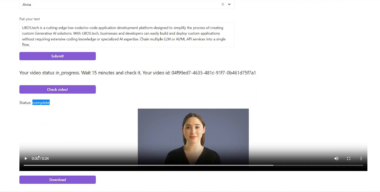
The server supports generating videos using replicas with text scripts or audio files. You can also manage (get details, list, delete, rename) the generated videos.
How does Conversational AI work with the Tavus MCP Server?
The server allows you to create interactive video conversations. You can create new conversations, get details, list them, end active conversations, and delete them.
What can I do with Personas?
You can create new personas for conversational AI, get details about them, list them, update them using JSON patch format, and delete them.
What is Lipsync functionality?
The Lipsync feature allows you to synchronize audio with existing videos. You can create new lipsyncs, get details, list them, and delete them.
What is Speech Synthesis used for?
Speech Synthesis generates speech audio from text using replicas. You can generate speech, get details, list speeches, delete them, and rename them.
What are the prerequisites for using the Tavus MCP Server?
You need Node.js 18+ and a Tavus API key (available at platform.tavus.io).
How do I install the Tavus MCP Server?
You can install it globally using npm: npm install -g tavus-mcp or from the source code by cloning the GitHub repository.
How do I configure the server?
You need to set your Tavus API key as an environment variable: export TAVUS_API_KEY="your_tavus_api_key_here". You also need to configure your MCP client (e.g., Claude Desktop, Cline) to use the server.
How do I use the Tavus tools once configured?
Once configured, you can use commands through your MCP client, such as “List my Tavus replicas” or “Generate a video using replica ‘Luna’ with the script: ‘Hello, welcome to our product demo!’”
What API coverage does the server provide?
The server provides complete coverage of the Tavus API v2, including Phoenix Replicas, Video Generation, Conversational AI, Lipsync, and Speech Synthesis.
How do I develop with the Tavus MCP Server?
You can clone the repository, install dependencies with npm install, build with npm run build, and use npm run watch for auto-rebuild during development.
How do I test the server during development?
Set your API key and run npm run inspector. The MCP Inspector will provide a URL to test the server in your browser.
What kind of error handling is included?
The server includes comprehensive error handling for authentication errors, rate limiting, payment errors, validation errors, and network errors.
How can I contribute to the project?
You can fork the repository, create a feature branch, commit your changes, push to the branch, and open a Pull Request.
Where can I find support?
You can find documentation at Tavus API Documentation, report issues on GitHub Issues, and learn more about the MCP protocol at Model Context Protocol.
Tavus MCP Server
Project Details
- rakeshdavid/Tavus-MCP
- MIT License
- Last Updated: 6/10/2025
Recomended MCP Servers
Agentic LLM Vulnerability Scanner / AI red teaming kit 🧪
Kollektiv MCP enables you to chat with and query your own documents directly from IDEs and MCP clients....
A Model Context Protocol (MCP) server providing access to Google Search Console
一个MCP服务器,基于Brave API让你的Claude Cline以及Langchain实现网络搜索功能。An MCP server that use Brave API allows your Claude Cline and Langchain to implement network...
A Model Context Protocol (MCP) server for interacting with Meilisearch through LLM interfaces.
AutoGen最新架构v0.4正式发布第一个稳定版本,v0.4是对AutoGen的一次从头开始的重写,目的是为构建Agent创建一个更健壮、可扩展、更易用的跨语言库,其应用接口采用分层架构设计,存在多套软件接口用以满足不同的场景需求 。
A Model Context Protocol (MCP) tool server for OpenAI's GPT-4o/gpt-image-1 image generation and editing APIs.
🔍 Enable AI assistants to search, access, and analyze PubMed articles through a simple MCP interface.
MCP Server that orchestrates research with Claude and Perplexity/GPT/Gemini automatically
Featured Templates
View More