UBOS Asset Marketplace: MCP Server for Streamlined AI Model Interaction
In the rapidly evolving landscape of Artificial Intelligence, managing interactions with multiple AI models from different providers can quickly become a complex undertaking. The UBOS Asset Marketplace addresses this challenge head-on with the MCP Server, a robust solution designed to simplify and standardize how applications provide context to Large Language Models (LLMs). This MCP (Model Context Protocol) server acts as a pivotal bridge, empowering AI models to seamlessly access and interact with external data sources and tools, streamlining AI integration, and enhancing overall efficiency.
Understanding the MCP Server
The MCP Server available on the UBOS Asset Marketplace is an implementation of the OpenAI MCP Server, designed as a Master Control Program (MCP) for interacting with AI models from OpenAI and Anthropic (Claude). It provides a unified endpoint to manage prompts, models, and API keys, simplifying the development and deployment of AI-powered applications.
Key Features and Benefits
- Unified API Endpoint: The MCP Server offers a single endpoint (
/api/mcp) for interacting with multiple AI models. This abstraction simplifies the code and reduces the complexity of managing multiple API calls. - Automatic Provider Detection: The server automatically detects the appropriate provider (OpenAI or Claude) based on the model requested, eliminating the need for manual configuration and routing.
- Simplified Configuration: The server utilizes environment variables for configuration, making it easy to manage API keys and other settings without modifying the code.
- Model Agnostic: The MCP Server supports a wide range of models from OpenAI and Claude, allowing developers to easily switch between models without changing their code.
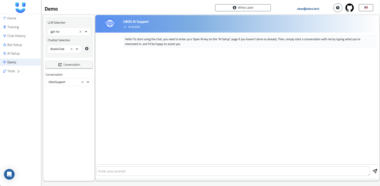
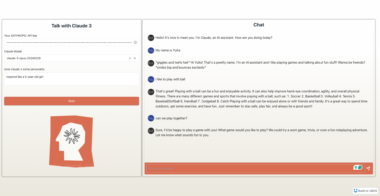
- Test Interface: A simple web interface is included for testing the MCP Server, making it easy to experiment with different prompts and models.
- Open Source: The MCP Server is open-source, allowing developers to customize and extend it to meet their specific needs.
Use Cases
The MCP Server can be used in a variety of applications, including:
- AI-Powered Chatbots: Build intelligent chatbots that can answer questions, provide information, and engage in conversations using different AI models.
- Content Generation: Automate the creation of high-quality content, such as blog posts, articles, and social media updates.
- Data Analysis: Analyze large datasets and extract insights using the power of AI.
- Code Generation: Generate code snippets and complete programs using AI models.
- Automation: Automate tasks such as email filtering, data entry, and customer support.
How the MCP Server Works
The MCP Server acts as an intermediary between your application and the AI models from OpenAI and Claude. Here’s a step-by-step breakdown of how it works:
- Request Received: Your application sends a request to the MCP Server’s unified endpoint (
/api/mcp). This request includes the prompt, the desired model (optional), the maximum number of tokens (optional), and the provider (optional). - Provider Detection: If the provider is set to
auto(or not specified), the MCP Server automatically detects the appropriate provider based on the model specified in the request. If the provider is explicitly specified (e.g.,openaiorclaude), the server uses that provider. - API Call: The MCP Server uses the specified provider’s API key and sends the prompt to the corresponding AI model.
- Response Received: The AI model processes the prompt and sends a response back to the MCP Server.
- Response Returned: The MCP Server returns the response to your application.
Installation and Configuration
To install and configure the MCP Server, follow these steps:
Clone the Repository:
bash git clone https://github.com/Spysailor/openai-mcp-implementation.git
Navigate to the Directory:
bash cd openai-mcp-implementation
Install Dependencies:
bash npm install
Configure Environment Variables:
bash cp .env.example .env
Edit the
.envfile and add your OpenAI and Claude API keys:PORT=3000 OPENAI_API_KEY=your_openai_api_key_here ANTHROPIC_API_KEY=your_claude_api_key_here
Start the Server:
bash npm start
The server will be accessible at
http://localhost:3000.
API Endpoints
POST /api/mcp: Unified endpoint for interacting with AI models from OpenAI and Claude.POST /api/mcp/openai: Endpoint specific to OpenAI models.POST /api/mcp/claude: Endpoint specific to Claude models.
Request Parameters (JSON)
prompt(required): The text to send to the AI model.model(optional): The model to use (default: ‘gpt-4’ for OpenAI).maxTokens(optional): The maximum number of tokens in the response (default: 2000).provider(optional): The provider to use (‘openai’, ‘claude’, or ‘auto’ for automatic detection).
Example Request
bash
curl -X POST http://localhost:3000/api/mcp
-H “Content-Type: application/json”
-d ‘{
“prompt”: “Explain how artificial intelligence works in 3 paragraphs.”,
“model”: “gpt-4”,
“maxTokens”: 500,
“provider”: “auto”
}’
Supported Models
OpenAI
- gpt-4
- gpt-4-turbo
- gpt-3.5-turbo
- And other OpenAI models…
Claude (Anthropic)
- claude-3-opus-20240229
- claude-3-sonnet-20240229
- claude-3-haiku-20240307
- And other Claude models…
The UBOS Advantage
The UBOS platform enhances the MCP Server’s capabilities by providing a comprehensive environment for building, orchestrating, and deploying AI Agents. UBOS allows you to:
- Orchestrate AI Agents: Seamlessly manage and coordinate multiple AI Agents to work together on complex tasks.
- Connect to Enterprise Data: Integrate AI Agents with your enterprise data sources, allowing them to access and process real-time information.
- Build Custom AI Agents: Customize AI Agents with your own LLM models and fine-tune them to meet your specific needs.
- Create Multi-Agent Systems: Develop sophisticated multi-agent systems that can solve complex problems and automate intricate workflows.
Conclusion
The MCP Server on the UBOS Asset Marketplace is a valuable tool for developers looking to simplify their interactions with AI models from OpenAI and Claude. By providing a unified API endpoint and automatic provider detection, the MCP Server streamlines AI integration and enhances overall efficiency. Combined with the power of the UBOS platform, the MCP Server empowers you to build, orchestrate, and deploy AI Agents with ease, unlocking the full potential of AI for your business.
OpenAI and Claude MCP
Project Details
- Spysailor/openai-mcp-implementation
- Last Updated: 4/13/2025
Recomended MCP Servers
Autonomous debugging agent MCP server
A math computation server that handles natural language math queries and calculations
cloudflare workers MCP server
A lightweight MCP server for processing, editing, and interacting with PDF, Word, Excel, and CSV documents.
A Python MCP Server for hirebase.org's API
A MCP implementation of the personal intelligence framework (PIF)
MCP server for Vidu video generation API
Kibela's official MCP Server
Featured Templates
View More