MemGPT: Unleashing the Potential of LLMs Through Advanced Memory Management
In the rapidly evolving landscape of Large Language Models (LLMs), one of the most significant limitations is their constrained context window. This limitation hinders their ability to engage in truly perpetual conversations and effectively utilize vast amounts of information. MemGPT emerges as a groundbreaking solution, addressing this challenge by intelligently managing different memory tiers within LLMs, effectively providing extended context within the LLM’s limited context window.
What is MemGPT?
MemGPT, short for Memory-GPT, is a system designed to enhance the memory capabilities of LLMs. It introduces a hierarchical memory architecture that allows LLMs to retain and recall information over extended periods, simulating a more human-like memory system. This is achieved by strategically managing different memory tiers, including:
- Core Context: The LLM’s immediate context window, containing the most recent and relevant information.
- Working Memory: A short-term memory space for actively used data and ongoing tasks.
- Archival Memory: A long-term storage solution, often implemented using a vector database, for less frequently accessed but crucial information.
MemGPT intelligently determines when to push critical information to the archival memory and when to retrieve it, enabling perpetual conversations and access to a much larger knowledge base.
Key Features and Functionality
- Hierarchical Memory Management: MemGPT’s core innovation lies in its hierarchical memory system, which mimics human memory by categorizing and storing information based on its relevance and frequency of use.
- Perpetual Conversations: By effectively managing memory, MemGPT enables LLMs to maintain context over extended conversations, allowing for more natural and engaging interactions.
- Integration with External Data Sources: MemGPT can connect to various external data sources, such as SQL databases and local files, allowing LLMs to access and utilize vast amounts of information.
- Self-Editing Memory: MemGPT possesses the ability to self-edit its memory, ensuring that it remains relevant and up-to-date.
- Command-Line Interface (CLI): MemGPT offers an interactive CLI for managing and interacting with the system.
- Database Interaction: MemGPT can be used to query and interact with SQL databases, providing LLMs with access to structured data.
- Document Question Answering: MemGPT can be used to answer questions about documents, providing LLMs with access to unstructured data.
Use Cases
MemGPT opens up a wide range of possibilities for enhancing LLM applications. Here are some key use cases:
- Enhanced Chatbots and Virtual Assistants: MemGPT enables chatbots and virtual assistants to have more natural and engaging conversations by maintaining context over extended interactions.
- Improved Knowledge Management: MemGPT can be used to build knowledge management systems that allow LLMs to access and utilize vast amounts of information.
- Data Analysis and Insights: MemGPT can be used to analyze data and generate insights by providing LLMs with access to structured and unstructured data sources.
- Personalized Learning: MemGPT can be used to create personalized learning experiences by adapting to the individual needs and preferences of each learner.
- Code Generation and Debugging: MemGPT can assist developers with code generation and debugging by providing access to relevant documentation and code examples.
- Document Question Answering: Quickly extract information from lengthy documents without manual searching.
- SQL Database Interaction: Enable LLMs to directly query and retrieve information from databases.
Getting Started with MemGPT
MemGPT offers several ways to get started, including:
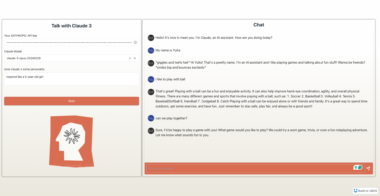
- Discord Integration: You can try out the MemGPT chatbot on Discord by joining the MemGPT Discord server and messaging the MemGPT bot.
- Local Installation: You can install MemGPT locally by following the instructions in the MemGPT repository.
Running MemGPT Locally
To run MemGPT locally, you will need to install the dependencies and add your OpenAI API key to your environment.
sh pip install -r requirements.txt export OPENAI_API_KEY=YOUR_API_KEY python3 main.py
Interactive CLI Commands
MemGPT’s CLI provides a set of commands for managing and interacting with the system, including:
/exit: Exit the CLI./save: Save a checkpoint of the current agent/conversation state./load: Load a saved checkpoint./dump: View the current message log./memory: Print the current contents of agent memory./pop: Undo the last message in the conversation./heartbeat: Send a heartbeat system message to the agent./memorywarning: Send a memory warning system message to the agent.
MemGPT and UBOS: A Powerful Combination
MemGPT’s advanced memory management capabilities make it an ideal complement to the UBOS AI Agent Development Platform.
UBOS is a full-stack AI Agent development platform focused on bringing AI Agents to every business department. UBOS helps you orchestrate AI Agents, connect them with your enterprise data, build custom AI Agents with your LLM model and Multi-Agent Systems. By integrating MemGPT into the UBOS platform, developers can create more powerful and versatile AI Agents that can:
- Maintain context over extended interactions.
- Access and utilize vast amounts of information.
- Adapt to the individual needs and preferences of users.
- Seamlessly interact with enterprise data sources.
Benefits of Using MemGPT with UBOS
- Enhanced AI Agent Performance: MemGPT improves the performance of AI Agents by providing them with a more robust memory system.
- Increased Versatility: MemGPT enables AI Agents to handle a wider range of tasks and applications.
- Improved User Experience: MemGPT enhances the user experience by enabling more natural and engaging interactions.
- Seamless Integration with Enterprise Data: MemGPT allows AI Agents to seamlessly integrate with enterprise data sources.
- Streamlined Development Process: UBOS simplifies the development process by providing developers with a comprehensive set of tools and resources.
Conclusion
MemGPT represents a significant advancement in the field of LLMs, addressing the critical challenge of limited context windows. By intelligently managing memory tiers, MemGPT enables LLMs to engage in perpetual conversations, access vast amounts of information, and adapt to individual user needs. When combined with the UBOS AI Agent Development Platform, MemGPT empowers developers to create more powerful, versatile, and user-friendly AI Agents that can transform various industries and applications.
Whether you’re building chatbots, virtual assistants, knowledge management systems, or data analysis tools, MemGPT offers a compelling solution for enhancing the capabilities of LLMs and unlocking their full potential.
MemGPT
Project Details
- Thelyoncrypt/MemGPT
- Apache License 2.0
- Last Updated: 11/6/2024
Recomended MCP Servers
Rad Security MCP Server
Python & JS/TS SDK for running AI-generated code/code interpreting in your AI app
An MCP server enabling CFBD API queries within Claude Desktop.
py-mcp-gcalendar
Model Context Protocol Server agent debates
MCP server that enables communication and coordination between different Roo modes/roles across multiple systems
Connecting Local AI Agent with MCP servers about Crypto and Stock news
Connect a bitcoin lightning wallet to your LLM using Nostr Wallet Connect and Model Context Protocol
MCP Crew AI Server is a lightweight Python-based server designed to run, manage and create CrewAI workflows.
Featured Templates
View More