DROMA: Revolutionizing Cancer Research with AI-Powered Drug Response Analysis
In the relentless pursuit of effective cancer treatments, the ability to accurately predict drug response is paramount. Traditional methods often fall short, struggling to integrate the vast and complex landscape of genomic, proteomic, and clinical data. Enter DROMA (Drug Response Omics association MAp, 卓玛), a groundbreaking resource poised to transform cancer pharmacogenomics.
DROMA is not just another database; it’s a comprehensive ecosystem meticulously designed to bridge the gap between multi-omics data and drug sensitivity in cancer models. It seamlessly integrates the largest published studies investigating cancer response to chemical compounds with associations between drug sensitivity and multi-omics data (mRNA, CNV, protein, mutation, etc.) across diverse cancer models. These models include Patient-Derived Cells (PDC), Patient-Derived Organoids (PDO), and Patient-Derived Xenografts (PDX). Importantly, human data integration is actively under development, promising an even more comprehensive resource in the future.
The Power of Integration: Unveiling Hidden Insights
DROMA’s true strength lies in its ability to integrate disparate data types into a unified platform. By combining drug response data with a wealth of omics information, DROMA enables researchers to:
- Identify predictive biomarkers: Discover novel genomic or proteomic signatures that correlate with drug sensitivity or resistance.
- Unravel mechanisms of action: Gain deeper insights into how drugs interact with cancer cells at the molecular level.
- Stratify patient populations: Identify subgroups of patients who are most likely to benefit from specific therapies.
- Accelerate drug discovery: Facilitate the development of more effective and targeted cancer treatments.
Key Components: A Modular and Extensible Architecture
DROMA is built upon a modular architecture, comprising several key components that work synergistically to provide a comprehensive research platform:
DROMA_DB: The heart of the system, DROMA_DB is a meticulously curated SQLite database containing a wealth of drug response and omics data. It serves as the foundation for all downstream analyses.
DROMA_Set: DROMASet is a powerful R package designed for managing and analyzing the complex data within DROMA. It offers a robust framework for handling multi-omics datasets alongside integrated drug sensitivity information, enabling seamless cross-project comparisons and analyses. This R package allows researchers to extract, manipulate, and analyze the data with ease, fostering deeper insights into drug response mechanisms.
DROMA_R: An R package specifically designed for DROMA, DROMA_R provides a suite of analytical tools for exploring and interpreting the data. It allows users to perform statistical analyses, generate visualizations, and identify potential biomarkers.
DROMA_Web: A user-friendly Shiny website that provides an intuitive interface for accessing and exploring the DROMA database. It allows researchers to easily search for specific drugs, genes, or cancer types, and visualize the corresponding data.
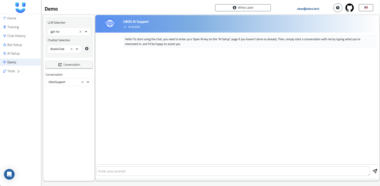
DROMA_MCP: Bridging the gap between AI and cancer research, DROMA_MCP (Model Context Protocol) acts as a crucial intermediary, enabling seamless communication between AI assistants and the analytical power of DROMA.R and DROMA.Set packages. This natural language interface simplifies the process of analyzing complex pharmacogenomic data, making it more accessible to researchers.
DROMA_AI (Under Development): DROMA_AI aims to leverage the power of artificial intelligence to further enhance drug response prediction. It will incorporate machine learning algorithms to identify complex patterns in the data and predict drug sensitivity with greater accuracy.
DROMA_Augur (Under Development): This component will focus on developing predictive models for drug response based on patient-specific data. By integrating clinical information with omics data, DROMA_Augur will enable personalized treatment strategies.
DROMA_py (Under Development): A Python-based version of DROMA, designed to provide greater flexibility and scalability for large-scale data analysis.
DROMA_MCP: AI-Powered Cancer Pharmacogenomics Analysis
The DROMA_MCP server is particularly noteworthy. It stands for DROMA Model Context Protocol server. In essence, it acts as a bridge, facilitating seamless communication between AI assistants and the analytical capabilities of the DROMA ecosystem. By providing a natural language interface to the DROMA.R and DROMA.Set packages, DROMA_MCP makes complex pharmacogenomic data analysis more accessible to a wider range of researchers. This innovative approach simplifies the process of extracting meaningful insights from vast datasets, potentially accelerating the discovery of new cancer treatments.
Statistics Speak Volumes: A Growing Resource
The DROMA database currently includes data from 17 datasets, encompassing 11 cell lines, 2 PDC, 3 PDO, and 1 PDX. This translates to a total of 2599 unique samples and an impressive 56398 unique drugs. These numbers underscore the breadth and depth of the resource, making it an invaluable asset for cancer researchers worldwide.
Use Cases: Transforming Cancer Research
DROMA has the potential to revolutionize cancer research in several key areas:
- Personalized Medicine: By predicting drug response based on individual patient characteristics, DROMA can help tailor treatment strategies to maximize efficacy and minimize side effects.
- Drug Repurposing: DROMA can identify existing drugs that may be effective against specific cancer subtypes, accelerating the drug development process.
- Targeted Therapy Development: By identifying novel drug targets, DROMA can facilitate the development of new therapies that specifically target cancer cells.
- Understanding Drug Resistance: DROMA can help researchers understand the mechanisms of drug resistance, leading to the development of strategies to overcome resistance.
Unlocking Synergies: Integrating DROMA with the UBOS Platform
While DROMA offers a wealth of capabilities on its own, integrating it with the UBOS platform amplifies its potential exponentially. UBOS, the Full-stack AI Agent Development Platform, provides a powerful ecosystem for building, orchestrating, and deploying AI agents. By connecting DROMA to UBOS, researchers can:
- Automate data analysis workflows: Create AI agents that automatically analyze DROMA data and generate reports, freeing up researchers to focus on more creative tasks.
- Develop custom AI agents: Build custom AI agents that leverage DROMA data to predict drug response or identify potential drug targets.
- Integrate DROMA with other data sources: Connect DROMA to other databases and tools, creating a comprehensive data ecosystem for cancer research.
- Build Multi-Agent Systems: Orchestrate multiple AI Agents for even more sophisticated research. These Agents can access data, build custom models and much more. The possibilities are endless.
Key Features: A Glimpse into the Future of Cancer Research
- Comprehensive Data Integration: Seamlessly integrates drug response and multi-omics data from diverse cancer models.
- AI-Powered Analysis: Leverages AI algorithms to predict drug response and identify potential drug targets.
- User-Friendly Interface: Provides an intuitive web interface for easy access to data and analysis tools.
- Modular Architecture: Enables easy customization and extension of the platform.
- Open-Source and Collaborative: Fosters collaboration and innovation within the cancer research community.
- Natural language interface: Simplify complex pharmacogenomics data analysis by using DROMA_MCP server.
The Future is Bright: Ongoing Development and Expansion
The DROMA team is committed to continuously improving and expanding the platform. Ongoing development efforts include:
- Integrating human data: Expanding the database to include data from clinical trials and patient cohorts.
- Developing new AI algorithms: Incorporating cutting-edge machine learning techniques to improve drug response prediction.
- Expanding the range of data types: Adding new types of omics data, such as metabolomics and proteomics.
- Creating a more user-friendly interface: Improving the usability of the platform for researchers of all backgrounds.
In conclusion, DROMA represents a significant step forward in the fight against cancer. By providing a comprehensive and integrated platform for drug response analysis, DROMA empowers researchers to unlock new insights into the disease and develop more effective treatments. Integrated with the UBOS platform, the possibilities are limitless, paving the way for a future where cancer is a treatable, rather than a terminal, illness.
DROMA MCP Server

Project Details
- mugpeng/DROMA
- Mozilla Public License 2.0
- Last Updated: 6/4/2025
Recomended MCP Servers
A MCP server for the Frankfurter API for currency exchange rates.
An MCP server that enables searches within Obsidian vaults using the Omnisearch plugin API. Returns absolute paths to...
A Model Context Protocol server for calculating.
Agentic tool that looks for statistical variations in conversation structure and logs unusual events to a SQLite database.
MCP server for InfluxDB 1.8
A Model Context Protocol (MCP) server for interacting with DaVinci Resolve and Fusion
Featured Templates
View More