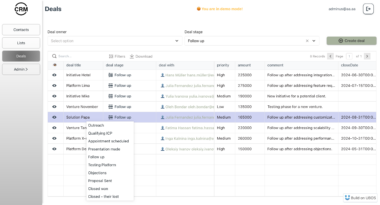
DataX Admin: Streamlining Data Synchronization for Modern Enterprises
In today’s data-driven world, efficient data synchronization is paramount for businesses seeking to gain a competitive edge. DataX Admin emerges as a robust solution, offering a user-friendly platform to configure, manage, and monitor data synchronization tasks with ease. Built on the powerful combination of Go and Vue.js, DataX Admin provides a seamless experience for data engineers and administrators, enabling them to orchestrate data flows across diverse systems.
Understanding DataX and Its Significance
Before diving deeper into DataX Admin, it’s crucial to understand the underlying technology it leverages: DataX. DataX is a versatile, high-performance data synchronization tool developed by Alibaba. It supports various data sources and destinations, allowing businesses to move data between databases, file systems, cloud storage, and more. DataX excels at handling large volumes of data, making it ideal for complex data integration scenarios.
However, DataX’s command-line interface can be challenging for some users. This is where DataX Admin steps in, providing a graphical interface that simplifies the configuration and management of DataX jobs.
Core Use Cases of DataX Admin
DataX Admin addresses a wide range of data synchronization needs across various industries. Here are some prominent use cases:
- Data Warehousing: Seamlessly extract, transform, and load (ETL) data from multiple sources into a data warehouse for analytical purposes.
- Data Migration: Migrate data between different database systems or platforms with minimal downtime and data loss.
- Data Backup and Recovery: Create reliable data backups and restore them quickly in case of system failures or data corruption.
- Real-time Data Synchronization: Keep data synchronized between operational systems and reporting databases to ensure consistent and up-to-date insights.
- Cloud Data Integration: Integrate on-premises data sources with cloud-based data warehouses and data lakes.
Key Features That Set DataX Admin Apart
DataX Admin boasts a comprehensive set of features designed to streamline data synchronization workflows:
- Visual Configuration:
- Intuitive web-based interface for configuring DataX tasks without requiring extensive command-line knowledge.
- Drag-and-drop functionality for defining data sources, destinations, and transformation rules.
- Support for a wide range of data source types, including relational databases (MySQL, PostgreSQL, Oracle), NoSQL databases (MongoDB, Redis), file systems (HDFS, local), and cloud storage (Amazon S3, Azure Blob Storage).
- Real-time Monitoring:
- Monitor the status of running DataX tasks in real-time.
- View detailed logs and performance metrics to identify bottlenecks and troubleshoot issues.
- Receive alerts and notifications when tasks complete, fail, or encounter errors.
- Data Source Management:
- Centralized management of data source connections, including connection strings, credentials, and access permissions.
- Support for multiple environments (development, testing, production).
- Secure storage of sensitive data using encryption and access control mechanisms.
- Task Scheduling and Execution:
- Schedule DataX tasks to run automatically at specific intervals or on a recurring basis.
- Trigger tasks based on events or external dependencies.
- Manage task dependencies to ensure that tasks are executed in the correct order.
- User and Permission Management:
- Role-based access control to restrict access to sensitive data and functionality.
- User authentication and authorization to ensure that only authorized users can perform certain actions.
- Audit logging to track user activity and system changes.
- System Monitoring and Performance Analysis:
- Monitor system resources, such as CPU usage, memory consumption, and disk I/O.
- Analyze DataX task performance to identify areas for optimization.
- Generate reports on data synchronization activity and system health.
- Multi-Architecture Support:
- DataX Admin supports both AMD64 and ARM64 architectures, making it suitable for deployment on a variety of platforms, including traditional servers, cloud instances, and embedded devices.
Diving Deeper: Technical Aspects and Implementation
- Technology Stack:
- Backend: Go
- Frontend: Vue.js
- Database: MySQL (recommended)
- Installation:
- Docker: The recommended installation method is using Docker, which simplifies the deployment process and ensures consistency across environments. A pre-built Docker image is available on Docker Hub.
- Source Code: Alternatively, you can build DataX Admin from source code, which provides more flexibility and allows you to customize the application to your specific needs.
- Configuration:
- The system configuration is stored in a YAML file (
backend/config.yaml), which allows you to customize various aspects of the application, such as database connections, server ports, and logging settings.
- The system configuration is stored in a YAML file (
- Project Structure:
- The project is organized into two main directories:
frontendandbackend, which contain the frontend and backend code, respectively. The structure follows industry best practices for Vue.js and Go projects.
- The project is organized into two main directories:
Unlocking the Potential of AI Agents with UBOS
While DataX Admin focuses on data synchronization, it’s important to consider how it can be integrated with other technologies to unlock even greater potential. This is where UBOS, a full-stack AI Agent development platform, comes into play. UBOS empowers businesses to orchestrate AI Agents, connect them with enterprise data, and build custom AI Agents tailored to specific needs.
Here’s how DataX Admin and UBOS can work together:
- Data Ingestion for AI Agents: DataX Admin can be used to ingest data from various sources into a data lake or data warehouse, which can then be accessed by AI Agents running on the UBOS platform.
- Data Enrichment: AI Agents can enrich data synchronized by DataX Admin by adding context, performing transformations, and identifying patterns.
- Automated Data Pipelines: UBOS can be used to orchestrate automated data pipelines that leverage DataX Admin for data synchronization and AI Agents for data processing and analysis.
The Future of Data Synchronization and AI Integration
DataX Admin represents a significant step forward in simplifying data synchronization for modern enterprises. By providing a user-friendly interface and a comprehensive set of features, it empowers data engineers and administrators to manage data flows with greater efficiency and control. Furthermore, its potential integration with AI Agent platforms like UBOS opens up exciting possibilities for automating data pipelines and unlocking new insights from data.
As businesses continue to generate and collect ever-increasing volumes of data, the need for robust and efficient data synchronization solutions will only grow. DataX Admin is well-positioned to meet this demand, providing a solid foundation for building data-driven applications and leveraging the power of AI.
DataX Admin
Project Details
- happyhope/datax-admin
- Last Updated: 4/20/2025
Recomended MCP Servers
Simple MCP Server Implementation
Google Search Console Insights with Claude AI for SEOs
MCP server 0xEvm addresses
A starter kit to build *local-only* AI apps that cost $0 to run -- starting with document Q&A....
Image generation assistant, please imagine and describe a complete picture in detail based on my simple description. Then...
An MCP server to inject auto-approve MCP functionality into Claude Desktop
A Model Control Protocol (MCP) server that allows cross-checking responses from multiple LLM providers simultaneously
Featured Templates
View More