Unleash the Power of Brazilian Trade Data with the Comexstat MCP Server on UBOS
In today’s data-driven world, access to timely and accurate information is paramount, especially when dealing with complex global markets. The Comexstat MCP (Model Context Protocol) Server emerges as a crucial tool for anyone seeking to leverage Brazilian foreign trade statistics. Integrated seamlessly with the UBOS (Full-stack AI Agent Development Platform), it unlocks unprecedented opportunities for AI-powered analysis, decision-making, and innovation.
What is the Comexstat MCP Server?
The Comexstat MCP Server acts as a vital bridge, connecting AI models like Claude with the Comexstat API, Brazil’s comprehensive foreign trade statistics resource. By implementing the Model Context Protocol (MCP), this server standardizes how AI agents access and interact with Comexstat data, ensuring consistency, reliability, and ease of use.
Think of it as a universal translator for AI, allowing it to understand and utilize the intricate details of Brazilian trade flows. It eliminates the need for complex API integrations and custom coding, providing a streamlined, efficient pathway to valuable trade insights.
Key Features that Set the Comexstat MCP Server Apart
- Seamless Integration with UBOS: The Comexstat MCP Server is designed to work flawlessly within the UBOS ecosystem. UBOS is a comprehensive platform for developing and deploying AI agents. By integrating the Comexstat MCP Server with UBOS, you get easy way to bring it to your enterprise data, build custom AI Agents with your LLM model and Multi-Agent Systems.
- Comprehensive Data Access: Gain access to a wealth of Brazilian foreign trade data, including:
- General export and import statistics
- Data broken down by municipalities
- Historical data spanning from 1989 to 1996
- Auxiliary tables with essential codes and descriptions
- Standardized MCP Interface: Adherence to the Model Context Protocol ensures compatibility with a wide range of AI models and tools, promoting interoperability and reducing integration efforts.
- Robust Error Handling and Data Validation: Built with TypeScript and Zod, the server offers robust error handling and data validation, guaranteeing data integrity and reliability.
- Flexible Communication: Supports communication via stdin/stdout, adhering to the MCP standard for seamless data exchange.
- Easy Installation and Setup: With a straightforward installation process using npm, you can quickly set up the server and start accessing Comexstat data.
- Ready-to-Use Tools: The server provides a suite of pre-built tools for querying data, retrieving metadata, and exploring available filters and metrics.
Unleashing the Power of the Comexstat MCP Server: Use Cases
The Comexstat MCP Server opens doors to a multitude of applications across various industries. Here are some compelling use cases:
Market Research and Analysis:
- Scenario: A market research firm wants to analyze Brazil’s export trends for agricultural products to identify potential new markets for their clients.
- How the Comexstat MCP Server Helps: By using the server, the firm can quickly query historical export data for specific agricultural products, filtering by destination country, time period, and other relevant criteria. They can then use this data to identify emerging markets, assess competitive landscapes, and provide actionable insights to their clients.
Supply Chain Optimization:
- Scenario: A manufacturing company relies on imported raw materials from Brazil. They need to optimize their supply chain to minimize disruptions and reduce costs.
- How the Comexstat MCP Server Helps: The company can use the server to monitor import data for their key raw materials, tracking prices, volumes, and supplier information. This allows them to identify potential supply chain bottlenecks, negotiate better terms with suppliers, and diversify their sourcing strategies.
Investment Analysis:
- Scenario: An investment fund is considering investing in Brazilian companies involved in the export sector. They need to assess the risks and opportunities associated with these investments.
- How the Comexstat MCP Server Helps: The fund can use the server to analyze the export performance of various Brazilian industries, identifying sectors with high growth potential and assessing their vulnerability to external factors such as currency fluctuations and trade policies. This enables them to make more informed investment decisions.
Policy Making and Government Agencies:
- Scenario: A government agency is responsible for promoting Brazilian exports. They need to understand the impact of various trade policies on the country’s export performance.
- How the Comexstat MCP Server Helps: The agency can use the server to analyze export data before and after the implementation of specific trade policies, assessing their effectiveness and identifying areas for improvement. This enables them to develop evidence-based trade policies that promote sustainable economic growth.
Financial institutions
- Scenario: A financial institution wants to evaluate the credit risk associated with lending to businesses involved in international trade with Brazil.
- How the Comexstat MCP Server Helps: They can use the server to access detailed export and import data for specific companies or industries, allowing them to evaluate their trade volumes, trading partners, and historical performance. This information can then be used to develop more accurate credit risk assessments and make better lending decisions.
Customs and Border Control:
- Scenario: Customs agencies are responsible for monitoring and controlling the flow of goods across borders. They need to identify potential risks related to illegal trade, smuggling, or non-compliance with trade regulations.
- How the Comexstat MCP Server Helps: They can utilize the server to compare reported trade data with actual shipments, identifying discrepancies or anomalies that may indicate illegal activities. This helps them to improve border security and combat illicit trade practices.
Environmental Agencies:
- Scenario: Environmental agencies are interested in monitoring the trade of environmentally sensitive goods or products that may be associated with deforestation, illegal logging, or other environmental crimes.
- How the Comexstat MCP Server Helps: They can leverage the Comexstat MCP Server to track the trade of specific commodities, such as timber or minerals, identifying potential links to environmental degradation or illegal activities. This allows them to implement targeted enforcement measures and promote sustainable trade practices.
Digging Deeper: Exploring the Available Tools
The Comexstat MCP Server offers a rich set of tools designed to simplify data access and analysis:
getLastUpdate(): Quickly retrieve the date of the last data update to ensure you’re working with the most current information.getAvailableYears(): List all years for which data is available, allowing you to conduct historical analysis.getAvailableFilters(): Discover the filters you can use to refine your queries, such as country, product category, and region.getFilterValues(filter, language?): Obtain the available values for a specific filter, ensuring accurate and precise data retrieval.getAvailableFields(): List the fields available for detailed data breakdown, enabling granular analysis.getAvailableMetrics(): Discover the metrics you can use to measure trade performance, such as FOB value and weight.queryData(options): Execute detailed queries with a range of options, including:flow: Specify whether you’re interested in exports or imports.period: Define the time period for your query usingfromandtodates.monthDetail: Choose whether to include monthly details.filters: Apply filters to narrow down your results.details: Specify the fields for detailed breakdown.metrics: Select the metrics you want to retrieve.language: Choose the language for the results (optional).
queryMunicipalitiesData(options): Focus your analysis on specific municipalities within Brazil.queryHistoricalData(options): Delve into historical data from 1989 to 1996.- Auxiliary Table Tools: Access valuable reference data, including:
getStates(): List Brazilian states.getStateDetails(ufId): Retrieve details for a specific state.getCities(): List Brazilian cities.getCityDetails(cityId): Retrieve details for a specific city.getCountries(search?): List countries.getCountryDetails(countryId): Retrieve details for a specific country.getEconomicBlocks(options?): List economic blocks.getHarmonizedSystem(options?): Access the Harmonized System (HS) codes.getNBM(options?): Access the Nomenclatura Brasileira de Mercadorias (NBM) codes.getNBMDetails(coNbm): Retrieve details for a specific NBM code.
Integrating with Claude and UBOS: A Powerful Combination
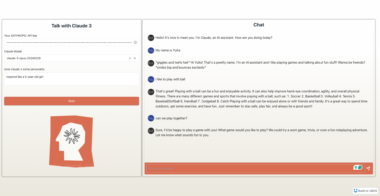
The Comexstat MCP Server seamlessly integrates with Claude, a powerful AI model, via the Claude Desktop application. By adding the server configuration to the claude_desktop_config.json file, you can enable Claude to directly access and analyze Comexstat data. Then, you can use the UBOS Platform to create AI Agents with your LLM model.
This integration allows you to:
- Ask complex questions about Brazilian trade in natural language.
- Generate reports and visualizations based on real-time data.
- Automate trade analysis tasks.
- Gain deeper insights into Brazilian trade dynamics.
Installation and Usage: Getting Started
Installing and using the Comexstat MCP Server is a breeze. Follow these simple steps:
Clone the repository:
bash git clone https://github.com/luizzzvictor/mcp-comexstat-easy.git cd mcp-comexstat-easy
Install dependencies:
bash npm install
Compile the TypeScript code:
bash npm run build
Run the MCP server:
bash npm start
Beyond the Basics: Development and Customization
For developers who want to extend the functionality of the Comexstat MCP Server, the project offers a flexible and well-documented codebase. You can:
- Run the server in development mode using
npm run dev. - Execute tests using
npm test. - Check test coverage using
npm test -- --coverage.
Why Choose the Comexstat MCP Server on UBOS?
The Comexstat MCP Server, tightly integrated with the UBOS platform, empowers businesses, researchers, and policymakers with unparalleled access to Brazilian trade data. By simplifying data access, promoting interoperability, and enabling AI-powered analysis, this solution unlocks new opportunities for growth, innovation, and informed decision-making.
Embrace the power of data and AI. Choose the Comexstat MCP Server on UBOS and transform your understanding of Brazilian trade.
Comexstat Data Server (Brazilian foreign trade statistics)
Project Details
- luizzzvictor/mcp-comexstat
- MIT License
- Last Updated: 5/5/2025
Recomended MCP Servers
This project is a Model Context Protocol (MCP) server for interacting with the VRChat API.
sharing what I've learned with mcp servers on mac os x.
本项目通过将 MCP 协议转换为 MQTT 协议,我们能够利用强大的大型语言模型(LLMs),就能轻松操控您的智能家居、机器人或其他硬件设备。
Model Context Protocol (MCP) server implementation for ClickUp integration
To teach LLM Agents how to work with PSR.exe's hmt
Cline Browser-Use MCP
Due Diligence Automation 尽职调查自动化
A math computation server that handles natural language math queries and calculations
A RAG-ready MCP server for semantic PDF search with OCR, FAISS, and transformers—plug into any MCP client and...
Featured Templates
View More