UBOS Asset Marketplace: Shrimp Task Manager - The AI Agent’s Taskmaster
In the rapidly evolving landscape of AI and specifically within the burgeoning field of AI Agents, effective task management is paramount. Traditional project management tools often fall short when dealing with the dynamic and iterative nature of AI development. This is where Shrimp Task Manager, an MCP (Model Context Protocol) Server, steps in to revolutionize how AI Agents handle complexity, consistency, and continuous refinement.
Shrimp Task Manager, available on the UBOS Asset Marketplace, isn’t just another task management tool; it’s a purpose-built system designed to empower AI Agents with capabilities like chain-of-thought reasoning, reflection, and adherence to stylistic guidelines. It translates natural language instructions into structured development tasks, complete with dependency tracking and iterative refinement processes, thus mirroring the problem-solving approach of human developers.
What is an MCP Server and Why is it Important?
To fully appreciate the significance of Shrimp Task Manager, understanding the Model Context Protocol (MCP) is crucial. MCP is an open protocol that standardizes how applications provide context to Large Language Models (LLMs). Think of it as a universal translator, allowing diverse AI systems to communicate and collaborate effectively.
An MCP server, like Shrimp Task Manager, acts as a bridge between AI models and the real world. It allows AI to access and interact with external data sources, tools, and even other AI systems. This is particularly important for AI Agents that need to perform complex tasks that require understanding and manipulating information from various sources.
Use Cases: Where Shrimp Task Manager Shines
- Complex Software Development: Imagine an AI Agent tasked with developing a new feature for a software application. Shrimp Task Manager enables the agent to break down this complex task into smaller, more manageable sub-tasks, track dependencies between them, and iteratively refine its approach based on feedback and testing. The ‘init project rules’ functionality allows you to set initial guidelines to maintain consistency.
- Data Analysis and Reporting: An AI Agent analyzing large datasets and generating reports can use Shrimp Task Manager to structure its workflow, ensuring each step is verified and that the final report meets specific requirements. The ‘task verification’ feature is crucial here.
- Content Creation and Curation: AI Agents creating marketing copy, blog posts, or social media content can leverage Shrimp Task Manager to maintain consistent brand voice and style across all outputs. The ‘project rules’ feature ensures adherence to established guidelines.
- Scientific Research and Experimentation: AI Agents conducting scientific research can use Shrimp Task Manager to manage experiments, track data, and analyze results in a structured and reproducible manner. The ‘task memory’ feature ensures that all steps are documented for future reference.
- AI-Driven Customer Support: AI Agents handling customer inquiries can use Shrimp Task Manager to access customer data, identify relevant solutions, and track the progress of each interaction. The ‘thought chain process’ allows the AI to systematically reason through complex issues.
Key Features: Unlocking the Power of AI Agents
Shrimp Task Manager boasts a comprehensive set of features designed to empower AI Agents and streamline their workflows:
- Task Planning & Analysis: At the heart of Shrimp Task Manager lies its ability to deeply understand complex task requirements. It goes beyond simply receiving instructions; it analyzes the underlying needs and objectives to ensure that the AI Agent is working towards the right goals. The
plan_tasktool initiates this process. - Intelligent Task Decomposition: Complex problems are rarely solved in a single step. Shrimp Task Manager excels at breaking down large tasks into smaller, more manageable sub-tasks. This allows AI Agents to focus on individual components, making the overall process more efficient and less prone to errors. The
split_taskstool facilitates this. - Dependency Management & Status Tracking: In many projects, tasks are interdependent, meaning one task cannot be started until another is completed. Shrimp Task Manager intelligently manages these dependencies, ensuring that tasks are executed in the correct order and that progress is accurately tracked. The
list_tasks,query_task, andget_task_detailtools provide visibility into task status. - Task Verification: Ensuring that the results of each task meet the required standards is crucial for maintaining quality. Shrimp Task Manager includes built-in task verification capabilities, allowing AI Agents to automatically check their work and identify any discrepancies. The
verify_tasktool enables this. - Task Memory: Learning from past experiences is essential for AI Agents to improve their performance over time. Shrimp Task Manager automatically saves execution history for each task, providing a valuable source of reference and learning data. This is all handled in the background automatically.
- Thought Chain Process: For complex problems that require careful reasoning, Shrimp Task Manager provides a step-by-step thought chain process. This allows AI Agents to systematically explore different approaches, evaluate their potential, and arrive at the most optimal solution. The
process_thoughttool enables systematic reasoning. - Project Rules: Maintaining consistency across a project is essential for ensuring a cohesive and professional outcome. Shrimp Task Manager allows you to define project-specific rules and guidelines that AI Agents must adhere to. The
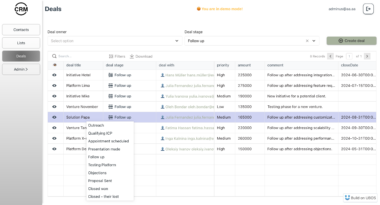
init_project_rulestool helps in defining standards. - Web GUI (Optional): For users who prefer a visual interface, Shrimp Task Manager offers an optional web GUI that provides a user-friendly way to interact with the system. This can be enabled with the
ENABLE_GUI=trueenvironment variable. - Detailed Mode (Optional): For advanced users who want to delve deeper into the AI Agent’s reasoning process, Shrimp Task Manager offers a detailed mode that displays the complete conversation history. This can be enabled with the
ENABLE_DETAILED_MODE=trueenvironment variable.
Getting Started with Shrimp Task Manager
Installing and configuring Shrimp Task Manager is straightforward:
- Installation: You can install Shrimp Task Manager via Smithery or manually using
npm. Both methods are detailed in the documentation. - Configuration: Configure Shrimp Task Manager in your preferred MCP-compatible client, such as Cursor IDE. The documentation provides detailed instructions for setting up the configuration file.
- Environment Variables: Customize the behavior of Shrimp Task Manager using environment variables. The
DATA_DIRvariable is particularly important, as it specifies the directory where task data will be stored.
Why Choose Shrimp Task Manager from the UBOS Asset Marketplace?
The UBOS Asset Marketplace is the premier destination for discovering and deploying cutting-edge AI tools and resources. By choosing Shrimp Task Manager from the marketplace, you benefit from:
- Seamless Integration: Shrimp Task Manager is designed to seamlessly integrate with the UBOS platform, allowing you to leverage its full range of capabilities.
- Curated Selection: The UBOS Asset Marketplace features a curated selection of high-quality AI tools, ensuring that you have access to the best resources available.
- Community Support: As a member of the UBOS community, you’ll have access to a wealth of knowledge and support from fellow AI enthusiasts and experts.
UBOS: Your Full-Stack AI Agent Development Platform
UBOS is more than just an asset marketplace; it’s a comprehensive platform for developing and deploying AI Agents. UBOS provides the tools and infrastructure you need to:
- Orchestrate AI Agents: Design and manage complex workflows involving multiple AI Agents.
- Connect to Enterprise Data: Seamlessly integrate AI Agents with your existing data sources.
- Build Custom AI Agents: Create AI Agents tailored to your specific needs and requirements.
- Develop Multi-Agent Systems: Build sophisticated AI systems that leverage the collective intelligence of multiple agents.
Conclusion: Empowering AI Agents with Intelligent Task Management
Shrimp Task Manager is a game-changer for AI Agent development. By providing a purpose-built task management system that understands the nuances of AI workflows, it empowers AI Agents to tackle complex problems, maintain consistency, and continuously improve their performance. Whether you’re building software, analyzing data, creating content, or conducting research, Shrimp Task Manager can help you unlock the full potential of AI Agents.
Visit the UBOS Asset Marketplace today to discover how Shrimp Task Manager can transform your AI Agent development process.
Chain of Thought

Project Details
- liorfranko/mcp-chain-of-thought
- MIT License
- Last Updated: 5/7/2025
Recomended MCP Servers
@zbddev/payments-sdk TypeScript SDK for ZBD Payments
An advanced sequential thinking process using a Multi-Agent System (MAS) built with the Agno framework and served via...
MCP server for MS SQL Server
Get detail captions for a image
MCP Server for Space Frontiers API
Frontend testing tools for Model Context Protocol
Featured Templates
View More