Azure DevOps MCP Server: Unleashing AI-Powered Automation within UBOS
In the rapidly evolving landscape of AI-driven software development, the need for seamless integration between AI models and existing development platforms is paramount. The Azure DevOps MCP (Model Context Protocol) Server, seamlessly integrated with UBOS, addresses this critical need by providing a robust bridge between Azure DevOps and AI agents like Claude, enabling developers to automate tasks, access real-time information, and enhance their workflows with the power of AI.
What is an MCP Server?
Before diving into the specifics of the Azure DevOps MCP Server, let’s clarify the concept of an MCP Server itself. An MCP (Model Context Protocol) server acts as a bridge, allowing AI models to access and interact with external data sources and tools. It provides a standardized way for applications to expose their functionality to LLMs (Large Language Models), enabling AI agents to leverage these capabilities in a controlled and secure manner. This is crucial for building practical AI applications that can go beyond simple text generation and interact with the real world.
UBOS: The Full-Stack AI Agent Development Platform
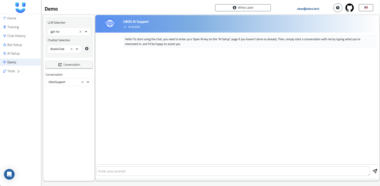
UBOS is a full-stack AI Agent Development Platform designed to empower businesses to create, orchestrate, and deploy AI agents across various departments. It provides the infrastructure and tools necessary to connect AI agents with enterprise data, build custom AI agents using your preferred LLM models, and create sophisticated multi-agent systems. UBOS simplifies the complexity of AI agent development, making it accessible to businesses of all sizes.
The Azure DevOps MCP Server is a key component of the UBOS ecosystem, allowing AI agents built on the UBOS platform to directly interact with Azure DevOps services. This integration unlocks a wide range of use cases, from automated code reviews to intelligent task management.
Key Features and Capabilities of the Azure DevOps MCP Server
The Azure DevOps MCP Server offers a rich set of features that enable AI agents to interact with various aspects of Azure DevOps:
Work Item Management:
get_work_item: Retrieve detailed information about a specific work item by its ID.list_work_items: Query work items based on specified criteria using WIQL (Work Item Query Language).create_work_item: Create new work items, such as bugs, tasks, or user stories, directly from the AI agent.update_work_item: Modify existing work items to reflect changes in status, assignments, or other attributes.
Board Management:
get_boards: Retrieve a list of available boards within the Azure DevOps project, providing context for task organization and prioritization.
Git Repository Management:
list_repositories: Obtain a list of all Git repositories within the project, including essential information like ID, name, default branch, size, and URLs.get_file: Retrieve the content of a specific file from a repository, enabling AI agents to analyze code, documentation, or configuration files.compare_branches: Compare two branches within a repository to identify the commit history and changes between them.
Pipeline Management:
list_pipelines: Obtain a list of all pipelines defined within the Azure DevOps project.trigger_pipeline: Initiate the execution of a specific pipeline, enabling automated builds, tests, and deployments.
Pull Request Management:
list_pull_requests: Retrieve a list of pull requests within the project, allowing AI agents to monitor code review processes.create_pull_request: Create new pull requests, automating the process of proposing code changes.update_pull_request: Modify existing pull requests to reflect changes in code or discussions.get_pull_request: Retrieve detailed information about a specific pull request.
Wiki Management:
get_wikis: Obtain a list of all wikis within the project.get_wiki_page: Retrieve the content of a specific wiki page, enabling AI agents to access documentation and knowledge base articles.create_wiki: Create new wikis directly from the AI agent.update_wiki_page: Create or update wiki pages, allowing AI agents to contribute to project documentation.
Project Management:
list_projects: Retrieve a list of all projects within the Azure DevOps organization.
Use Cases: Transforming Software Development with AI
The integration of the Azure DevOps MCP Server with UBOS unlocks a wide array of powerful use cases:
- Automated Code Reviews: AI agents can analyze code changes submitted in pull requests, identifying potential bugs, security vulnerabilities, and style violations. This accelerates the code review process and improves code quality.
- Intelligent Task Management: AI agents can monitor work item status, identify bottlenecks, and automatically assign tasks to the appropriate team members. This streamlines workflows and improves team productivity.
- Automated Pipeline Execution: AI agents can trigger pipelines based on specific events, such as code commits or pull request merges. This automates the build, test, and deployment process, reducing the risk of human error.
- AI-Powered Documentation: AI agents can automatically generate documentation based on code comments and commit messages. This ensures that documentation is always up-to-date and accurate.
- Proactive Issue Detection: AI agents can analyze logs and metrics to identify potential issues before they impact users. This allows developers to proactively address problems and prevent downtime.
- Context-Aware Assistance: Integrated with tools like Claude, developers can ask questions about their Azure DevOps projects and receive contextually relevant answers, drawing insights directly from work items, code repositories, and pipelines.
- Predictive Analytics: Leveraging historical data from Azure DevOps, AI agents can predict project completion times, identify potential risks, and optimize resource allocation.
Installation and Configuration
Installing and configuring the Azure DevOps MCP Server is straightforward. The server can be installed either via Smithery, a tool for managing MCP servers, or manually by cloning the repository, installing dependencies, and building the server. Detailed instructions are provided in the server’s documentation.
Configuration involves obtaining an Azure DevOps Personal Access Token (PAT) with the necessary scopes and configuring the MCP settings for your client application (e.g., Cline or Claude Desktop). The configuration specifies the command to run the server, the environment variables required for authentication, and other settings.
Verification and Troubleshooting
After installation and configuration, it’s essential to verify that the server is working correctly. The documentation provides instructions on how to use the MCP Inspector tool to verify the installation and troubleshoot any issues.
Common troubleshooting steps include checking the server path in the MCP settings, verifying Azure DevOps credentials, and ensuring that the PAT has the necessary scopes. The Cline logs can also provide valuable information for diagnosing problems.
Development and Extension
The Azure DevOps MCP Server is designed to be easily modified and extended. Developers can make changes to the server’s code in the src directory, build the server using npm run build, and test the changes using the inspector tool.
This allows developers to customize the server to meet their specific needs and integrate it with other tools and services.
Conclusion
The Azure DevOps MCP Server, seamlessly integrated with UBOS, provides a powerful bridge between Azure DevOps and AI agents, enabling developers to automate tasks, access real-time information, and enhance their workflows with the power of AI. By leveraging the rich set of features and capabilities offered by the server, organizations can transform their software development processes and accelerate their innovation.
With UBOS, the full-stack AI Agent Development Platform, the integration becomes even more streamlined, offering a comprehensive environment for building, orchestrating, and deploying AI agents that can revolutionize various business departments. The Azure DevOps MCP Server is not just an integration; it’s a catalyst for AI-driven transformation in the world of software development.
Azure DevOps Integration Server

Project Details
- RainyCodeWizard/azure-devops-mcp-server
- MIT License
- Last Updated: 4/22/2025
Recomended MCP Servers
MCP server for Medusa JS SDK
An MCP server implementation that provides tools for interacting with the [Telegram Bot API](https://core.telegram.org/bots/api).
Stay on top of trending topics on social media and the web with AI
Research on Educational Reform Projects
📄 A curated list of awesome .cursorrules files
Featured Templates
View More