UBOS AutoProvisioner MCP Server: Seamless AI Integration for Enhanced LLM Capabilities
In the rapidly evolving landscape of Artificial Intelligence, the ability for Large Language Models (LLMs) to access and interact with real-world data is paramount. The UBOS AutoProvisioner MCP (Model Context Protocol) Server provides a robust solution to this challenge, acting as a crucial bridge between your LLMs and external data sources. This allows for richer, more context-aware AI applications. The AutoProvisioner MCP Server, now in open beta, is designed to simplify the integration process, enabling developers to focus on building innovative AI solutions rather than wrestling with complex connectivity issues.
What is an MCP Server?
Before diving into the specifics of the AutoProvisioner, let’s clarify the core concept: MCP or Model Context Protocol. MCP is an open protocol standardizing how applications provide context to LLMs. Think of it as a universal translator, ensuring seamless communication between AI models and diverse data sources. An MCP Server acts as the intermediary, handling the complexities of data retrieval and formatting, and presenting it in a way that LLMs can easily understand and utilize.
Key Features of the UBOS AutoProvisioner MCP Server
The UBOS AutoProvisioner MCP Server offers several key features that streamline AI integration and enhance LLM capabilities:
- Automated Provisioning: The name says it all. The server automates the process of connecting LLMs to external data, reducing manual configuration and deployment efforts. This allows for faster iteration and quicker time-to-market for AI applications.
- Remote and Local Installation Options: The AutoProvisioner supports both remote (SSE-based) and local (stdio-based) communication. This flexibility allows you to choose the installation method that best suits your infrastructure and security requirements. Remote installation leverages Server-Sent Events (SSE) for efficient, real-time communication. Local installation offers a dependency-free setup for scenarios where direct system access is preferred.
- Simplified Configuration: The server is designed for ease of use, with a straightforward configuration process. The provided configuration snippets drastically reduce the learning curve, allowing you to get up and running quickly.
- Open Beta Access: The AutoProvisioner is currently in open beta, providing early access to its capabilities and allowing you to contribute to its development and improvement.
- Build From Source Option: For advanced users and those seeking maximum customization, the server can be built directly from source using Deno. This provides complete control over the server’s functionality and allows for tailored optimizations.
- Testing Tools: The inclusion of the
@modelcontextprotocol/inspectortool simplifies testing and debugging, ensuring smooth operation and accurate data transfer between your LLMs and external sources.
Use Cases for the UBOS AutoProvisioner MCP Server
The UBOS AutoProvisioner MCP Server unlocks a wide range of use cases across various industries:
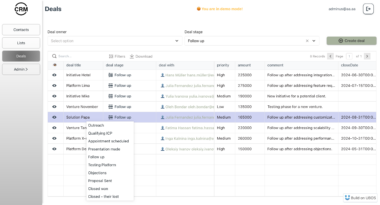
- Customer Service Automation: Connect your LLM-powered chatbots to CRM systems to provide personalized and informed customer support. The AutoProvisioner can fetch customer data, order history, and other relevant information, enabling the chatbot to answer inquiries accurately and efficiently.
- Content Generation and Summarization: Integrate LLMs with news feeds, databases, and other content sources to automatically generate articles, summaries, and reports. The AutoProvisioner can retrieve relevant information and provide it to the LLM, enabling it to create high-quality, context-aware content.
- Data Analysis and Visualization: Connect LLMs to data warehouses and analytics platforms to perform advanced data analysis and generate insightful visualizations. The AutoProvisioner can retrieve data, perform calculations, and present the results in a user-friendly format.
- Personalized Recommendations: Integrate LLMs with e-commerce platforms and recommendation engines to provide personalized product recommendations to customers. The AutoProvisioner can fetch customer browsing history, purchase data, and other relevant information, enabling the LLM to generate highly targeted recommendations.
- Code Generation and Debugging: Empower AI coding assistants by connecting them to code repositories and development environments. The AutoProvisioner can provide context about existing code, libraries, and APIs, enabling the LLM to generate and debug code more effectively.
- Financial Modeling and Forecasting: Connect LLMs to financial data sources and models to perform sophisticated financial analysis and forecasting. The AutoProvisioner can retrieve real-time market data, economic indicators, and other relevant information, enabling the LLM to generate accurate and timely financial predictions.
Installation Options: Remote vs. Local
The UBOS AutoProvisioner MCP Server offers two primary installation methods, each catering to different needs and environments:
1. Remote Installation (Recommended):
- Ideal for: Users who prefer a quick and easy setup with minimal system dependencies.
- Mechanism: Utilizes Server-Sent Events (SSE) for communication.
- Prerequisites: Requires Node.js and npm to be installed.
- Configuration: Simply update your configuration file with the provided snippet, pointing to the remote SSE endpoint.
2. Local Installation:
- Ideal for: Users who require complete control over the server and prefer a dependency-free setup.
- Mechanism: Utilizes standard input/output (stdio) for communication.
- Prerequisites: None (no system dependencies).
- Steps: Involves downloading and running an installation script, followed by updating your configuration file with the path to the executable.
Building from Source: For Advanced Users
For those who seek maximum customization and control, the UBOS AutoProvisioner MCP Server can be built directly from source using Deno. This process involves using the deno compile command with specific flags to generate an executable file. Building from source allows you to tailor the server to your specific needs and optimize its performance.
Testing with the MCP Inspector
The @modelcontextprotocol/inspector tool is a valuable asset for testing and debugging your MCP Server integration. This tool allows you to inspect the communication between your LLM and the server, ensuring that data is being transmitted correctly and that the server is functioning as expected.
Integrating with the UBOS Platform
The UBOS AutoProvisioner MCP Server seamlessly integrates with the broader UBOS platform, a full-stack AI Agent Development Platform designed to empower businesses with AI capabilities. UBOS focuses on bringing AI Agents to every business department, offering tools to orchestrate AI Agents, connect them with enterprise data, build custom AI Agents with your LLM model, and create sophisticated Multi-Agent Systems.
By leveraging the UBOS platform in conjunction with the AutoProvisioner MCP Server, you can unlock the full potential of AI Agents and build powerful, intelligent applications that drive business value. The UBOS platform provides a comprehensive ecosystem for developing, deploying, and managing AI Agents, while the AutoProvisioner ensures seamless integration with external data sources.
Conclusion
The UBOS AutoProvisioner MCP Server is a valuable tool for anyone looking to integrate LLMs with external data sources. Its automated provisioning, flexible installation options, and simplified configuration make it easy to get started, while its open beta access and build from source option provide opportunities for customization and contribution. By leveraging the AutoProvisioner in conjunction with the UBOS platform, you can unlock the full potential of AI Agents and build innovative AI solutions that drive business value. Embrace the future of AI integration with the UBOS AutoProvisioner MCP Server and empower your LLMs with the context they need to excel.
AutoProvisioner

Project Details
- zerosync-co/mcp-server-autoprovisioner
- BSD 3-Clause "New" or "Revised" License
- Last Updated: 6/13/2025
Recomended MCP Servers
public server for mcp
A Model Context Protocol (MCP) server for Cursor that enables requesting user input during generation
Google Forms MCP
Connect Rhino3D to Claude AI via the Model Context Protocol
Bluesky MCP server
A Model Context Protocol (MCP) for Jupyter Notebook
MCP server for connecting clients like Claude Desktop to ODBC data sources
A model context protocol server for GitHub API
Web3 MCP server for EVM chains (at moment)
Featured Templates
View More