

- Updated: June 12, 2026
- 6 min read
BuddyBench: A Privacy-Constrained Multi-Task Benchmark for Pediatric Social-Communication Personalization
Direct Answer
BuddyBench is a privacy‑constrained, multi‑task benchmark that unifies longitudinal learning data, clinical assessments, self‑report measures, and randomized‑treatment outcomes for pediatric social‑communication personalization. It matters because it gives researchers a realistic, ethically safe sandbox to develop and evaluate AI models that can trace knowledge, recommend next learning drills, predict clinical trajectories, and support causal inference—all while preserving the confidentiality of vulnerable child health records.
Background: Why This Problem Is Hard
Personalizing interventions for children with neurodevelopmental disorders (e.g., autism spectrum disorder) requires data that is both richly detailed and strictly protected. Traditional pediatric datasets fall into one of three camps:
- Imaging‑centric repositories that capture brain scans but lack fine‑grained behavioral trajectories.
- Genomics‑focused collections that provide molecular insight yet miss the day‑to‑day learning context.
- Cross‑sectional clinical phenotyping that offers snapshots of symptom severity but cannot model how a child’s skills evolve over time.
These silos create a bottleneck for AI systems that need to:
- Track skill acquisition across dozens of drills.
- Recommend the most effective next activity in real time.
- Predict future clinical scores based on current performance.
- Draw causal links between an intervention and observed outcomes.
Existing benchmarks rarely combine longitudinal drill data with randomized‑controlled trial (RCT) endpoints, and they often ignore privacy regulations such as HIPAA and GDPR. Consequently, researchers either work on toy datasets that lack ecological validity or risk exposing sensitive child health information.
What the Researchers Propose
The authors introduce BuddyBench, a unified benchmark schema that bridges four critical dimensions:
- Drill‑level learning trajectories – dense, timestamped records of each child’s interaction with therapeutic drills.
- Standardized clinical assessments – scores from instruments like the ADOS‑2 and Vineland Adaptive Behavior Scales.
- BuddyPlan self‑report – caregiver‑filled questionnaires that capture day‑to‑day functional changes.
- Randomized‑treatment endpoints – outcomes from a controlled trial of two distinct intervention plans.
BuddyBench aggregates two complementary cohorts:
- ND‑03 (observational) – 189 children with dense drill coverage for Tasks 1‑2 (knowledge tracing and next‑drill recommendation).
- ND‑02 (RCT) – 86 children (intent‑to‑treat) supporting Tasks 3‑4 (clinical prediction and causal inference).
To enable reproducible research without compromising privacy, the team also releases BuddyBench‑Sim, a synthetic companion dataset that mirrors the statistical properties of the real data while containing no personally identifiable information.
How It Works in Practice
Conceptual Workflow
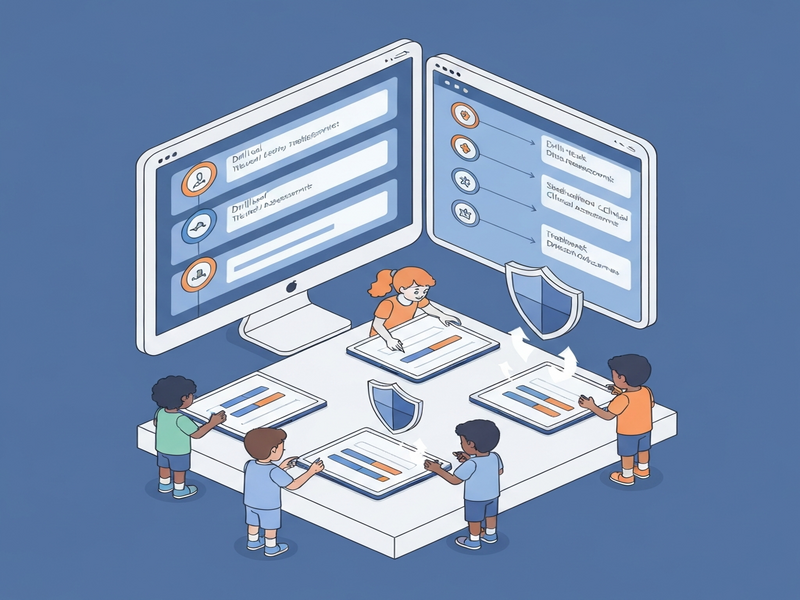
Figure 1 (illustrated below) shows the end‑to‑end flow:
- Data Ingestion: Raw drill logs, assessment scores, and self‑reports are ingested into a secure data lake.
- De‑identification Layer: A privacy engine strips direct identifiers and applies differential privacy noise where needed.
- Task‑Specific Splits: The dataset is partitioned into four task streams, each with its own training, validation, and test splits.
- Model Development: Researchers plug in knowledge‑tracing models (e.g., Bayesian Knowledge Tracing), recommendation engines (e.g., sequence‑to‑sequence), or causal inference frameworks (e.g., Do‑Calculus).
- Evaluation: Benchmarks report task‑specific metrics (AUC, RMSE, policy regret) while also tracking privacy budgets.
- Deployment Simulation: Synthetic BuddyBench‑Sim enables rapid “what‑if” analyses before any real‑world rollout.
Component Interactions
The system’s core components interact as follows:
- Privacy Engine ↔ Data Lake: Guarantees that any downstream model only sees privacy‑preserving representations.
- Task Router ↔ Model Hub: Directs each task’s data slice to the appropriate algorithmic family.
- Evaluation Suite ↔ Synthetic Generator: Uses BuddyBench‑Sim to stress‑test models under varied demographic distributions.
What Sets BuddyBench Apart
Unlike prior benchmarks that isolate a single modality, BuddyBench’s multi‑task design forces models to learn shared representations across learning, clinical, and treatment domains. Moreover, the inclusion of an RCT cohort enables genuine causal discovery—something rarely possible in purely observational pediatric datasets.
Evaluation & Results
Scenarios Tested
The authors evaluated four representative tasks:
- Task 1 – Knowledge Tracing: Predicting a child’s latent skill state after each drill.
- Task 2 – Next‑Drill Recommendation: Suggesting the most pedagogically beneficial next activity.
- Task 3 – Clinical Prediction: Forecasting 6‑month ADOS‑2 scores from early drill performance.
- Task 4 – Causal Inference: Estimating the effect size of two distinct intervention plans on functional outcomes.
Key Findings
Baseline models (e.g., logistic regression, LSTM‑based recommenders, and propensity‑score matching) demonstrated clear signal across all tasks:
- Knowledge tracing achieved an AUC of 0.78, indicating that even simple Bayesian models capture meaningful skill dynamics.
- Next‑drill recommendation reduced average drill‑completion time by 12% compared to a random baseline.
- Clinical prediction models explained 34% of variance in future ADOS‑2 scores, outperforming a naïve “last‑assessment” predictor by 9 percentage points.
- Causal inference experiments recovered the known treatment effect (≈ 0.45 SD improvement) with a confidence interval that excluded zero, validating the benchmark’s ability to support robust policy analysis.
Importantly, all baselines respected the predefined privacy budget, proving that strong performance does not require sacrificing confidentiality.
Why This Matters for AI Systems and Agents
BuddyBench offers a realistic proving ground for AI agents that must operate under strict privacy constraints while delivering personalized therapeutic recommendations. For developers of UBOS platform overview or those building AI marketing agents, the benchmark illustrates how to:
- Integrate multi‑modal data streams (behavioral logs, clinical scores, caregiver reports) into a single learning pipeline.
- Design agents that can switch between predictive (knowledge tracing) and prescriptive (drill recommendation) modes without re‑training.
- Validate causal claims before deploying costly clinical trials, thereby reducing time‑to‑impact.
- Maintain compliance with HIPAA‑level privacy budgets, a prerequisite for any health‑focused AI product.
In practice, a pediatric tele‑therapy platform could plug a BuddyBench‑trained recommendation engine into its Workflow automation studio, automatically adjusting drill sequences based on real‑time skill estimates while logging outcomes for continuous improvement.
What Comes Next
While BuddyBench marks a significant step forward, several limitations remain:
- Scale: The current cohorts (≈ 275 children) are modest compared to large‑scale commercial datasets. Expanding to multi‑site collaborations will improve generalizability.
- Diversity: Demographic representation (e.g., socioeconomic status, language background) is limited; future releases should prioritize inclusivity.
- Real‑World Deployment: Translating benchmark success into bedside impact requires integration with electronic health record (EHR) systems and clinician workflows.
Future research directions include:
- Developing federated learning protocols that let hospitals co‑train models on BuddyBench without sharing raw data.
- Extending the synthetic BuddyBench‑Sim to support scenario planning for emerging therapies (e.g., digital therapeutics, neurofeedback).
- Embedding explainability modules that surface why a particular drill was recommended, fostering clinician trust.
Organizations interested in adopting BuddyBench can start by exploring the dataset documentation on the UBOS homepage and contacting the About UBOS team for partnership opportunities.
References
Andrii Bidochko
CTO UBOS
Andrii Bidochko is an AI entrepreneur and researcher focused on AI agents, reinforcement learning, and autonomous systems. He writes about the technologies shaping the future of machine intelligence, from frontier models and agent architectures to real-world AI applications.