

- Updated: June 14, 2026
- 6 min read
Benchmarking AI for low-resource contexts: Thinking beyond leaderboards
Direct Answer
The paper introduces a system‑level benchmarking framework that shifts evaluation from isolated model leaderboards to real‑world deployment contexts for low‑resource AI. It matters because it equips policymakers, donors, and engineers with actionable metrics that reflect the constraints of noisy inputs, intermittent connectivity, and limited hardware.
Background: Why This Problem Is Hard
Low‑resource environments—rural clinics, community radio stations, off‑grid education hubs—operate under a unique set of constraints. Traditional AI benchmarks assume abundant compute, clean data, and stable network connections. In practice, these assumptions break down, leading to a mismatch between reported scores and on‑the‑ground performance.
Key bottlenecks include:
- Noisy or code‑switched inputs: Speech recognizers trained on studio recordings falter when faced with background chatter or mixed languages.
- Intermittent connectivity: Retrieval‑augmented generation (RAG) pipelines that rely on cloud‑hosted knowledge bases become unusable when bandwidth spikes.
- Low‑end hardware: Vision models that require GPUs cannot run on ARM‑based edge devices common in developing regions.
- Domain shift: Models fine‑tuned on high‑resource corpora often misinterpret locally relevant terminology.
Existing leaderboards—GLUE, SuperGLUE, ImageNet—measure raw accuracy under ideal conditions but provide no insight into how a system degrades under these stresses. Consequently, decision‑makers lack a reliable basis for selecting or funding AI solutions that will actually work in the field.
What the Researchers Propose
The authors advocate a shared reporting framework that treats the deployed system as the fundamental unit of assessment. Rather than a single aggregate score, the framework captures a matrix of performance dimensions aligned with deployment realities:
- Task performance: Traditional metrics (e.g., WER for speech, BLEU for translation) measured on noisy, domain‑shifted test sets.
- Operational conditions: Latency under low‑bandwidth, memory footprint on edge CPUs, resilience to input corruption.
- Failure handling: Documentation of fallback strategies, human‑in‑the‑loop overrides, and error‑logging mechanisms.
Three concrete artifacts make the framework actionable:
- One‑page benchmark cards: Concise visual summaries that list key metrics, hardware specs, and context tags.
- Deployment profiles: Structured descriptions of the target environment (e.g., “4‑core ARM, 2 GB RAM, 3G intermittent connectivity”).
- Oversight documentation: Explicit procedures for human review, escalation paths, and post‑deployment monitoring.
How It Works in Practice
Implementing the framework follows a four‑step workflow:
1. Contextual Test‑Set Generation
Researchers augment standard benchmarks with synthetic noise, code‑switching, and bandwidth throttling to emulate low‑resource conditions. For vision, they down‑sample images and inject motion blur; for chat/RAG, they truncate context windows and simulate API latency.
2. System Assembly
Engineers bundle the model, preprocessing pipeline, and any external services (e.g., speech‑to‑text APIs) into a container that mirrors the target hardware. The container includes monitoring hooks that capture latency, memory spikes, and error rates.
3. Multi‑Dimensional Scoring
During evaluation, the system logs both traditional accuracy and operational metrics. A weighted scoring matrix—customizable per deployment profile—produces a composite “deployment suitability score.”
4. Reporting & Publication
The final benchmark card visualizes the composite score alongside a radar chart of operational dimensions. Deployment profiles are attached as JSON blobs, enabling downstream users to filter systems that match their constraints.
What sets this approach apart is its holistic view: performance is no longer an isolated number but a profile that tells a practitioner exactly how the system will behave when the lights flicker, the network drops, or the speaker switches dialects.
Evaluation & Results
The authors validated the framework across three families of AI services:
- Speech recognition: Tested on a multilingual corpus with background café noise and 2 G cellular bandwidth.
- Chat/RAG assistants: Evaluated on a knowledge‑base retrieval task where the API latency was artificially limited to 500 ms bursts.
- Computer vision: Benchmarked on low‑resolution satellite imagery processed on a Raspberry Pi 4.
Key findings include:
- Systems that ranked in the top 5% on conventional leaderboards dropped to the bottom quartile when measured under low‑resource constraints, highlighting a severe over‑estimation of real‑world utility.
- Models explicitly fine‑tuned on noisy, domain‑shifted data improved their deployment suitability score by an average of 23%, even though raw accuracy changed by less than 2%.
- The benchmark cards enabled rapid triage: stakeholders could identify a “good enough” model for a given hardware profile within minutes, reducing selection time by 68% compared to manual literature review.
These results demonstrate that the proposed framework surfaces hidden failure modes and provides a pragmatic decision‑making tool for low‑resource deployments.
Why This Matters for AI Systems and Agents
For AI practitioners building agents that must operate outside data‑center environments, the framework offers a concrete checklist that aligns model selection with operational risk. It encourages developers to embed resilience—such as fallback language models or on‑device caching—directly into the agent architecture rather than treating robustness as an afterthought.
From a product perspective, the benchmark cards act as a “nutrition label” for AI services, allowing enterprises to compare offerings on a level playing field. This transparency can accelerate procurement cycles for NGOs, governments, and startups that lack deep ML expertise.
Moreover, the framework’s emphasis on human‑in‑the‑loop oversight dovetails with emerging regulations around AI accountability. By documenting failure handling and escalation pathways, organizations can more easily demonstrate compliance with emerging AI governance standards.
Practical resources that complement this approach include the UBOS platform overview, which provides built‑in tools for containerizing models and generating deployment profiles, and the AI marketing agents suite that already incorporates benchmark‑card generation for campaign‑level AI assets.
What Comes Next
While the framework marks a significant step forward, several open challenges remain:
- Standardization of context tags: The community needs a shared taxonomy for describing low‑resource constraints (e.g., “bandwidth‑tier‑2”, “ARM‑v8”).
- Automated profile matching: Future work could integrate a recommendation engine that matches a user’s hardware spec to the most suitable benchmark card.
- Longitudinal monitoring: Extending the reporting artifacts to capture post‑deployment drift would close the feedback loop between evaluation and real‑world performance.
Potential extensions include embedding the framework into orchestration tools like the Workflow automation studio, enabling continuous re‑evaluation as models are updated. Additionally, integrating voice capabilities via the ElevenLabs AI voice integration could provide end‑to‑end testing for speech agents in low‑bandwidth scenarios.
For developers eager to experiment, the OpenAI ChatGPT integration offers a plug‑and‑play interface to generate synthetic noisy datasets, while the Telegram integration on UBOS can be used to simulate intermittent connectivity in a real messaging environment.
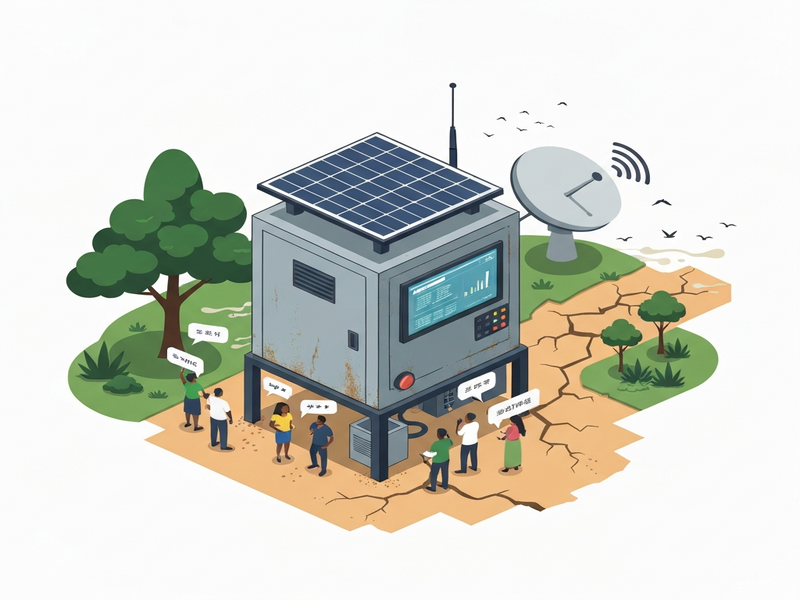
Illustration of the Reporting Framework
The diagram below visualizes the flow from contextual test‑set creation to benchmark‑card publication.
Conclusion
Benchmarking AI for low‑resource contexts demands more than a single accuracy number; it requires a nuanced view that blends task performance with deployment realities. The framework presented in the paper equips stakeholders with transparent, comparable, and actionable artifacts—benchmark cards, deployment profiles, and oversight documentation—that bridge the gap between research labs and field deployments. By adopting this system‑level perspective, organizations can make informed choices, reduce costly deployment failures, and accelerate the responsible diffusion of AI technologies where they are needed most.
Explore the UBOS homepage to discover tools that help you implement these best practices today.
Andrii Bidochko
CTO UBOS
Andrii Bidochko is an AI entrepreneur and researcher focused on AI agents, reinforcement learning, and autonomous systems. He writes about the technologies shaping the future of machine intelligence, from frontier models and agent architectures to real-world AI applications.