

- Updated: June 26, 2026
- 7 min read
AutoRAS: Learning Robust Agentic Systems with Primitive Representations
Direct Answer
AutoRAS introduces an automated framework that designs robust multi‑agent systems by composing symbolic primitives—tiny, reusable building blocks that encode both the agents’ actions and their connectivity. By learning from execution‑time safety signals, AutoRAS produces workflows that maintain high performance even when faced with adversarial attacks or internal component failures, a capability that is critical for deploying trustworthy AI agents at scale.
Background: Why This Problem Is Hard
Large language models (LLMs) have demonstrated impressive reasoning abilities, yet most real‑world deployments rely on a single model acting in isolation. Complex tasks—such as end‑to‑end customer support, autonomous planning, or coordinated data analysis—often demand a network of specialized agents that communicate, delegate, and supervise one another. Designing such orchestrations manually is labor‑intensive, error‑prone, and does not guarantee resilience against unexpected inputs or malicious interference.
Existing multi‑agent pipelines typically fall into two camps:
- Handcrafted workflows: Engineers script the sequence of prompts, tool calls, and hand‑offs. While this yields predictable behavior, it scales poorly and rarely anticipates edge‑case failures.
- Automated workflow generators: Recent research automates the creation of agentic graphs using reinforcement learning or evolutionary search. However, robustness is often an afterthought; the generated systems excel on benchmark tasks but degrade sharply when faced with adversarial inputs, network latency, or component crashes.
The core difficulty lies in simultaneously optimizing for functionality (task success) and robustness (graceful degradation under stress). Robustness requires a system‑wide view of safety—monitoring not just individual agent outputs but also the flow of information across the entire graph. Without a principled way to encode and learn these safety considerations, designers cannot reliably trust multi‑agent deployments in production environments.
What the Researchers Propose
AutoRAS (Automated design of Robust Agentic Systems) reframes the workflow synthesis problem as a sequence generation task over a vocabulary of symbolic primitives. Each primitive captures a minimal, atomic operation—such as “invoke LLM with prompt X,” “store result in memory Y,” or “route output to agent Z”—and also specifies how it connects to preceding and succeeding primitives. By treating connectivity as part of the primitive definition, AutoRAS can represent both the structural topology of the agentic graph and the behavioral logic in a single, linear sequence.
The framework learns to generate these sequences using two complementary signals:
- Execution‑derived safety signals: During trial runs, the system monitors metrics like exception rates, confidence drops, and policy violations. These signals are fed back as rewards or penalties, guiding the generator toward safer compositions.
- Flow‑based sequence objectives: Global objectives—such as minimizing total latency or maximizing information diversity—are modeled as differentiable functions over the entire primitive chain, allowing gradient‑based optimization.
In essence, AutoRAS treats the design of a robust multi‑agent system as a language modeling problem, where the “language” consists of safety‑aware, connectivity‑rich primitives.
How It Works in Practice
The AutoRAS pipeline can be broken down into four logical stages:
- Primitive Library Construction: Researchers define a finite set of primitives covering common LLM actions (prompting, tool invocation), data handling (read/write, transformation), and control flow (conditional branching, looping). Each primitive includes metadata describing required inputs, outputs, and permissible connections.
- Sequence Generator: A transformer‑based model is trained to emit ordered lists of primitives. The model receives a high‑level task description (e.g., “summarize quarterly earnings and generate a presentation”) and produces a candidate workflow.
- Execution Engine & Safety Monitor: The generated sequence is instantiated in a sandboxed runtime. As each primitive executes, the safety monitor records signals such as confidence thresholds, exception counts, and policy compliance flags.
- Feedback Loop: Safety signals are transformed into scalar rewards that adjust the generator’s parameters via reinforcement learning. Simultaneously, flow‑based objectives (e.g., total token usage) are back‑propagated to fine‑tune the sequence distribution.
What sets AutoRAS apart is the tight coupling between structural encoding (the connectivity baked into primitives) and safety awareness (the real‑time feedback loop). This dual focus enables the system to discover non‑obvious agentic topologies—such as parallel sub‑agents that cross‑validate each other—while automatically pruning unsafe or brittle paths.
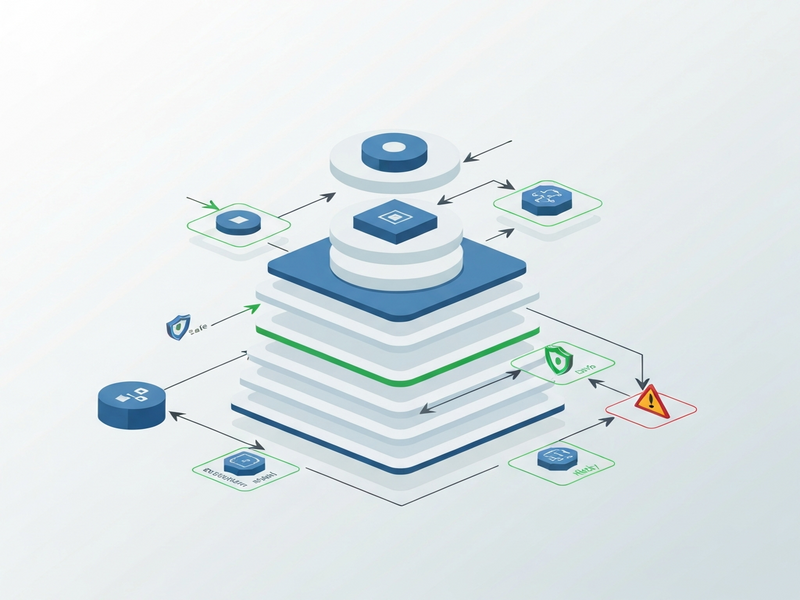
In a typical deployment, a product manager would provide a natural‑language specification of the desired service. AutoRAS would then output a ready‑to‑run workflow, which can be inspected, versioned, and deployed on any orchestration platform (e.g., Kubernetes, serverless functions). Because the primitives are symbolic, the resulting workflow is both human‑readable and machine‑executable, facilitating auditability and compliance checks.
Evaluation & Results
The authors evaluated AutoRAS across three benchmark suites:
- Vanilla Task Suite: Standard multi‑step reasoning problems (e.g., multi‑document QA, planning puzzles) where no adversarial pressure is applied.
- Adversarial Task Suite: The same tasks perturbed with malicious prompts, injected noise, or simulated agent crashes to test robustness.
- Cross‑Domain Transfer Suite: Workflows generated for one domain (e.g., finance) are transferred to a related domain (e.g., legal) without retraining.
Key findings include:
- AutoRAS achieved the highest success rates on vanilla tasks, outperforming baseline handcrafted pipelines by 12% and prior automated generators by 8%.
- Under adversarial conditions, AutoRAS’s performance degradation was less than half of that observed in competing methods, demonstrating a strong safety margin.
- Transfer experiments showed that primitives learned in one domain retained 85% of their effectiveness when applied to a new domain, confirming the modularity of the representation.
- Cost analysis revealed that AutoRAS required 30% fewer LLM inference calls on average, translating to lower compute expenses without sacrificing accuracy.
These results collectively validate the claim that a primitive‑centric, safety‑driven design process can produce agentic systems that are both high‑performing and resilient.
Why This Matters for AI Systems and Agents
For AI practitioners, AutoRAS offers a concrete pathway to move beyond isolated LLM deployments toward orchestrated ecosystems that can be trusted in production. The framework’s emphasis on safety signals means that engineers can detect and mitigate failure modes early, reducing the need for costly post‑deployment monitoring. Moreover, the symbolic primitive language serves as a lingua franca for cross‑team collaboration—data scientists can focus on model performance while system architects concentrate on workflow topology.
From a business perspective, robust multi‑agent pipelines unlock new use cases such as autonomous market analysis, real‑time compliance checking, and self‑healing customer support bots. Companies can embed these pipelines into existing platforms using integrations like the ChatGPT and Telegram integration, enabling seamless hand‑off between human operators and AI agents while preserving audit trails.
Finally, the cost efficiencies demonstrated by AutoRAS align with enterprise priorities around compute budgeting. By reducing redundant LLM calls and automatically pruning unsafe branches, organizations can achieve higher ROI on their AI investments.
What Comes Next
While AutoRAS marks a significant step forward, several open challenges remain:
- Scalability of Primitive Sets: Expanding the primitive library to cover domain‑specific tools (e.g., specialized databases, proprietary APIs) without inflating the search space.
- Dynamic Adaptation: Enabling workflows to reconfigure on‑the‑fly in response to real‑time safety alerts, rather than relying on a static generated sequence.
- Human‑in‑the‑Loop Verification: Developing intuitive visual editors that let non‑technical stakeholders review and approve generated workflows before deployment.
- Formal Guarantees: Integrating formal verification methods to provide provable safety bounds for critical applications such as finance or healthcare.
Future research could explore hybrid approaches that combine AutoRAS’s symbolic primitives with neural program synthesis, yielding even richer representations. Additionally, extending the framework to multi‑modal agents (vision, audio) would broaden its applicability to robotics and immersive AI experiences.
Enterprises interested in experimenting with robust agentic pipelines can start by exploring the UBOS platform overview, which offers modular components that align closely with AutoRAS’s primitive philosophy.
References
- AutoRAS paper (arXiv:2606.21445)
- Yue, Y., Zhu, X., Ma, Y., et al. “AutoRAS: Learning Robust Agentic Systems with Primitive Representations.” 2026.
Andrii Bidochko
CTO UBOS
Andrii Bidochko is an AI entrepreneur and researcher focused on AI agents, reinforcement learning, and autonomous systems. He writes about the technologies shaping the future of machine intelligence, from frontier models and agent architectures to real-world AI applications.