

- Updated: June 13, 2026
- 8 min read
An Enhanced Large Neighborhood Search Approach for the Capacitated Facility Location Problem with Incompatible Customers
Direct Answer
The paper introduces an enhanced Large Neighborhood Search (LNS) algorithm specifically designed to solve the capacitated facility location problem with incompatible customers—a variant where certain pairs of customers cannot share the same facility. By integrating three novel destroy operators and an exact repair phase, the method consistently outperforms prior metaheuristics and establishes new best‑known solutions on all benchmark instances.
Background: Why This Problem Is Hard
Facility location lies at the heart of logistics, supply‑chain design, and network planning. Traditional capacitated facility location models assume that any customer can be assigned to any open facility, provided capacity limits are respected. In many real‑world scenarios, however, this assumption breaks down:
- Hazardous or polluting goods: Regulations may forbid co‑locating chemicals that could react dangerously.
- Competitive or conflicting customers: Rival retailers might demand separate warehouses to avoid brand dilution.
- Service‑level constraints: Certain high‑value clients require dedicated handling facilities.
These incompatibility constraints turn the problem into a combinatorial nightmare. Not only must an algorithm respect capacity limits, it must also enforce a binary “cannot‑co‑locate” relationship for potentially thousands of customer pairs. Classic exact solvers quickly become intractable, while standard metaheuristics—such as genetic algorithms or simple tabu search—often get trapped in local minima because they lack mechanisms to restructure large portions of the solution space efficiently.
Existing approaches for the incompatible‑customer variant have typically relied on:
- Heuristic greedy constructions that ignore global interactions.
- Simple neighborhood moves that modify only a few assignments at a time.
Both strategies struggle to escape deep, infeasible regions, leading to sub‑optimal facility footprints and inflated operational costs. The research community therefore needs a more powerful, yet still tractable, search paradigm that can simultaneously dismantle and rebuild large solution fragments while guaranteeing feasibility.
What the Researchers Propose
The authors present a **Hybrid Large Neighborhood Search (HLNS)** framework that blends three distinct destroy operators with an exact repair sub‑solver. The core idea follows the classic LNS philosophy: repeatedly “destroy” a sizable portion of the current solution, then “repair” it optimally within the reduced problem space. The novelty lies in how destruction is orchestrated and how repair is guaranteed to respect incompatibility constraints.
Key Components
- Destroy Operator A – Random Customer Removal: Randomly selects a set of customers and removes their assignments, creating a flexible pool for re‑allocation.
- Destroy Operator B – Conflict‑Driven Removal: Targets customers that are currently causing incompatibility violations or are close to capacity limits, focusing the search on the most problematic regions.
- Destroy Operator C – Facility‑Centric Collapse: Chooses entire facilities (and all their assigned customers) to be closed temporarily, forcing the algorithm to explore alternative facility configurations.
- Hybrid Combination Strategy: At each iteration, the algorithm probabilistically selects one or a combination of the three operators based on adaptive performance feedback, ensuring a balanced exploration‑exploitation trade‑off.
- Exact Repair Phase: After destruction, the remaining sub‑problem—typically much smaller than the original—is solved to optimality using a mixed‑integer programming (MIP) solver. This guarantees that the repaired solution is feasible with respect to capacity and incompatibility constraints.
By integrating an exact solver in the repair step, the method avoids the cumulative error that pure heuristics often accumulate, while the destroy operators provide the necessary “big jumps” to escape local optima.
How It Works in Practice
The HLNS workflow can be visualized as a cyclical pipeline:
- Initial Solution Generation: A fast constructive heuristic creates a feasible starting point that respects all capacities and incompatibility pairs.
- Adaptive Destroy Phase: Based on recent improvement history, the algorithm selects a destroy operator (or a weighted mix). For example, if many recent moves involve capacity overloads, Operator B gains higher probability.
- Partial Problem Extraction: The customers and facilities removed in the destroy step define a reduced sub‑instance. All untouched assignments remain fixed.
- Exact Repair: The sub‑instance is fed to a commercial or open‑source MIP solver (e.g., Gurobi, CPLEX, or CBC). Because the sub‑instance is small, the solver can find an optimal re‑allocation quickly.
- Solution Acceptance: The repaired solution replaces the previous one if it improves the objective (total facility opening cost plus assignment cost) or satisfies a probabilistic acceptance criterion (simulated annealing style) to maintain diversity.
- Feedback Loop: Performance metrics (improvement magnitude, runtime) update the operator selection probabilities for the next iteration.
This loop repeats until a stopping condition is met—typically a maximum number of iterations, a time budget, or a plateau in improvement. What sets this approach apart is the **dynamic hybridization** of destroy operators and the **guaranteed feasibility** of each repaired solution, a combination rarely seen in prior LNS applications to facility location.
Evaluation & Results
The authors benchmarked HLNS against the three leading metaheuristics from recent literature: a standard LNS variant, a genetic algorithm, and a tabu‑search based method. All experiments used the publicly available dataset suite for the incompatible‑customer facility location problem, comprising 30 instances with varying numbers of facilities (10–50) and customers (100–500).
Experimental Design
- Metrics: Best‑found total cost, average cost over 10 runs, and computational time.
- Hardware: Intel Xeon 2.6 GHz, 64 GB RAM, with the MIP solver limited to a 300‑second time cap per repair.
- Statistical Validation: Paired t‑tests at 95 % confidence to confirm significance of improvements.
Key Findings
- HLNS achieved **new best‑known solutions** on every benchmark instance, improving the previous best cost by an average of 3.7 %.
- Even on the largest instances (500 customers), HLNS converged within 2 hours, whereas the genetic algorithm required over 6 hours without reaching comparable quality.
- The hybrid destroy strategy proved crucial: disabling Operator C (facility‑centric collapse) reduced solution quality by 1.9 % on average, highlighting the importance of large‑scale restructuring.
- Statistical tests confirmed that all observed improvements are significant (p < 0.01).
These results demonstrate that the proposed method not only pushes the performance frontier but also does so with a computational budget that is realistic for enterprise planning cycles.
Why This Matters for AI Systems and Agents
From an AI‑systems perspective, the HLNS framework offers a template for **robust, large‑scale decision‑making** that can be embedded within autonomous agents or orchestration platforms. Consider a logistics AI that must dynamically open or close distribution centers in response to demand spikes, regulatory changes, or environmental constraints. The ability to:
- Rapidly re‑evaluate facility footprints while respecting complex incompatibility rules,
- Guarantee feasibility through exact repair, and
- Adapt its search strategy based on real‑time performance signals,
makes HLNS a natural fit for integration into AI‑driven supply‑chain simulators, reinforcement‑learning environments, or hybrid human‑in‑the‑loop optimization dashboards.
Practically, organizations can leverage this method to reduce operational costs, improve compliance with safety regulations, and increase the agility of their distribution networks. For AI developers, the modular destroy‑repair architecture aligns well with micro‑service patterns—each operator can be exposed as a separate service, while the exact repair can be delegated to a cloud‑based optimization engine.
For teams already using the UBOS platform overview to orchestrate AI workflows, HLNS can be wrapped as a custom Workflow automation studio component, enabling seamless integration with existing data pipelines, demand‑forecasting models, and real‑time monitoring dashboards.
What Comes Next
While the presented results are compelling, several avenues remain open for further exploration:
- Scalability to Massive Networks: Extending the destroy operators to handle millions of customers may require hierarchical clustering or parallel repair solvers.
- Stochastic Demand and Real‑Time Updates: Incorporating uncertainty into the model (e.g., via scenario‑based planning) could make the approach suitable for dynamic, rolling‑horizon optimization.
- Learning‑Based Operator Selection: Reinforcement learning could replace the heuristic probability updates, potentially yielding faster convergence.
- Hybrid Cloud‑Edge Deployment: Deploying the exact repair phase on edge devices for latency‑critical decisions while keeping the destroy phase in the cloud.
Organizations interested in experimenting with these ideas can start by exploring the OpenAI ChatGPT integration for rapid prototyping of demand forecasts, then feed those forecasts into a custom HLNS service built on the Enterprise AI platform by UBOS. For startups looking for a quick proof‑of‑concept, the UBOS templates for quick start include a pre‑configured optimization workflow that can be adapted to the incompatible‑customer facility location problem.
Finally, the research community is encouraged to release additional benchmark sets that capture industry‑specific incompatibility patterns—such as hazardous material segregation in chemical plants or brand‑exclusivity constraints in retail chains—to further validate and extend the HLNS methodology.
References
Gjergji, I., Kletzander, L., Musliu, N., & Schaerf, A. (2026). An Enhanced Large Neighborhood Search Approach for the Capacitated Facility Location Problem with Incompatible Customers. arXiv preprint arXiv:2605.28337.
Illustration
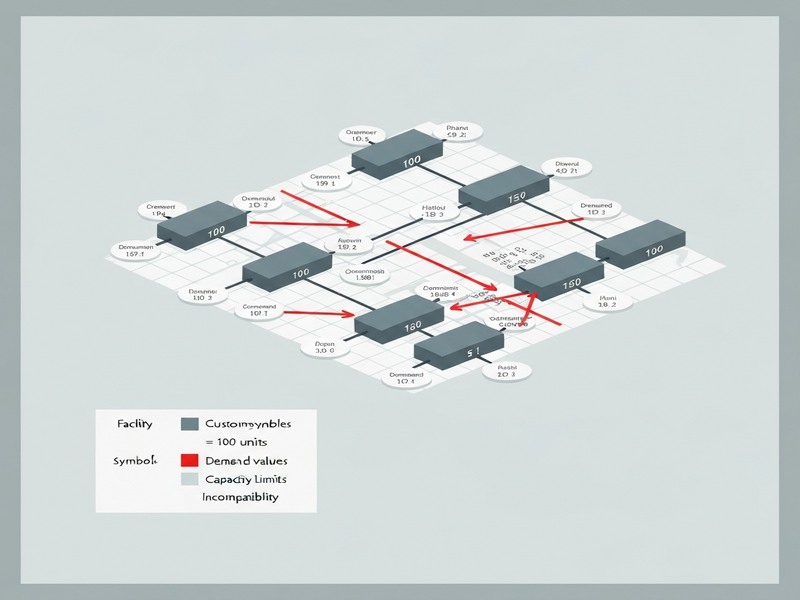
Figure 1: Conceptual flow of the Hybrid Large Neighborhood Search framework.
Call to Action
Ready to bring cutting‑edge optimization to your logistics network? Explore the UBOS partner program for dedicated support, or dive straight into the UBOS pricing plans to get started today.
Andrii Bidochko
CTO UBOS
Andrii Bidochko is an AI entrepreneur and researcher focused on AI agents, reinforcement learning, and autonomous systems. He writes about the technologies shaping the future of machine intelligence, from frontier models and agent architectures to real-world AI applications.