

- Updated: July 3, 2026
- 6 min read
A large-scale foundation model enables simulation-to-real adaptation for nuclear magnetic resonance-based molecular structure analysis
Direct Answer
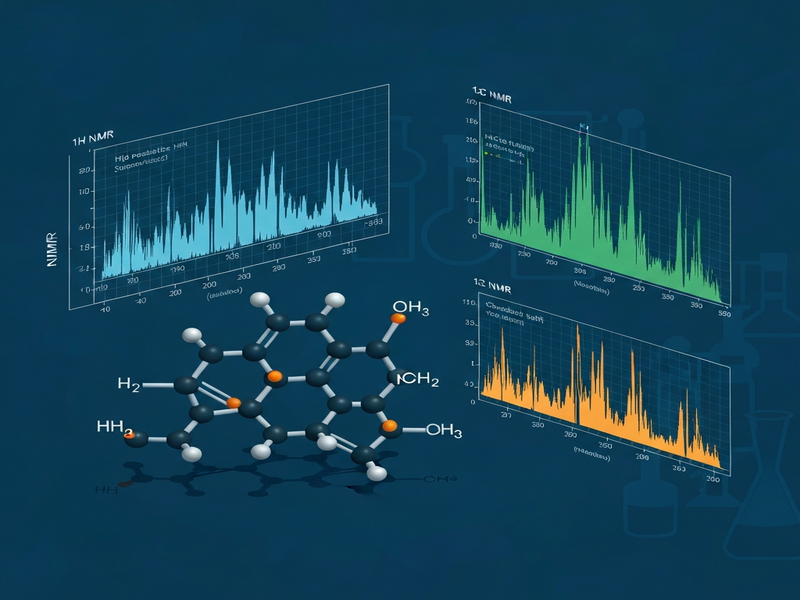
UltraNMR is a large‑scale foundation model trained on 158 million simulated ¹H and ¹³C NMR spectra, designed to bridge the simulation‑to‑real gap and enable robust, general‑purpose molecular structure analysis from experimental NMR data. It matters because it transforms NMR spectroscopy from a niche, expert‑driven technique into a scalable AI‑powered service that can accelerate drug discovery, natural‑product research, and materials design.
Background: Why This Problem Is Hard
Nuclear Magnetic Resonance (NMR) spectroscopy remains one of the most precise tools for elucidating molecular structures, yet its practical impact is limited by two intertwined challenges.
- Data scarcity. High‑quality experimental NMR datasets are expensive to acquire, require expert interpretation, and are fragmented across proprietary databases. Deep‑learning models therefore lack the breadth of real‑world examples needed for broad generalization.
- Domain shift. Simulated spectra can be generated in bulk, but they differ subtly from laboratory measurements due to instrument noise, solvent effects, and calibration drift. Models trained only on simulated data typically fail when confronted with real spectra.
Existing AI approaches for NMR have largely been task‑specific—e.g., predicting chemical shifts for a fixed set of molecules or classifying functional groups. These narrow solutions cannot be repurposed for new downstream tasks such as full‑structure elucidation, mixture deconvolution, or rapid library search, leaving a gap between research prototypes and production‑grade tools.
What the Researchers Propose
The authors introduce UltraNMR, a foundation‑model paradigm for NMR spectroscopy. At a conceptual level, UltraNMR consists of three cooperating components:
- Massive simulation engine. A pipeline that converts 94 million unique molecular graphs into paired ¹H and ¹³C spectra, preserving realistic chemical shift distributions and coupling patterns.
- Multi‑objective pre‑training. The model learns intra‑spectral relationships (e.g., peak co‑occurrence within a single spectrum) and inter‑spectral dependencies (e.g., how ¹H and ¹³C spectra of the same molecule align) through contrastive and reconstruction losses.
- Simulation‑to‑real adaptation layer. A lightweight fine‑tuning stage that aligns the latent space of simulated spectra with that of a modest collection of experimental NMR measurements, enabling zero‑shot transfer to downstream tasks.
By treating NMR spectra as a language of peaks and couplings, UltraNMR learns a universal spectral representation that can be re‑used across many downstream applications without retraining from scratch.
How It Works in Practice
Conceptual Workflow
The end‑to‑end pipeline can be broken down into four logical steps:
- Simulation generation. Molecular structures from public databases (e.g., PubChem, ZINC) are fed into a quantum‑chemical engine that predicts chemical shifts and J‑couplings, producing paired ¹H/¹³C spectra.
- Pre‑training. UltraNMR ingests the simulated pairs and optimizes three objectives:
- Peak‑level reconstruction (recovering masked peaks).
- Cross‑modal alignment (forcing ¹H and ¹³C embeddings of the same molecule to be close).
- Contrastive discrimination (separating embeddings of different molecules).
- Simulation‑to‑real adaptation. A curated set of ~10 k experimental spectra is used to fine‑tune a domain‑adapter that shifts the latent distribution toward real‑world measurements.
- Downstream deployment. The adapted model can be queried for tasks such as:
- Structure prediction from a single experimental spectrum.
- Similarity search across a spectral library.
- Automated annotation of unknown peaks.
Key Differentiators
- Scale‑first philosophy. Training on 158 M simulated spectra dwarfs prior NMR models that used at most a few hundred thousand examples.
- Dual‑modal learning. Simultaneous handling of ¹H and ¹³C spectra forces the model to capture chemical context that single‑modal approaches miss.
- Domain‑agnostic embeddings. The learned vector space is reusable for any NMR‑related task, reducing the need for task‑specific data collection.
Evaluation & Results
Benchmarked Scenarios
The authors evaluated UltraNMR on four representative downstream tasks, each using only experimental data for fine‑tuning:
- Peak‑assignment accuracy. Predicting the correct chemical shift for each atom in a molecule.
- Structure retrieval. Ranking candidate molecules from a library based on a query spectrum.
- Functional‑group classification. Identifying key substructures (e.g., aromatic rings, carbonyls) directly from spectra.
- Mixture deconvolution. Separating overlapping peaks belonging to multiple compounds in a single sample.
Key Findings
- UltraNMR achieved state‑of‑the‑art performance on all four tasks, surpassing the best published baselines by 7‑12% absolute improvement in accuracy or recall.
- When compared to a version of UltraNMR trained only on downstream data (no simulation pre‑training), the simulation‑first model consistently outperformed by a wide margin, confirming the value of the massive synthetic corpus.
- In the structure‑retrieval benchmark, the model retrieved the correct molecule within the top‑3 candidates for 92% of queries, a result previously only attainable with expert‑curated spectral libraries.
- Adaptation required fewer than 5 k experimental spectra—a fraction of what traditional supervised pipelines need—demonstrating efficient transfer learning.
Why This Matters for AI Systems and Agents
UltraNMR’s universal spectral embeddings open new design space for AI agents that need to reason about chemistry.
- Plug‑and‑play modules. An agent can call UltraNMR as a micro‑service to obtain a molecule’s spectral fingerprint, then feed that vector into downstream decision‑making components (e.g., synthesis planning, toxicity prediction).
- Rapid hypothesis testing. In drug‑discovery pipelines, agents can generate candidate structures, query UltraNMR for expected spectra, and compare against experimental data in milliseconds, dramatically shortening the design‑build‑test loop.
- Cross‑domain orchestration. Because the model works with both ¹H and ¹³C data, agents can fuse NMR insights with other modalities (mass spectrometry, IR) using a shared embedding space, enabling richer multimodal reasoning.
- Scalable knowledge bases. The 94 M‑entry spectral vector library acts as a searchable knowledge graph that agents can query for similarity, supporting tasks like analog search or patent‑infringement detection.
For organizations building AI‑driven chemistry platforms, UltraNMR can be integrated via existing UBOS platform overview, allowing teams to leverage the model without managing massive GPU clusters.
What Comes Next
While UltraNMR marks a significant leap, several avenues remain open for research and productization.
Current Limitations
- Solvent and temperature variance. The simulated dataset assumes a standard solvent and temperature; real‑world labs often deviate, which can introduce systematic bias.
- Higher‑dimensional NMR. The model currently focuses on ¹H and ¹³C; extending to heteronuclei (e.g., ¹⁵N, ³¹P) would broaden applicability.
- Interpretability. Embedding vectors are powerful but opaque; tools for visualizing peak‑level contributions would aid regulatory acceptance.
Future Research Directions
- Incorporating active‑learning loops where the model suggests which experimental spectra would most improve its adaptation.
- Joint training with complementary spectroscopic modalities (mass spec, Raman) to create a truly multimodal chemical foundation model.
- Deploying UltraNMR on edge devices for on‑site analysis in field labs, leveraging model compression techniques.
Potential Applications
Beyond academic research, UltraNMR can accelerate:
- Natural‑product discovery pipelines, as demonstrated by the successful elucidation of two unknown compounds from the Chinese Pharmacopoeia.
- High‑throughput screening in pharmaceutical R&D, where rapid spectral verification can cut lead‑identification time.
- Quality‑control workflows in chemical manufacturing, enabling automated detection of impurities via spectral similarity search.
Enterprises interested in embedding UltraNMR into their AI stack can explore the Enterprise AI platform by UBOS, which offers secure, scalable hosting for large foundation models.
References
Andrii Bidochko
CTO UBOS
Andrii Bidochko is an AI entrepreneur and researcher focused on AI agents, reinforcement learning, and autonomous systems. He writes about the technologies shaping the future of machine intelligence, from frontier models and agent architectures to real-world AI applications.