

- Updated: August 16, 2026
- 7 min read
CoAdapt-GUI: Joint Workflow Context and Policy Adaptation for Unseen GUI Applications
Direct Answer
CoAdapt‑GUI is a test‑time adaptation framework that lets a mobile GUI agent quickly learn to operate previously unseen applications by jointly updating a reusable workflow context and a lightweight policy adapter. The approach matters because it lifts the long‑standing brittleness of GUI agents, enabling them to scale across the fragmented Android ecosystem with only a handful of interactions on the target app.
Background: Why This Problem Is Hard
Mobile graphical user interfaces (GUIs) are the primary interaction surface for billions of users, yet automating them with AI agents remains a research bottleneck. Traditional agents are trained on a fixed set of apps, learning a mapping from visual observations to actions using large vision‑language models. When deployed to a new app, they encounter three intertwined challenges:
- Domain shift: Visual layouts, widget styles, and navigation flows differ dramatically across apps, breaking the visual grounding learned during training.
- Limited target data: Collecting annotated demonstrations for every new app is infeasible; enterprises often have only a few seconds of interaction budget before the agent must perform reliably.
- Lack of reusable knowledge: Existing methods treat each app as an isolated task, discarding higher‑level procedural knowledge (e.g., “search‑then‑select” patterns) that could accelerate learning on new apps.
Current solutions either (a) fine‑tune the entire model on the target app, which is data‑hungry and computationally expensive, or (b) apply policy‑only test‑time adaptation (TTA) that updates the action head but ignores the broader workflow structure. Both strategies struggle to generalize under the strict interaction budget typical of real‑world deployments.
What the Researchers Propose
The authors introduce CoAdapt‑GUI, a two‑pronged TTA system that simultaneously adapts:
- Workflow Context: A structured representation of reusable procedures, failure modes, and verification rules that abstracts away app‑specific UI details while preserving the logical flow of tasks.
- Policy Adapter: A low‑rank (LoRA) module attached to a frozen vision‑language backbone, updated using rewards collected from the agent’s own rollouts on the target app.
By decoupling “what to do” (workflow) from “how to do it” (policy), CoAdapt‑GUI can leverage transferable knowledge without leaking source‑app state, and it can refine its action selection in situ using only the limited feedback available during deployment.
How It Works in Practice
Conceptual Workflow
The end‑to‑end process consists of four stages:
- Initial Rollout: The agent interacts with the unseen app using its pre‑trained vision‑language model and a generic workflow template derived from the source training set.
- Reward Collection: Each step yields a scalar reward based on task success, error detection, and verification checks (e.g., “did the expected screen appear?”).
- Workflow Context Update: Using the observed successes and failures, a lightweight graph‑based optimizer refines the workflow representation—adding new sub‑tasks, pruning dead‑ends, and adjusting verification rules.
- Policy LoRA Adaptation: The collected rewards drive a group‑relative optimization that updates a LoRA adapter attached to the frozen vision‑language encoder, improving the mapping from visual tokens to action logits.
Component Interaction
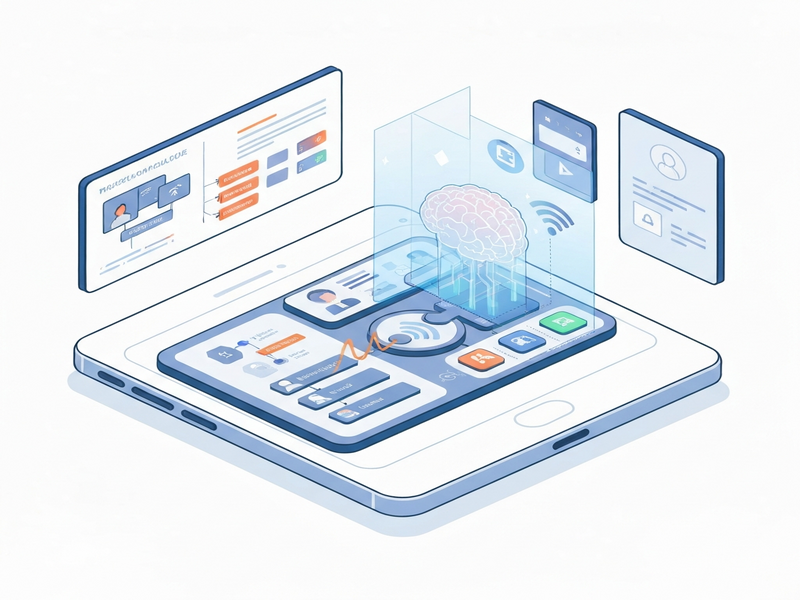
Figure 1 (placeholder) would illustrate the feedback loop:
- Vision‑Language Backbone: Remains frozen to preserve the broad visual grounding learned from millions of screenshots.
- LoRA Adapter: Introduces a small set of trainable parameters (typically < 1 % of the backbone) that can be updated in seconds on‑device.
- Workflow Graph: A directed acyclic graph where nodes represent abstract UI states (e.g., “search field visible”) and edges encode permissible transitions (e.g., “tap → results list”).
- Reward Engine: Computes task‑level signals (completion, error, latency) that are fed back to both the graph optimizer and the LoRA trainer.
What Sets This Apart
Unlike policy‑only TTA, CoAdapt‑GUI does not rely solely on gradient signals from the action head. The workflow context acts as a high‑level scaffold that guides exploration, reduces catastrophic forgetting, and prevents the agent from repeatedly repeating failed sub‑tasks. Conversely, the LoRA adapter ensures that low‑level perception‑action mappings stay aligned with the evolving workflow, something a static policy cannot achieve.
Evaluation & Results
Benchmarks and Scenarios
The authors evaluated CoAdapt‑GUI on two recently released Android benchmark suites designed to test generalization:
- AndroidWorld‑Generalization: Contains 30 unseen apps with a mix of e‑commerce, productivity, and social media tasks.
- AndroidWorld‑Plus: Extends the first suite with more complex multi‑step workflows and stricter latency constraints.
Both benchmarks limit the target interaction budget to 200 steps per app, reflecting realistic deployment constraints.
Key Findings
| Metric | Policy‑Only TTA | CoAdapt‑GUI |
|---|---|---|
| Success Rate (AndroidWorld‑Generalization) | 37.5 % | 45.0 % |
| Success Rate (AndroidWorld‑Plus) | 38.6 % | 52.9 % |
| Average Adaptation Time per App | ≈ 45 s | ≈ 30 s |
These results demonstrate two crucial points:
- The workflow context alone contributes a measurable lift (≈ 7 % absolute gain) over a pure policy adaptation baseline.
- Joint adaptation—updating both workflow and policy—produces a synergistic effect, delivering a > 15 % absolute improvement on the more demanding AndroidWorld‑Plus suite.
Importantly, the adaptation process stays within the 200‑step budget, confirming that CoAdapt‑GUI can be deployed in production environments where interaction time is costly.
Why This Matters for AI Systems and Agents
For practitioners building AI‑driven automation, CoAdapt‑GUI offers a pragmatic pathway to scale agents across the chaotic Android app landscape without exhaustive data collection. The framework’s modularity aligns with modern MLOps pipelines:
- Reduced Engineering Overhead: Developers can ship a single “generic” agent and rely on on‑device adaptation to handle new apps, cutting the need for per‑app custom scripts.
- Improved Reliability: The workflow graph provides explicit verification checkpoints, making failures easier to diagnose and remediate.
- Resource Efficiency: LoRA adapters require minimal memory and compute, enabling on‑device updates on smartphones or edge servers.
These capabilities map directly onto enterprise automation platforms that need to orchestrate heterogeneous mobile workflows. For example, integrating CoAdapt‑GUI‑style agents into a Workflow automation studio could let business users define high‑level tasks while the system automatically tailors low‑level interactions to each target app.
Moreover, the separation of workflow knowledge from visual policy mirrors the best practices in software engineering—encapsulating business logic separately from UI rendering—making the approach more maintainable and auditable for regulated industries.
What Comes Next
While CoAdapt‑GUI marks a significant step forward, several open challenges remain:
- Cross‑Platform Generalization: Extending the framework to iOS or web‑based GUIs will require handling different UI toolkits and interaction paradigms.
- Scalable Reward Design: Current rewards rely on handcrafted verification rules; learning these signals automatically could further reduce engineering effort.
- Multi‑Agent Collaboration: In complex enterprise workflows, multiple agents may need to coordinate; integrating shared workflow contexts across agents is an unexplored avenue.
Future research could explore hierarchical meta‑learning where the workflow graph itself is meta‑trained across many apps, enabling zero‑shot adaptation to entirely new domains. Additionally, coupling CoAdapt‑GUI with a Enterprise AI platform by UBOS could provide the necessary infrastructure for large‑scale rollout, monitoring, and continuous improvement.
Practitioners interested in experimenting with the core ideas can start by prototyping a LoRA‑based policy on top of an open‑source vision‑language model and building a lightweight graph engine for workflow representation. The UBOS platform overview offers tools such as Chroma DB integration for storing workflow graphs and ElevenLabs AI voice integration for multimodal feedback loops.
References and Further Reading
- CoAdapt‑GUI: Joint Workflow Context and Policy Adaptation for Unseen GUI Applications (arXiv)
- Related work on LoRA adapters: “Low‑Rank Adaptation of Large Language Models” (2021).
- AndroidWorld benchmark suite documentation (official repository).
Andrii Bidochko
CTO UBOS
Andrii Bidochko is an AI entrepreneur and researcher focused on AI agents, reinforcement learning, and autonomous systems. He writes about the technologies shaping the future of machine intelligence, from frontier models and agent architectures to real-world AI applications.