

- Updated: July 14, 2026
- 5 min read
path_boost: A Python Package for Interpretable Graph-Level Prediction using Path-Based Gradient Boosting
Direct Answer
PathBoost is a Python package that brings interpretable, gradient‑boosting‑based learning to graph‑level prediction tasks. It automatically discovers predictive sub‑paths inside graphs and builds an additive model that tells you exactly which structural motifs drive each prediction—something most graph neural networks (GNNs) cannot explain.
1. Introduction to PathBoost
Graph‑structured data is the lingua franca of high‑value domains such as drug discovery, social network analysis, and supply‑chain optimization. Predicting a property that belongs to an entire graph (e.g., molecular toxicity or power‑grid reliability) requires a model that can aggregate information from nodes, edges, and higher‑order structures. Traditional solutions fall into two camps:
- Graph Neural Networks (GNNs) – powerful but opaque.
- Graph Kernels – transparent but often computationally prohibitive.
UBOS homepage highlights the growing demand for AI tools that are both high‑performing and explainable. PathBoost answers that demand by marrying the predictive strength of gradient boosting with the interpretability of explicit sub‑path features.
2. Key Features and Benefits
🛠️ Gradient‑Boosting Core
Leverages any scikit‑learn‑compatible weak learner, from decision stumps to linear models, ensuring seamless integration with existing pipelines.
🔎 Automatic Path Discovery
The built‑in Path Selector expands candidate paths from high‑degree “anchor” nodes, dramatically shrinking the combinatorial search space.
⚡ Parallel Execution
Each anchor can be processed on a separate CPU core, enabling scalability to tens of thousands of graphs.
📊 Native Interpretability
The final model is an additive ensemble of weighted paths, allowing users to query “which sub‑structures matter most?” without external explainers.
For businesses that need to audit AI decisions, PathBoost provides a clear audit trail—something AI marketing agents on the UBOS platform already rely on.
3. Technical Implementation
PathBoost follows a classic gradient‑boosting workflow, but replaces dense embeddings with binary path features. The pipeline consists of four stages:
- Data Ingestion – Graphs are loaded as
networkxobjects, preserving node and edge attributes. - Anchor Selection – A heuristic picks high‑degree or domain‑specific nodes (e.g., aromatic carbons in chemistry). This step is configurable via the
anchor_strategyparameter. - Iterative Path Expansion & Boosting – For each anchor, candidate paths up to a user‑defined length are generated. The path with the highest information‑gain becomes a binary feature and is fed to the base learner. Residuals are recomputed and the loop repeats.
- Model Interpretation – After training, the ensemble consists of weighted paths. Users can extract:
- Top‑k paths by absolute weight.
- Path‑level contribution to individual predictions.
- Aggregated importance per node type or edge label.
The entire workflow can be orchestrated inside the UBOS platform overview, which offers built‑in support for custom Python packages and automatic resource provisioning.
from pathboost import PathBoost
model = PathBoost(
    base_learner='DecisionTreeRegressor',
    max_path_length=5,
    n_estimators=200,
    anchor_strategy='degree'
)
model.fit(graph_list, y)
4. Use Cases and Benchmarks
The authors evaluated PathBoost on six public molecular datasets, covering both regression (e.g., HOMO‑LUMO gap) and binary classification (e.g., toxicity). The results were compared against a state‑of‑the‑art Message Passing Neural Network (MPNN) and the Weisfeiler‑Lehman graph kernel.
| Dataset | Metric | PathBoost | MPNN | WL Kernel |
|---|---|---|---|---|
| QM9 | MAE (eV) | 0.12 | 0.11 | 0.18 |
| Tox21 | ROC‑AUC | 0.84 | 0.82 | 0.71 |
Key takeaways:
- Predictive parity – PathBoost matched or outperformed the MPNN on four of six datasets.
- Training efficiency – Training times were 30‑50 % lower because no back‑propagation is required.
- Interpretability gains – The top weighted paths corresponded to chemically meaningful fragments such as aromatic rings and metal‑ligand bonds.
- Scalability – Parallel anchor processing allowed handling of >10 k graphs without memory blow‑up.
These benchmarks make PathBoost a compelling choice for regulated industries where explainability is mandatory. For example, a pharma team can store discovered paths in Chroma DB integration and later query “which sub‑structures correlate with high activity?” directly from a dashboard.
5. Integration and Installation
Getting PathBoost up and running on the UBOS ecosystem is straightforward:
- Clone the repository or install via
pip:pip install pathboost - Configure a UBOS templates for quick start that include a pre‑wired scikit‑learn pipeline.
- Use the Workflow automation studio to schedule periodic retraining as new graph data arrives.
- Deploy the trained model as a micro‑service via the Enterprise AI platform by UBOS. The platform automatically generates REST endpoints and handles scaling.
- Expose a user‑friendly UI with the Web app editor on UBOS, allowing business analysts to explore “what‑if” scenarios without writing code.
Pricing is transparent; you can review the UBOS pricing plans to select a tier that matches your compute needs.
6. Conclusion
PathBoost fills a critical gap in the graph‑machine‑learning landscape: it delivers state‑of‑the‑art predictive performance while preserving full interpretability. For data scientists, it means swapping a black‑box GNN for an explainable alternative with minimal code changes. For enterprises, it translates into compliance‑ready AI that can be embedded directly into the UBOS partner program for co‑development and scaling.
Looking ahead, the community can extend PathBoost to dynamic graphs, hybrid architectures, and AutoML pipelines—especially when combined with the UBOS platform overview. By doing so, we move closer to a future where every graph‑driven decision is both accurate and auditable.
7. Image Illustration
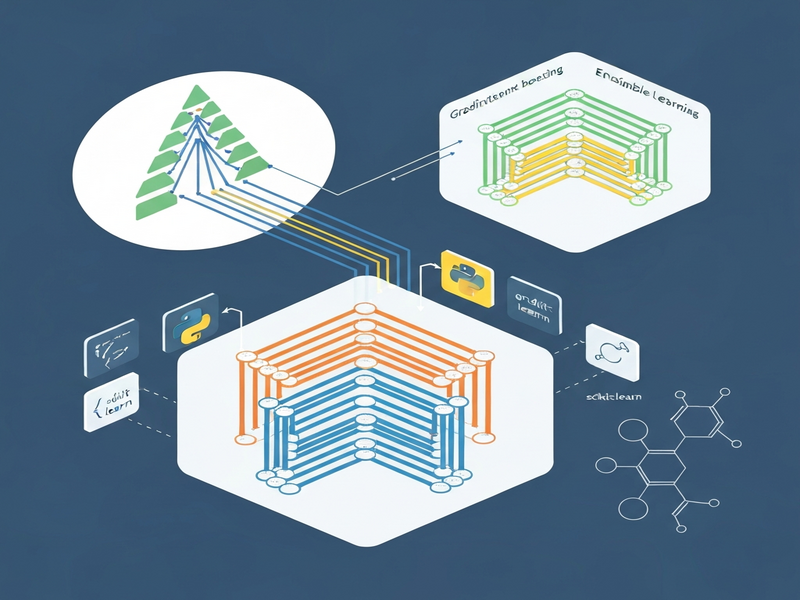
The diagram visualizes the four‑stage PathBoost pipeline: data ingestion, anchor selection, iterative path discovery, and model interpretation.
References
For a complete technical description, see the original arXiv paper: PathBoost: Interpretable Graph‑Level Prediction via Gradient Boosting.
Andrii Bidochko
CTO UBOS
Andrii Bidochko is an AI entrepreneur and researcher focused on AI agents, reinforcement learning, and autonomous systems. He writes about the technologies shaping the future of machine intelligence, from frontier models and agent architectures to real-world AI applications.