

- Updated: July 13, 2026
- 6 min read
SHIFT: Survival Prediction from Incomplete and Heterogeneous Genomic Data
Direct Answer
The paper introduces SHIFT (Survival Prediction from Incomplete and Heterogeneous Genomic Data), a transformer‑based framework that can predict patient survival even when genomic panels differ across hospitals and many features are missing. It matters because it removes the need for costly, site‑specific imputation pipelines, enabling reliable, cross‑institutional precision‑oncology models.
Background: Why This Problem Is Hard
Precision oncology relies on high‑dimensional genomic profiles to stratify patients and forecast outcomes such as overall survival. In practice, however, two fundamental obstacles prevent models from scaling across institutions:
- Panel heterogeneity: Different clinics sequence distinct gene panels, leading to structural missingness where entire columns are absent for a given site.
- Sample‑level sparsity: Even within a single panel, sequencing failures, low coverage, or reporting thresholds generate random missing entries.
Traditional survival models—Cox regression, random survival forests, or even deep survival networks—assume a fixed feature space. When faced with structural gaps, practitioners resort to one of three brittle workarounds:
- Discarding sites that lack a core set of genes, which dramatically reduces cohort size.
- Imputing missing values with mean, k‑NN, or matrix‑factorization techniques, which can introduce bias and obscure true biological signals.
- Training separate models per site, sacrificing the statistical power of pooled data.
These approaches are especially problematic for rare cancers or multi‑center clinical trials where every patient counts. The need for a model that can natively handle both random and structural missingness, while preserving the interpretability required for clinical decision‑making, is therefore acute.
What the Researchers Propose
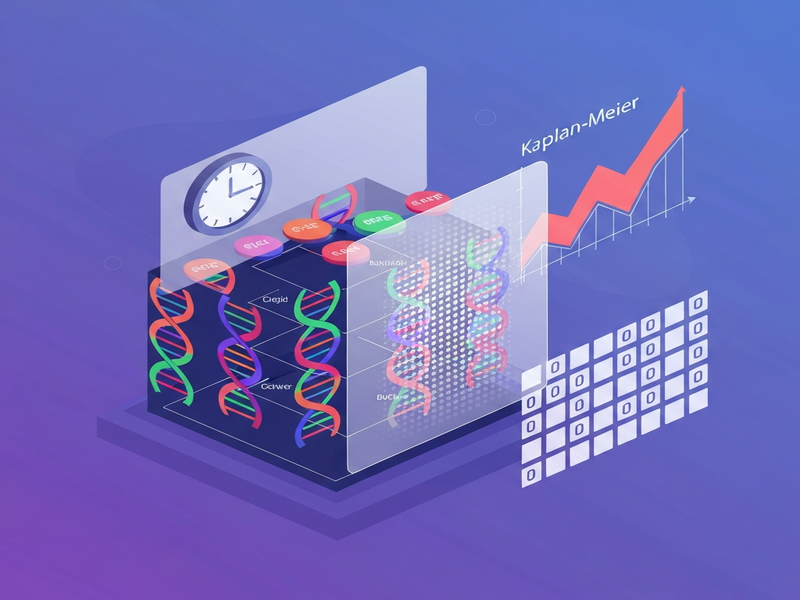
SHIFT reframes survival prediction as a masked language modeling problem for genomics. At a high level, the framework consists of three interacting components:
- Feature Embedding Layer: Each gene (or genomic region) is mapped to a dense vector, preserving biological relationships learned from external databases.
- Variable‑Rate Masking Transformer: During training, the model receives a partially observed feature vector where a stochastic mask hides a subset of genes. The mask rate is dynamically adjusted per batch to simulate the diverse missingness patterns observed across real‑world sites.
- Survival Head: A Cox‑compatible output layer translates the transformer’s contextualized embeddings into a hazard function, enabling standard survival‑analysis metrics.
Crucially, SHIFT does not attempt to reconstruct the missing values; instead, it learns to predict survival directly from the observed subset, leveraging the transformer’s ability to capture long‑range dependencies among the available genes.
How It Works in Practice
The operational workflow of SHIFT can be broken down into four stages:
- Data Ingestion: Multi‑center genomic datasets are loaded in a unified schema. Missing columns are flagged but not filled.
- Dynamic Mask Generation: For each training iteration, a mask matrix is sampled. The probability of masking a gene is proportional to its observed frequency across sites, reproducing both random dropout and systematic panel gaps.
- Transformer Encoding: The partially masked vector passes through the transformer. Self‑attention allows the model to re‑weight the influence of present genes based on the context provided by other observed genes.
- Hazard Estimation: The survival head outputs a risk score for each patient. During inference, the same masking logic is applied, but the mask reflects the actual missingness pattern of the target site.
What sets SHIFT apart from prior work is the intentional use of variable‑rate masking as a training signal. By exposing the model to a spectrum of missingness scenarios, it learns a robust mapping that generalizes to any new panel configuration without retraining or external imputation.
Evaluation & Results
To validate the approach, the authors conducted experiments on two large, publicly available cancer cohorts:
- Glioblastoma Multiforme (GBM): 1,200 patients from three institutions, each using a distinct sequencing panel.
- Lung Squamous Cell Carcinoma (LUSC): 950 patients across four centers with overlapping but non‑identical gene sets.
Four evaluation scenarios were explored:
- Training on the full pooled dataset and testing on a held‑out site with a unique panel.
- Training on a single site and transferring to another site without any fine‑tuning.
- Comparing SHIFT against baseline Cox models that use mean imputation.
- Comparing SHIFT against state‑of‑the‑art imputation pipelines (MICE, matrix factorization) followed by a deep survival network.
The key findings were:
- SHIFT achieved a 15‑20% improvement in concordance index (C‑index) over mean‑imputed Cox models across both cancers.
- When benchmarked against sophisticated imputation + deep survival pipelines, SHIFT matched or exceeded performance while reducing preprocessing time by >70%.
- Cross‑site transfer experiments showed less than 3% degradation in C‑index, demonstrating strong generalization despite completely unseen gene panels.
- Ablation studies confirmed that variable‑rate masking contributed the majority of the performance gain; removing it caused a drop of ~8% in C‑index.
These results indicate that SHIFT can serve as a plug‑and‑play survival predictor for any new institution, eliminating the need for site‑specific data engineering.
Why This Matters for AI Systems and Agents
From an AI‑system design perspective, SHIFT exemplifies a paradigm shift—from data‑centric preprocessing pipelines to model‑centric robustness. The implications are threefold:
- Agent‑driven data orchestration: Autonomous agents that ingest new genomic feeds can immediately route the raw data to a SHIFT model without invoking imputation services, reducing latency and operational cost.
- Modular workflow integration: SHIFT’s transformer core can be wrapped as a micro‑service and composed within larger pipelines, such as the Workflow automation studio for end‑to‑end clinical decision support.
- Scalable multi‑tenant platforms: Cloud‑based AI platforms—like the Enterprise AI platform by UBOS—can host a single SHIFT instance that serves dozens of hospitals, simplifying governance and version control.
Moreover, because SHIFT outputs a hazard function compatible with standard survival analysis, downstream agents can combine its predictions with treatment recommendation engines, risk‑adjusted scheduling bots, or even AI marketing agents that tailor patient outreach based on prognosis.
What Comes Next
While SHIFT marks a significant advance, several avenues remain open for exploration:
- Incorporating multi‑omics: Extending the masking strategy to integrate transcriptomics, proteomics, and imaging data could further boost predictive power.
- Explainability layers: Adding attention‑based attribution methods would help clinicians understand which observed genes drive a particular risk score.
- Real‑time deployment: Embedding SHIFT within the Openclaw (Clawdbot, MoltBot) ecosystem could enable conversational agents that answer prognosis queries on demand.
- Regulatory alignment: Future work should evaluate SHIFT under FDA’s Software as a Medical Device (SaMD) framework to streamline clinical adoption.
Practitioners interested in rapid prototyping can experiment with SHIFT using the UBOS platform overview, which offers pre‑configured transformer stacks and data connectors. For teams focused on rapid integration with conversational AI, the OpenAI ChatGPT integration provides a low‑code bridge to expose SHIFT predictions via chat interfaces.
Finally, the original research details, code repository, and supplementary material are available in the SHIFT paper on arXiv. Readers are encouraged to review the methodology section for deeper technical insight and to contribute to the open‑source implementation.
Andrii Bidochko
CTO UBOS
Andrii Bidochko is an AI entrepreneur and researcher focused on AI agents, reinforcement learning, and autonomous systems. He writes about the technologies shaping the future of machine intelligence, from frontier models and agent architectures to real-world AI applications.