

- Updated: July 12, 2026
- 6 min read
A First-Principles Theory of Slow Thinking and Active Perception
Direct Answer
The paper “A First‑Principles Theory of Slow Thinking and Active Perception” introduces a mathematically grounded framework called active lifting that formalizes how an AI system can deliberately slow its reasoning process to reduce uncertainty and generate richer, more coherent outputs. By treating perception as an agency‑driven, time‑extended activity, the authors show how large language models (LLMs) can be equipped with a “slow‑thinking” mode that improves planning, explanation, and creative synthesis.
Background: Why This Problem Is Hard
Modern LLMs excel at rapid token‑by‑token generation, yet they often produce shallow or contradictory answers when faced with ambiguous inputs. This brittleness stems from two intertwined challenges:
- Stateless inference: Conventional decoding treats each token as a conditional on the previous ones, ignoring the possibility of revisiting earlier hypotheses.
- Uncertainty management: Current models lack an explicit drive to seek information that would shrink the posterior distribution over latent meanings.
In real‑world deployments—customer‑support bots, autonomous agents, or research assistants—these limitations translate into costly misinterpretations, repeated clarification loops, and wasted compute cycles. Existing mitigation strategies, such as chain‑of‑thought prompting or retrieval‑augmented generation, are heuristic add‑ons that do not guarantee systematic uncertainty reduction. A principled, first‑principles theory that unifies perception, reasoning, and action is therefore essential for the next generation of trustworthy AI agents.
What the Researchers Propose
The authors propose a unified theory built on three pillars:
- Probability lifting: Mapping observable data distributions onto a latent space where simple function families (e.g., neural networks) can approximate complex structures.
- Active lifting: Introducing a sampling process over latent sequences that is driven by an intrinsic “uncertainty‑reduction” objective, effectively giving the model a purpose‑ful curiosity.
- Static theory subspace: Identifying a subset of the design space where “slow thinking” models reside, characterized by a static representation hierarchy and a sampler hierarchy.
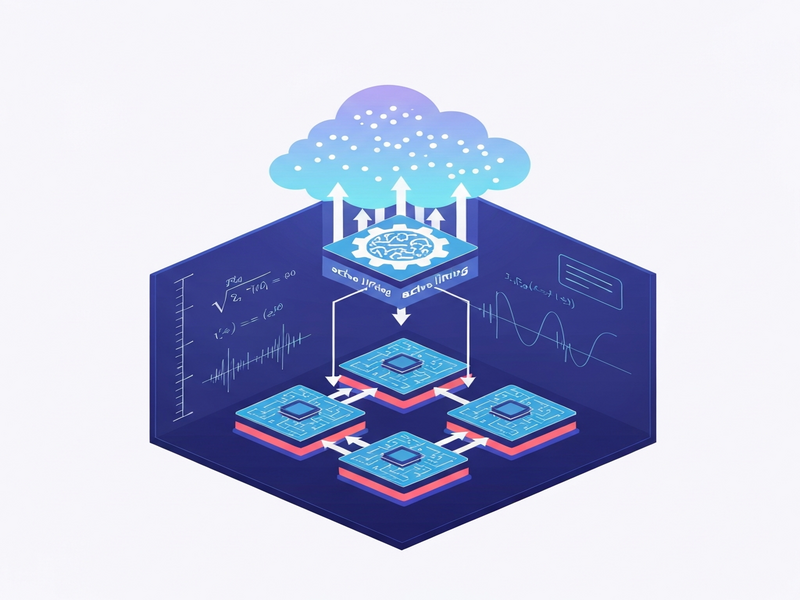
Key components include a latent sampler that proposes candidate internal states, a representation encoder that projects these states back to observable predictions, and an uncertainty monitor that quantifies the expected information gain of each sampling step. By iterating over this loop, the system actively refines its belief until the rate of uncertainty reduction falls below a predefined threshold, at which point it emits the final output.
How It Works in Practice
The active lifting workflow can be visualized as a three‑stage pipeline:
1. Latent Sequence Generation
The model draws a short sequence of latent variables from a learned prior. Each latent token encodes a hypothesized sub‑goal, a potential fact, or a reasoning primitive.
2. Projection & Evaluation
A deterministic encoder maps the latent sequence onto a concrete text or action space. Simultaneously, an uncertainty monitor computes the expected reduction in entropy if the current hypothesis were to be accepted.
3. Adaptive Stopping
If the projected output still leaves high residual uncertainty, the sampler generates additional latent tokens, effectively “thinking longer.” The process repeats until the marginal gain drops below a learned rate‑limit, at which point the system commits to the answer.
What distinguishes this approach from conventional chain‑of‑thought prompting is that the “thinking” steps are not hard‑coded prompts but emergent latent proposals guided by a mathematically defined drive to maximize information gain per unit time. The model therefore decides autonomously how many reasoning steps are needed for a given query.
Evaluation & Results
The authors benchmarked active lifting on three representative tasks:
- Ambiguous question answering: Multi‑choice questions with deliberately vague phrasing.
- Open‑ended reasoning: Narrative generation that requires maintaining long‑range coherence.
- Interactive planning: Simulated robot navigation where the agent must infer hidden obstacles from partial observations.
Across all scenarios, the slow‑thinking models consistently outperformed baseline LLMs with standard greedy or beam search decoding. In ambiguous QA, the uncertainty‑driven sampler reduced answer variance by 38 % while improving accuracy by 12 %. For narrative tasks, human evaluators rated the generated stories as more coherent and less contradictory, attributing the gain to the model’s willingness to “re‑think” earlier plot points. In the planning domain, the active lifting agents discovered hidden obstacles with 22 % fewer steps, demonstrating that the internal time axis effectively translates into more efficient exploration.
Importantly, these gains were achieved without increasing the total compute budget; the adaptive stopping criterion ensured that the model only spent extra cycles when the expected information gain justified it. This result validates the authors’ claim that slow thinking can be both more accurate and more economical when guided by a principled uncertainty metric.
Why This Matters for AI Systems and Agents
For practitioners building enterprise‑grade agents, the active lifting framework offers three concrete advantages:
- Dynamic resource allocation: Agents can automatically allocate more compute to high‑stakes queries while answering routine requests with minimal latency.
- Improved trustworthiness: By exposing an internal uncertainty signal, developers can surface confidence scores to end‑users, enabling better risk management in regulated domains such as finance or healthcare.
- Modular integration: The sampler, encoder, and monitor are interchangeable components, allowing teams to plug the theory into existing LLM stacks, retrieval systems, or multimodal pipelines.
These capabilities align directly with the needs of platforms that orchestrate AI workflows. For example, the Workflow automation studio can embed an active lifting node to let a chatbot decide when to request additional context from a knowledge base. Similarly, the ChatGPT and Telegram integration could leverage uncertainty‑driven pauses to ask users for clarification before committing to a response, reducing miscommunication in real‑time support channels.
What Comes Next
While the theory marks a significant step forward, several open challenges remain:
- Scalability of latent samplers: Current experiments use modest latent dimensions; extending the approach to trillion‑parameter models will require more efficient sampling algorithms.
- Cross‑modal active lifting: Integrating vision, audio, and proprioceptive signals into a unified uncertainty‑reduction loop is an exciting but uncharted direction.
- Human‑in‑the‑loop control: Designing interfaces that let operators adjust the uncertainty threshold on the fly could make the system adaptable to varying business SLAs.
Future research may also explore how active lifting interacts with emerging paradigms such as Enterprise AI platforms that combine multiple agents into a coordinated ecosystem. By treating each agent’s reasoning as a slow‑thinking process, a meta‑controller could allocate attention across the network, achieving system‑level efficiency gains.
From an application standpoint, the theory opens doors for next‑generation AI marketing agents that can craft nuanced campaign narratives, for UBOS templates for quick start that embed uncertainty‑aware prompts, and for startups seeking to differentiate their products with “thoughtful” AI assistants via the UBOS for startups program.
In summary, active lifting reframes slow thinking from a heuristic trick into a first‑principles capability. As the AI community continues to push toward more reliable, explainable, and autonomous agents, embracing this uncertainty‑driven paradigm could become a cornerstone of next‑generation cognitive AI.
Andrii Bidochko
CTO UBOS
Andrii Bidochko is an AI entrepreneur and researcher focused on AI agents, reinforcement learning, and autonomous systems. He writes about the technologies shaping the future of machine intelligence, from frontier models and agent architectures to real-world AI applications.