

- Updated: July 11, 2026
- 7 min read
Large Behavior Model: A Promptable Digital Twin of the Retail Customer
Direct Answer
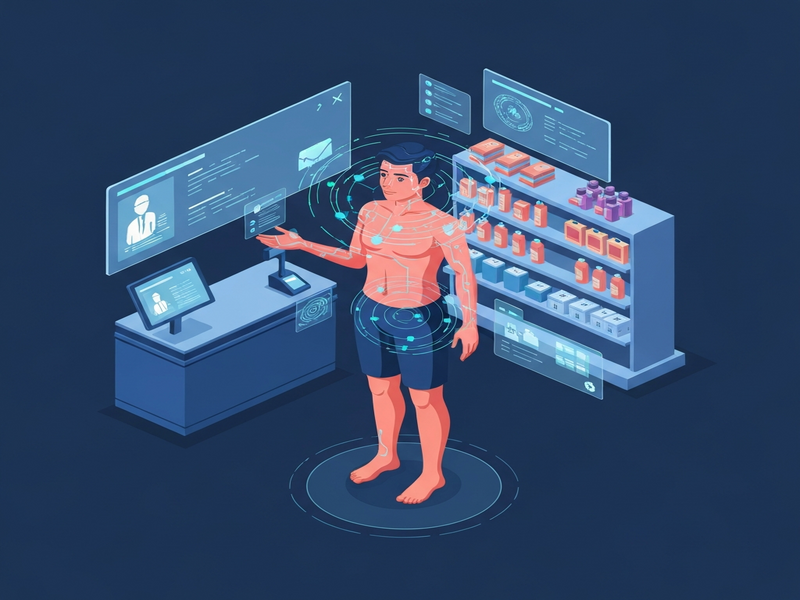
The paper introduces the Large Behavior Model (LBM), a promptable digital twin that learns retail customers’ decision‑making directly from massive transaction logs. By unifying a person‑environment formulation with retrieval‑augmented generation, LBM can predict purchases, recommend products, and simulate behavior across domains while remaining grounded in real‑world evidence.
Background: Why This Problem Is Hard
Retail organizations have long relied on two divergent families of models. Predictive models—such as collaborative filtering or deep neural nets—excel at forecasting the next click or basket item, yet they act as black boxes that offer little insight into *why* a customer chose a product. Conversely, simulation‑based approaches (e.g., agent‑based models) provide interpretable decision rules but are typically handcrafted, static, and detached from the rich, high‑frequency purchase histories that modern e‑commerce platforms generate.
Three intertwined challenges make the problem especially stubborn:
- Data‑behavior mismatch: Transaction logs capture what customers bought, not the latent motivations, constraints, or contextual cues that drove those purchases.
- Scalability of personalization: Retailers serve millions of shoppers, each with a unique purchase trajectory. Hand‑crafting behavioral rules for each segment quickly becomes infeasible.
- Transferability across campaigns: Promotions, coupons, and cross‑category bundles shift the decision landscape, demanding a model that can adapt without retraining from scratch.
These bottlenecks limit the ability of marketers to run “what‑if” simulations, to explain recommendation outcomes to regulators, or to personalize offers in real time without sacrificing accuracy.
What the Researchers Propose
The authors present a unified framework called the Large Behavior Model that treats each shopper as a person embedded in a mutable environment. The core ideas are:
- Behavioral Profile: A dense vector derived from a customer’s historical purchases, representing long‑term preferences, price sensitivity, and category affinities.
- Retrieval‑Augmented Generation (RAG): At inference time, the model fetches the most relevant past transactions (the “evidence”) and feeds them into a language model that generates a decision statement (e.g., “Buy product X”).
- Three‑stage training pipeline:
- Continued pre‑training on verb‑alized transaction logs to inject domain‑specific language and factual grounding.
- Supervised fine‑tuning where human‑annotated decision prompts teach the model to map context → purchase.
- Reinforcement learning with verifiable rewards that penalize decisions lacking explicit evidence, nudging the model toward evidence‑based reasoning.
In essence, LBM becomes a “digital twin” that can be prompted with any retail scenario—such as a new promotion or a price change—and will respond with a purchase decision that is both data‑driven and explainable.
How It Works in Practice
The operational workflow can be broken down into four logical stages, each aligning with a component of the LBM architecture:
1. Profile Construction
When a shopper first interacts with the platform, their transaction history is streamed into a profile encoder. This encoder aggregates items, timestamps, and monetary values into a fixed‑length embedding that captures long‑term behavioral signals.
2. Context Retrieval
Given a downstream task—say, predicting response to a 20 % off coupon—the system formulates a retrieval query that combines the shopper’s profile with the promotion details. A nearest‑neighbor search over a vector store (e.g., Chroma DB) returns the top‑k most similar past purchase episodes, providing concrete evidence for the upcoming decision.
3. Evidence‑Infused Generation
The retrieved episodes are concatenated with the current prompt and fed into a large language model (LLM) that has undergone the three‑stage training described earlier. The LLM produces a natural‑language decision, such as “Customer will add the discounted shampoo to the cart,” while also emitting a confidence score.
4. Reinforcement‑Based Calibration
During deployment, a lightweight verifier checks whether the generated decision references at least one retrieved evidence item. If the evidence is missing or contradictory, a penalty is applied, and the model’s policy is updated via reinforcement learning. Over time, the system learns to rely more heavily on explicit transaction evidence rather than generic language priors.
What distinguishes LBM from prior approaches is the tight coupling of retrieval and generation at both training and inference, ensuring that the model’s predictions remain anchored to real purchase behavior.
Evaluation & Results
The researchers benchmarked LBM across five retail‑centric tasks, each designed to probe a different facet of behavioral fidelity:
- Purchase Prediction: Forecasting the next item a shopper will buy given a basket context.
- Hard‑Negative Discrimination: Distinguishing true purchase intents from plausible but incorrect alternatives.
- Basket Completion: Suggesting missing items that complete a coherent shopping list.
- Promotion Response: Estimating conversion rates for targeted discounts.
- Cross‑Domain Voucher Redemption: Predicting whether a shopper will redeem a voucher in a different product category.
Across all tasks, LBM consistently outperformed leading general‑purpose LLMs (e.g., GPT‑4, Claude) and specialized retail baselines. Notably:
- In purchase prediction, LBM achieved a relative lift of 12 % in top‑1 accuracy over the strongest baseline.
- For hard‑negative discrimination, the model reduced false‑positive rates by 18 % while maintaining recall.
- Zero‑shot transfer to a new retailer (with no fine‑tuning) retained 85 % of in‑domain performance, demonstrating robust generalization.
Ablation studies revealed that:
- Continued pre‑training contributed the bulk of the performance gain, confirming that domain‑specific language exposure is critical.
- Applying retrieval during both training and inference yielded the highest evidence alignment.
- Reinforcement learning sharpened the model’s reliance on explicit transaction evidence, reducing hallucinated decisions by 23 %.
Collectively, these results validate the hypothesis that large language models can internalize behavioral knowledge from raw transaction data when guided by retrieval and evidence‑based reinforcement.
Why This Matters for AI Systems and Agents
For practitioners building AI‑driven marketing pipelines, LBM offers a concrete pathway to replace opaque recommendation engines with a *digital twin* that can be interrogated, audited, and simulated. The implications are threefold:
- Explainable Personalization: Because each decision is tied to retrieved purchase evidence, marketers can surface “because you bought X last month” explanations directly to end users, boosting trust and compliance with emerging AI transparency regulations.
- Rapid Campaign Simulation: By prompting the twin with hypothetical promotions, teams can forecast lift before spending ad dollars, enabling data‑driven budget allocation.
- Modular Agent Design: LBM can serve as a plug‑in behavioral core for larger autonomous agents—such as AI marketing agents—that need a realistic customer model to plan outreach, negotiate discounts, or schedule follow‑ups.
Integrating LBM into an existing AI stack is straightforward thanks to its reliance on standard retrieval back‑ends and LLM APIs. For example, a retailer could combine LBM with the AI marketing agents offered on the UBOS platform to orchestrate personalized email flows, chatbot dialogues, and ad‑targeting decisions—all driven by a single, evidence‑grounded customer twin.
What Comes Next
While LBM marks a significant step forward, several open challenges remain:
- Privacy‑Preserving Profiles: Encoding purchase histories into embeddings raises GDPR and CCPA concerns. Future work must explore federated or differential‑privacy techniques to protect shopper identities.
- Multi‑Modal Evidence: Current retrieval focuses on transaction text. Incorporating images, reviews, and click‑stream data could enrich the behavioral signal.
- Long‑Term Consistency: Simulating a shopper over months or years may require hierarchical memory structures to avoid drift.
- Real‑Time Adaptation: Promotions that change minute‑by‑minute demand ultra‑low‑latency retrieval and inference pipelines.
Addressing these gaps will unlock broader enterprise adoption. Companies interested in building such capabilities can start by exploring the Enterprise AI platform by UBOS, which provides the necessary infrastructure—vector stores, workflow orchestration, and model hosting—to prototype and scale digital twin solutions.
In summary, the Large Behavior Model demonstrates that a carefully engineered blend of pre‑training, retrieval, and reinforcement learning can turn raw retail transactions into a living, promptable representation of a shopper’s mind. For marketers, product managers, and AI architects, this translates into more accurate predictions, transparent recommendations, and a sandbox for testing the next generation of personalized retail experiences.
Ready to experiment with AI‑powered customer twins? Visit the UBOS homepage to learn how our platform can accelerate your journey from data to digital twin.
Andrii Bidochko
CTO UBOS
Andrii Bidochko is an AI entrepreneur and researcher focused on AI agents, reinforcement learning, and autonomous systems. He writes about the technologies shaping the future of machine intelligence, from frontier models and agent architectures to real-world AI applications.