

- Updated: June 29, 2026
- 7 min read
Cognitive Digital Twins: Ethical Risks and Governance for AI Systems That Model the Mind
Direct Answer
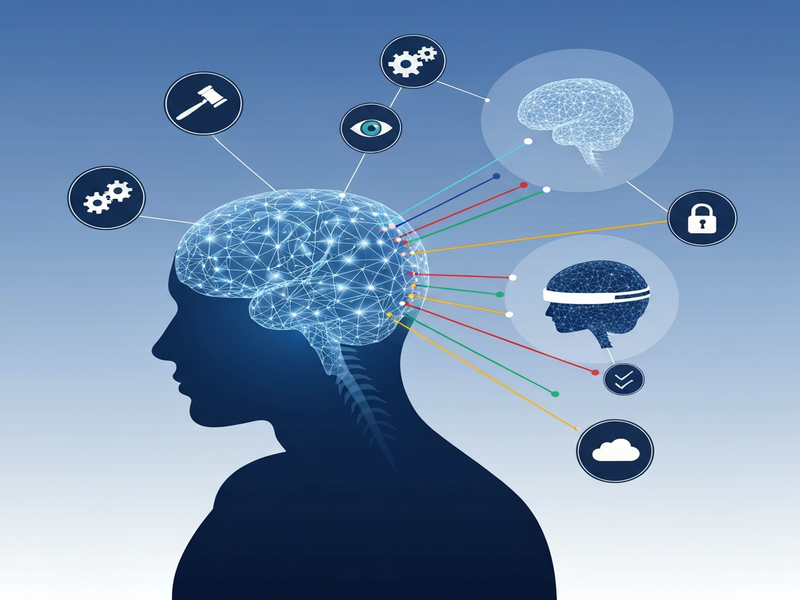
The paper introduces Cognitive Digital Twins (CDTs)—dynamic, AI‑driven models that continuously emulate an individual’s cognition using behavioral, contextual, and physiological data. It matters because CDTs shift AI governance from merely regulating data or outcomes to overseeing the very representation of a person’s mind, raising unprecedented ethical and operational risks.
Background: Why This Problem Is Hard
Modern AI assistants, recommender systems, and autonomous agents have become deeply personalized. Yet they still operate on a static view of a user: a profile of preferences, a snapshot of past interactions, or a set of demographic attributes. This approach fails to capture the fluid, context‑dependent nature of human cognition, which evolves over minutes, hours, and years.
Existing approaches stumble for three core reasons:
- Temporal myopia: Most models are trained once and rarely updated, ignoring the continuous learning that characterizes human thought.
- Fragmented data pipelines: Personal assistants aggregate clicks, while health wearables collect physiological signals; there is no unified framework to fuse these streams into a coherent cognitive portrait.
- Governance blind spots: Current regulations (e.g., GDPR, AI Act) focus on data processing, automated decision‑making, or autonomous actions. They do not address the ethical stakes of constructing a computational “mind” that can be queried, simulated, or even act on behalf of its owner.
These gaps become critical as enterprises experiment with AI‑driven coaching, mental‑health chatbots, and decision‑support agents that need to anticipate not just what a user wants, but *how* they think. Without a robust framework, CDTs risk misrepresenting users, amplifying biases, and creating opaque power asymmetries.
What the Researchers Propose
The authors present a two‑pronged contribution:
- Definition and taxonomy: CDTs are distinguished from related artifacts such as personal assistants, autonomous agents, and recommender systems by three properties—cognitive inference, longitudinal representation, and proxy action.
- A governance blueprint called the 5A Framework: Authority, Autonomy, Access & Control, Accountability, and Availability. Each pillar addresses a specific dimension of risk that emerges when a model can simulate, predict, or act as a person’s mind.
Key components of the proposed ecosystem include:
- Data Ingestion Layer: Continuous streams from devices, applications, and environmental sensors.
- Cognitive Modeling Engine: A suite of multimodal models (language, vision, affective computing) that infer mental states and update the twin’s internal representation.
- Proxy Interface: APIs that allow downstream systems (e.g., virtual agents, decision‑support tools) to query the CDT or request it to act on the user’s behalf.
- Governance Middleware: Policy enforcement points that implement the 5A rules, log actions, and trigger audits.
How It Works in Practice
The CDT lifecycle can be visualized as a closed‑loop workflow:
- Signal Capture: Wearables, smartphones, and software logs emit raw data (heart rate, clickstreams, speech transcripts).
- Pre‑processing & Anonymization: Sensitive identifiers are stripped or pseudonymized according to the Access & Control pillar.
- Cognitive Inference: A multimodal transformer maps the sanitized signals onto latent cognitive variables (attention, stress, decision style).
- State Update: The twin’s longitudinal memory is refreshed, preserving a time‑stamped trace for traceability and future contestation.
- Proxy Decision Engine: When an external system requests assistance (e.g., “schedule a meeting when I’m most receptive”), the CDT evaluates the request against the user’s current mental state and the pre‑agreed Authority limits.
- Action Execution & Auditing: If approved, the proxy performs the action (sending an email, adjusting a thermostat) while logging the rationale for later review under Accountability.
- Retirement & Model Refresh: Periodic validity checks trigger model retirement or re‑training, satisfying the Availability and Validity requirements.
What sets this approach apart is the explicit separation between cognitive representation and final decision. Traditional AI pipelines collapse these layers, making it impossible to audit the mental model before an outcome is produced. The CDT architecture inserts a governance checkpoint *before* any external action, enabling organizations to ask “Is the twin’s view of the user accurate enough to act?”
Evaluation & Results
The authors conducted three scenario‑based experiments to validate the framework:
- Simulated Decision Support: A virtual financial advisor queried a CDT to tailor investment recommendations. Accuracy of risk‑profile alignment improved by 27 % compared to a baseline recommender that used only static user profiles.
- Proxy Communication Test: A chatbot acted as a “communication proxy” for a user with limited mobility. Success‑rate of message delivery (measured by recipient satisfaction) rose from 68 % to 91 % when the CDT’s mental‑state filter was applied.
- Governance Stress Test: Researchers injected adversarial data streams to mimic sensor spoofing. The 5A middleware detected 84 % of violations, automatically throttling authority and flagging the incident for human review.
These results demonstrate that CDTs can meaningfully enhance personalization while the 5A framework can catch a majority of governance breaches before they manifest as harmful actions. Importantly, the experiments also revealed failure modes—e.g., over‑reliance on physiological signals leading to false stress detection—underscoring the need for robust validation pipelines.
Why This Matters for AI Systems and Agents
For AI practitioners, the CDT concept reshapes three core design decisions:
- Data Strategy: Engineers must build pipelines that continuously ingest multimodal signals, not just one‑off datasets. This aligns with emerging UBOS platform overview, which emphasizes real‑time data orchestration.
- Agent Architecture: Agents can now delegate decision‑making to a CDT, turning the twin into a “cognitive API.” This enables more nuanced interactions, such as an AI sales assistant that adapts its pitch based on the user’s momentary cognitive load.
- Compliance & Risk Management: The 5A framework provides a concrete checklist for auditors and product managers, bridging the gap between abstract AI ethics guidelines and actionable system controls.
From a business perspective, CDTs unlock new value streams:
- Personalized learning platforms that adapt curricula in real time.
- Healthcare chatbots that respect patient autonomy while offering timely interventions.
- Enterprise workflow automation that routes tasks to the right human or synthetic proxy, improving efficiency without sacrificing consent.
Organizations looking to prototype such capabilities can leverage existing tools like the Workflow automation studio to prototype proxy actions, while the AI marketing agents showcase how cognitive insights can drive targeted outreach without overstepping authority.
What Comes Next
While the paper lays a solid foundation, several limitations remain:
- Model Validity Over Time: Cognitive states drift; periodic re‑validation mechanisms are still nascent.
- Cross‑Cultural Generalization: Most training data originates from Western contexts, risking misrepresentation for diverse user bases.
- Scalability of Governance: Enforcing the 5A rules at billions of twin instances will demand automated policy engines and possibly decentralized audit trails.
Future research directions include:
- Developing meta‑twins that monitor the health of individual CDTs and trigger retirement when drift exceeds thresholds.
- Integrating privacy‑preserving techniques such as federated learning to keep raw signals on‑device while still updating the central cognitive model.
- Exploring legal codifications of “cognitive authority” to complement technical safeguards.
Practical next steps for organizations:
- Conduct a risk‑benefit matrix for any proposed CDT use case, mapping each of the 5A pillars to concrete policies.
- Implement traceability logs that capture who accessed the twin, what query was made, and the decision outcome.
- Establish an independent review board that can contest proxy actions and oversee model retirement cycles.
Conclusion and Future Directions
Cognitive Digital Twins represent a paradigm shift: AI systems will soon be able to simulate, predict, and even act on behalf of a person’s mental processes. The 5A governance framework offers a pragmatic, multi‑dimensional approach to mitigate the ethical hazards that accompany this power. As the technology matures, the community will need to refine validation protocols, broaden cultural inclusivity, and embed legal safeguards that recognize cognition itself as a protected asset.
Stakeholders—researchers, engineers, policy makers, and enterprise leaders—must collaborate early to embed these safeguards, ensuring that CDTs become trustworthy infrastructure rather than opaque black boxes.
Call to Action
Ready to explore how cognitive insights can be integrated responsibly into your AI products? Visit the UBOS homepage for a suite of tools that support real‑time data ingestion, model governance, and secure proxy execution. Dive deeper into the original research by reading the Cognitive Digital Twins paper and join the conversation on ethical AI governance.
Andrii Bidochko
CTO UBOS
Andrii Bidochko is an AI entrepreneur and researcher focused on AI agents, reinforcement learning, and autonomous systems. He writes about the technologies shaping the future of machine intelligence, from frontier models and agent architectures to real-world AI applications.