

- Updated: June 26, 2026
- 7 min read
Measuring What Persists: Conditioning Mechanisms and a Geometric Framework for AI Agent Identity
Direct Answer
The paper introduces a geometric framework that quantifies how an AI agent’s “identity” – the set of behavioral constraints it was conditioned to follow – changes over long‑context interactions. By treating identity as a non‑geodesic structure in a metric space built from the square‑root Jensen‑Shannon divergence (√JSD) and analyzing it with magnitude homology, the authors reveal two distinct conditioning mechanisms that explain why agents drift or remain stable.
Background: Why This Problem Is Hard
Long‑context applications such as multi‑turn chat, autonomous planning, or continuous‑learning assistants rely on agents that retain a consistent persona, policy, or safety envelope across thousands of tokens. In practice, developers observe that agents gradually “forget” their original specifications, producing outputs that deviate from intended tone, style, or safety constraints. The difficulty stems from three intertwined factors:
- Contextual overload: Transformer models attend to every token, so as the context window expands, earlier conditioning signals become diluted.
- Implicit attractor dynamics: After fine‑tuning, models develop internal attractor states that dominate generation, often overriding explicit prompts.
- Lack of quantitative diagnostics: Existing monitoring tools rely on surface‑level metrics (e.g., perplexity, sentiment drift) that only flag problems after user‑visible degradation.
Consequently, engineers lack a principled way to measure whether an agent’s identity is persisting, how fast it is eroding, or which architectural choices accelerate or mitigate drift. The paper tackles this blind spot by providing a mathematically grounded measurement system that works before any qualitative failure becomes apparent.
What the Researchers Propose
The authors propose a two‑part framework:
- Geometric embedding of agent responses: Every possible output (or a sampled subset) is represented as a point in a √JSD metric space. In this space, the distance between two responses reflects how statistically different their token distributions are.
- Magnitude homology analysis: Borrowed from enriched category theory, magnitude homology captures higher‑order shape information of a point cloud. In this context, it distinguishes “non‑geodesic” clusters (where identity constraints create a void that must be filled) from “geodesic” clusters (where responses naturally flow toward attractors).
Within this space, the researchers identify two conditioning mechanisms:
- Identity‑vacuum cluster: A region where the explicit identity specification (e.g., a system prompt) occupies a behavioral void, forcing the model to generate diverse responses to satisfy the constraint.
- Safety‑basin cluster: A region where the identity pushes the model away from its post‑training attractors, creating a protective “basin” that stabilizes behavior.
By measuring the magnitude (a scalar summarizing the homological structure) of these clusters, the framework quantifies how “tight” or “relaxed” the identity is under varying contexts.
How It Works in Practice
The workflow can be broken down into four conceptual stages:
1. Probe Generation
Engineers design a set of probe prompts that systematically vary in semantic content, length, and conditioning strength. Each probe is fed to the target agent, and the model’s responses are collected.
2. Embedding via √JSD
For every response, a probability distribution over the vocabulary is estimated (e.g., using the model’s softmax logits). Pairwise √JSD distances are computed, yielding a metric matrix that captures how far apart each response lies from every other.
3. Constructing the Magnitude Complex
The distance matrix feeds into a filtered simplicial complex: points that are within a chosen radius form edges, triangles, and higher‑dimensional simplices. Magnitude homology then extracts Betti numbers and magnitude values that describe the shape of the response cloud.
4. Interpreting Drift
When the agent is placed under increasing context pressure (e.g., longer preceding conversation), the magnitude is tracked. A decreasing magnitude signals that the response cloud is collapsing toward a geodesic (i.e., the identity is weakening). Conversely, a stable or increasing magnitude indicates that the identity continues to enforce a non‑geodesic structure.
What sets this approach apart is its focus on the *structure* of behavior rather than isolated output metrics. By treating identity as a topological feature, the method can detect subtle anisotropic contractions—situations where drift occurs only along certain semantic axes—something traditional scalar metrics miss.
Evaluation & Results
The authors validated the framework on a “persistent AI agent”—a fine‑tuned language model equipped with a system prompt that defines a friendly, safety‑first persona. The evaluation comprised three main experiments:
1. Conditioning Mechanism Discovery
Cross‑condition distance matrices revealed two clear clusters. The identity‑vacuum cluster exhibited 55 distinct response patterns when probes were maximally separated, whereas the baseline (no identity) produced a single dominant pattern. This demonstrates that the identity specification injects measurable behavioral richness.
2. Equilateral Probe Baseline
By arranging probes at the vertices of an equilateral triangle in the prompt space, the authors showed that magnitude changes could be predicted solely from perimeter changes. Shape perturbations canceled out due to the symmetry (Sn), confirming the theoretical first‑order perturbation model.
3. Context‑Length Drift Test
When the agent was subjected to repetitive padding (identical filler tokens) up to 150 K tokens, magnitude remained unchanged, indicating no genuine drift. However, when diverse padding was introduced, a modest magnitude decrease was observed, suggesting that true drift is tied to semantic interference rather than raw token count.
Overall, the experiments substantiate two claims:
- The geometric framework can isolate and quantify distinct conditioning mechanisms.
- Magnitude homology reliably detects when an agent’s identity is being eroded, even in the absence of obvious output degradation.
Why This Matters for AI Systems and Agents
For product teams building long‑running conversational assistants, autonomous planners, or AI‑driven customer‑service bots, the ability to monitor identity persistence translates into concrete operational benefits:
- Proactive safety enforcement: Detecting early signs of identity collapse allows automated rollback or re‑prompting before unsafe content is generated.
- Consistent brand voice: Marketers can verify that a brand‑specific persona remains intact across multi‑hour interactions, preserving user trust.
- Resource‑efficient scaling: By distinguishing padding‑induced artifacts from genuine drift, engineers can avoid over‑provisioning context windows.
- Model‑agnostic diagnostics: Because the framework relies only on output distributions, it can be applied to any transformer‑based agent, regardless of architecture.
These capabilities align directly with the needs of enterprises adopting the Enterprise AI platform by UBOS, where maintaining regulatory‑compliant behavior over extended sessions is a core requirement.
What Comes Next
While the study establishes a solid theoretical foundation, several open challenges remain:
- Scalability of homology computation: Current magnitude homology pipelines are computationally intensive for millions of responses. Future work could explore approximate methods or GPU‑accelerated implementations.
- Integration with orchestration layers: Embedding the diagnostic loop into real‑time agent orchestration (e.g., within Workflow automation studio) would enable automated mitigation strategies.
- Extending to multimodal agents: The framework currently assumes textual token distributions. Adapting it to vision‑language or audio‑language models would broaden its applicability.
- User‑centric evaluation: Correlating magnitude changes with human perception of identity drift could refine thresholds for alerts.
Addressing these points will move the community from post‑hoc analysis toward continuous, production‑grade identity management. Researchers interested in contributing can explore the arXiv paper for detailed methodology and raw data.
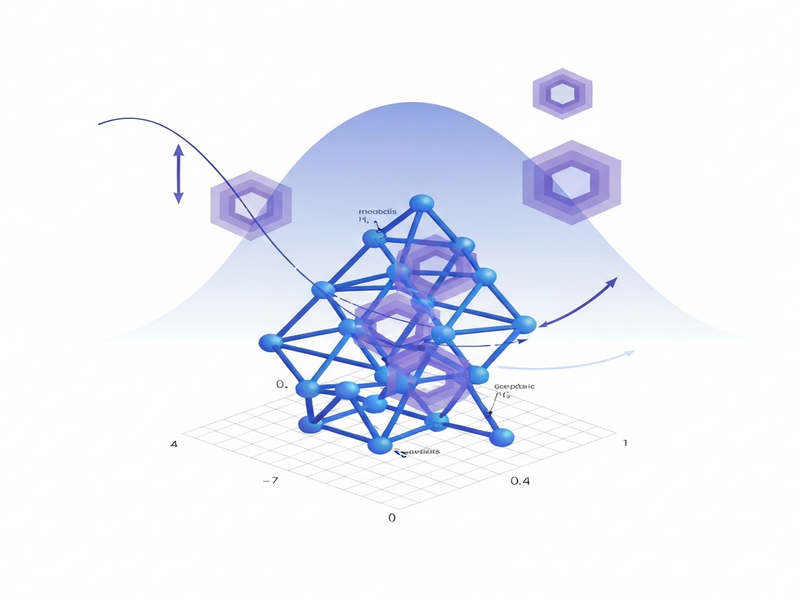
Illustration of the Geometric Framework
The diagram below visualizes the response cloud, the identified clusters, and the magnitude homology pipeline. It highlights how probe responses (colored points) form non‑geodesic structures that shrink under context pressure.
Further Resources
For developers looking to experiment with identity diagnostics on their own agents, UBOS offers a suite of integrations that simplify data collection and analysis:
- OpenAI ChatGPT integration – stream responses directly into the magnitude pipeline.
- Chroma DB integration – store and query large sets of probe embeddings efficiently.
- ChatGPT and Telegram integration – run live drift monitoring in conversational channels.
Conclusion
The geometric and homological approach presented in this work offers a fresh lens on a problem that has long plagued long‑context AI deployments: the gradual loss of an agent’s intended identity. By turning identity into a measurable shape in a metric space, the framework equips engineers with early‑warning diagnostics, clarifies the role of conditioning mechanisms, and opens a research agenda for scalable, multimodal, and user‑aligned identity management. As enterprises continue to embed AI agents deeper into customer‑facing workflows, tools that guarantee persistent, safe, and brand‑consistent behavior will become as essential as the models themselves.
Andrii Bidochko
CTO UBOS
Andrii Bidochko is an AI entrepreneur and researcher focused on AI agents, reinforcement learning, and autonomous systems. He writes about the technologies shaping the future of machine intelligence, from frontier models and agent architectures to real-world AI applications.