

- Updated: June 25, 2026
- 7 min read
Repeated post-training is not Self-improving: Diagnosing Scientific Amnesia in Continual DPO Pipelines
Direct Answer
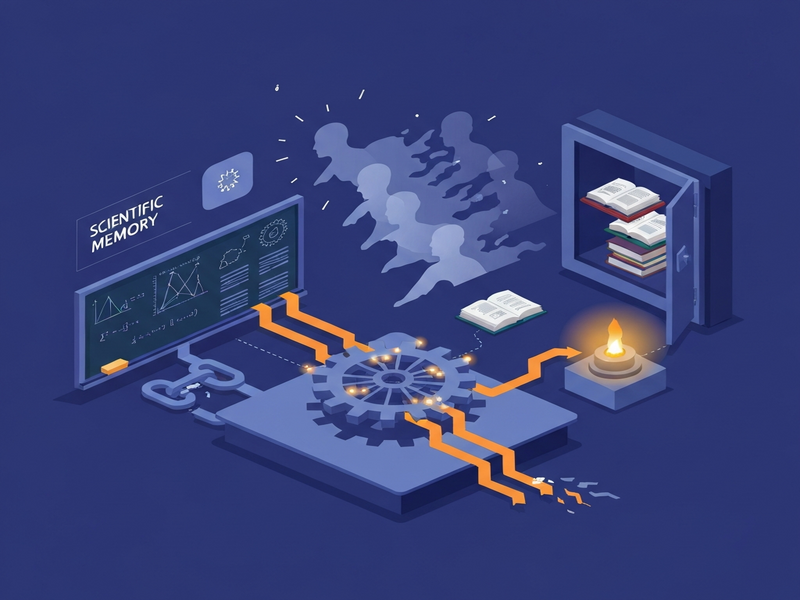
The paper “Repeated post‑training is not Self‑improving: Diagnosing Scientific Amnesia in Continual DPO Pipelines” reveals that repeatedly fine‑tuning large language models (LLMs) with Direct Preference Optimization (DPO) can suffer from a subtle but critical failure called scientific amnesia—the model retains past behaviors yet loses the methodological knowledge needed to improve future training campaigns. Recognizing and measuring this phenomenon is essential for any organization that ships continual updates to LLM‑driven products.
Background: Why This Problem Is Hard
Enterprises that deploy LLM‑based assistants, chatbots, or code‑generation tools rarely train a model once and forget it. Instead, they run a series of preference‑data campaigns—each campaign collects human feedback on a specific sub‑task (e.g., better code style, safer responses, domain‑specific jargon). The prevailing industrial practice is to feed the latest campaign into a DPO loop, producing a new checkpoint that replaces the previous version.
Two intertwined challenges make this workflow fragile:
- Catastrophic forgetting vs. hidden regression. Classic continual‑learning research focuses on catastrophic forgetting, where a model abruptly loses abilities learned earlier. In production DPO pipelines, the model often appears to retain earlier capabilities, yet it fails to internalize the “how‑to‑train‑next” knowledge that would make subsequent campaigns more efficient.
- Opaque feedback loops. Preference data is noisy, campaign scopes overlap, and the DPO objective is non‑convex. Without a systematic diagnostic, engineers cannot tell whether a dip in performance stems from data quality, optimizer settings, or the deeper amnesia effect.
Existing continual‑learning methods (replay buffers, regularization, parameter isolation) are designed for preserving task performance, not for preserving the *meta‑knowledge* about the training process itself. Consequently, they provide little insight into why a model that “looks fine” still struggles to improve on new tasks.
What the Researchers Propose
To surface scientific amnesia, the authors introduce a four‑part framework:
- Diagnostic Suite for Amnesia. A set of quantitative probes that compare step‑level peak performance against a baseline, isolating regressions that are not explained by forgetting.
- Program‑Based Pipeline. An end‑to‑end system that chains Fully‑Sharded Data‑Parallel (FSDP) DPO checkpoints across multiple runs of the Qwen2.5‑7B‑Instruct model, mimicking a realistic production environment.
- 30‑Campaign HumanEval Subdomain Benchmark. A curated collection of 30 related code‑generation tasks, each representing a distinct preference‑data campaign, enabling controlled measurement of cumulative learning.
- Comparative Study of Memory Strategies. Five candidate “memory” mechanisms—random memory, rule‑based scheduling, retrieval‑only memory, warm‑start Bayesian optimization, and a meta‑scientific memory & reasoner (MSCL)—are evaluated for their ability to mitigate amnesia.
Each component plays a distinct role: the diagnostic suite flags amnesia, the program‑based pipeline provides a reproducible testbed, the benchmark supplies a realistic workload, and the memory strategies represent practical interventions that product teams could adopt.
How It Works in Practice
The workflow can be visualized as a linear chain of three “steps,” each step consisting of a full DPO training run on a fresh campaign. The chain is orchestrated by a lightweight controller that performs the following actions:
Step‑by‑Step Execution
- Initialize Base Model. Load the Qwen2.5‑7B‑Instruct checkpoint and shard it across GPUs using FSDP.
- Inject Preference Data. Pull the next campaign’s human‑rated prompts and responses from a centralized data lake.
- Run DPO Optimizer. Optimize the model against the preference loss, producing a new checkpoint.
- Apply Memory Strategy. Depending on the experimental condition, the controller may retrieve past checkpoints, schedule training order, or invoke a Bayesian optimizer to suggest hyper‑parameters.
- Diagnose Amnesia. After each step, the diagnostic suite evaluates the model on the entire 30‑campaign benchmark, recording peak pass@1 scores and computing “Delta” metrics that capture performance drift.
What sets this pipeline apart from prior work is the explicit “memory” layer that sits between steps. Traditional pipelines simply overwrite the previous checkpoint; here, the memory module can:
- Recall specific examples from earlier campaigns (retrieval‑only).
- Enforce a conservative schedule that delays high‑risk campaigns (rule‑based).
- Adapt hyper‑parameters based on meta‑learning signals (warm‑start Bayesian).
- Reason about the scientific process itself, attempting to synthesize “training lessons” (MSCL).
By swapping out the memory module, the researchers can directly compare how each strategy influences the emergence—or mitigation—of scientific amnesia.
Evaluation & Results
The authors conduct two complementary experimental regimes:
Single‑Seed, Heterogeneous Chain
A deterministic seed runs a three‑step chain under each of the five memory conditions. The primary metric is the step‑level peak pass@1 on the 30‑campaign HumanEval benchmark. Findings include:
- Four of the five strategies (random, retrieval‑only, warm‑start Bayesian, MSCL) exhibit a measurable decline in peak pass@1 after the second step, indicating scientific amnesia.
- The rule‑based schedule, which deliberately postpones high‑variance campaigns, shows a modest improvement, suggesting that conservative ordering can preserve meta‑knowledge.
Multi‑Seed, Homogeneous Sweep
To assess statistical robustness, the authors repeat the experiment across three random seeds with a homogeneous campaign order. Results differ:
- Retrieval‑only memory achieves the best mean Delta, though confidence intervals overlap with other methods.
- No pairwise comparison reaches statistical significance, highlighting the sensitivity of amnesia detection to seed variance and chain configuration.
Overall, the evaluation demonstrates that scientific amnesia is observable in a realistic continual‑DPO pipeline, but the effectiveness of mitigation strategies is highly context‑dependent.
Why This Matters for AI Systems and Agents
For teams building AI‑driven products, the paper’s insights translate into concrete operational guidance:
- Continuous improvement is not guaranteed. Even if a model passes regression tests, it may have lost the ability to learn efficiently from new feedback.
- Memory mechanisms matter. Simple replay buffers are insufficient; designers must consider scheduling policies or meta‑learning components that preserve training methodology.
- Diagnostic tooling is essential. Embedding an amnesia‑aware evaluation suite into CI/CD pipelines can surface hidden regressions before they reach customers.
- Agent orchestration benefits. Autonomous agents that trigger their own fine‑tuning cycles can use the rule‑based scheduler to avoid “training storms” that degrade future learning capacity.
Practically, organizations can start by integrating the diagnostic suite into their existing Workflow automation studio to automatically flag step‑level performance drops. For teams that already expose LLMs via messaging platforms, the ChatGPT and Telegram integration can surface real‑time alerts when amnesia is detected, enabling rapid human‑in‑the‑loop remediation.
What Comes Next
While the study establishes a solid baseline, several open challenges remain:
- Scalability to larger models. Qwen2.5‑7B is a mid‑size LLM; extending the pipeline to 70B‑parameter models may reveal new failure modes.
- Richer memory representations. Current strategies rely on checkpoint retrieval or simple scheduling. Future work could explore graph‑based knowledge stores that encode training dynamics.
- Cross‑domain generalization. The HumanEval benchmark focuses on code generation. Applying the diagnostic suite to dialogue, retrieval‑augmented generation, or multimodal tasks will test the universality of scientific amnesia.
- Automated mitigation. Integrating a meta‑scientific reasoner like MSCL with reinforcement learning could enable the system to self‑adjust its training curriculum.
Addressing these gaps will require collaboration between academia and industry. Companies interested in pioneering robust continual‑learning pipelines can partner with the UBOS partner program to co‑design memory modules that align with their product roadmaps.
In the meantime, practitioners should adopt a two‑pronged approach: (1) embed the amnesia diagnostic suite into every DPO iteration, and (2) experiment with conservative scheduling policies while monitoring the impact on downstream performance. By treating scientific amnesia as a first‑class engineering concern, organizations can safeguard the long‑term value of their LLM investments.
Andrii Bidochko
CTO UBOS
Andrii Bidochko is an AI entrepreneur and researcher focused on AI agents, reinforcement learning, and autonomous systems. He writes about the technologies shaping the future of machine intelligence, from frontier models and agent architectures to real-world AI applications.